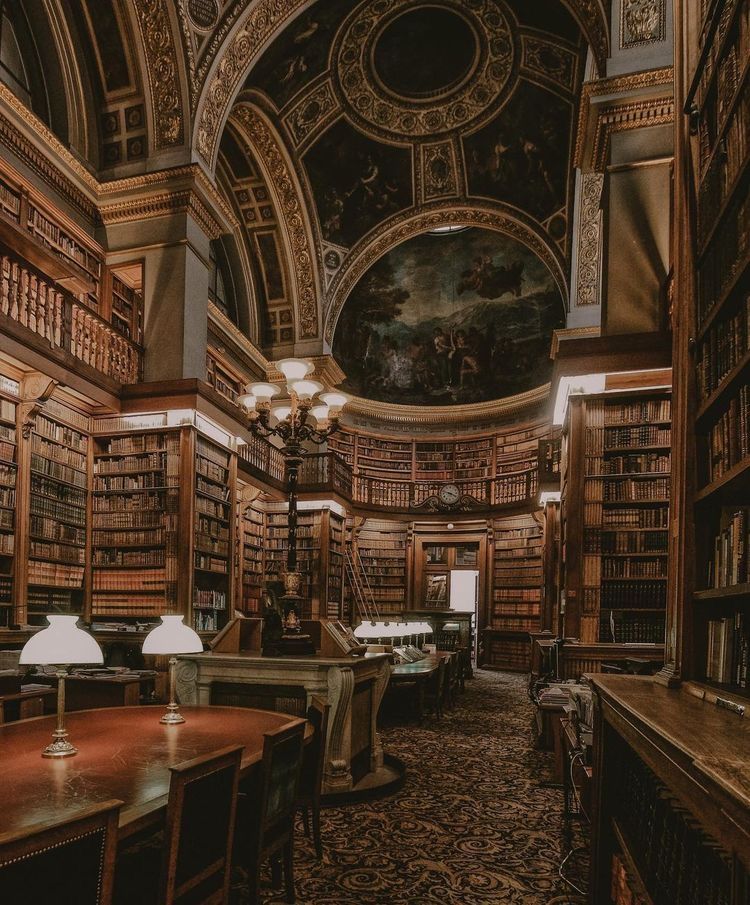
The first time Aria dreamed of the library, she woke up with the taste of paper on her tongue.
Not the kind you chew absentmindedly at work or in class — no, this was different. Dry, ancient, and heavy with the scent of ink long faded.
The dream was brief — a single corridor lined with shelves that stretched upward until they vanished into mist. Each shelf was filled not with books, but with bottles. Glass bottles, faintly glowing from within. Each one carried a flicker of light, pulsing gently, as though something alive slept inside it.
When she woke, her mouth was dry, her heartbeat uneven. On her bedside table, her journal lay open. She had written something in the middle of the night, though she didn’t remember doing it.
The words read:
“They borrowed my rain.”
She didn’t know what that meant.
For days, she tried to forget. She told herself it was just a dream — a strange one, yes, but dreams were supposed to be strange. Yet, as the week went on, she noticed something peculiar.
Her dreams became clearer, but shorter. Like someone was trimming the edges before she could finish them.
She would begin to dream — a childhood field, her mother’s laughter, the weightless moment before a kiss — and then, just as she reached the heart of it, everything would blur, fade, and fall away. She would wake up gasping, heart pounding, with the distinct sensation of absence.
By the third night, she stopped dreaming altogether.
Sleep became a black screen.
But when she woke, the journal always had new words written in it.
None in her handwriting.
“Filed under the Winged Hall. Borrower #2978. Condition: Fragile.”
Aria stopped sleeping properly after that.
She tried to tell her friend — Lucas, a soft-spoken literature professor who believed in ghosts the way others believed in caffeine. He listened as she spoke, leaning over his coffee cup, brow furrowed.
“So, you’re saying someone’s taking your dreams?”
“I’m saying they’re gone,” she said. “And I think they’re being kept somewhere.”
Lucas laughed, softly but nervously. “You’ve been reading too much Borges.”
“I haven’t read Borges in months,” she murmured, staring into her cup. “But last night I heard something. When I woke up. It sounded like… pages turning.”
Lucas reached for her hand, perhaps to comfort her, but something in her face stopped him. He let go halfway, fingers suspended in the air.
“Maybe you should see someone,” he said finally. “A doctor.”
She smiled without humor. “I’m thinking of seeing a librarian.”
That night, she didn’t even try to sleep. But exhaustion has its own will — it finds cracks in your resolve, seeps in like fog.
When she blinked next, she was standing before an enormous doorway. It was carved from black wood, with runes etched into the grain. The letters shimmered faintly as though written in silver blood.
Above the door, an inscription:
“The Library at the End of Dreams.”
The words pulsed once. The door opened on its own.
Inside, it was vast and silent — not the comforting silence of an empty library, but the kind that hums beneath your skin. The air shimmered faintly, heavy with the scent of parchment and something older.
She wandered through aisles of shelves, each labeled with strange signs:
“Forgotten Apologies.”
“Unsent Letters.”
“Half-Wakened Loves.”
The bottles were everywhere, glimmering faintly. When she leaned close to one, she saw the faintest image moving inside — a tiny scene, looping endlessly.
A little boy running through rain.
An old woman waiting at a window.
Two lovers saying goodbye under an eclipse.
And then she found one that made her breath hitch.
Inside a narrow, dust-coated bottle, she saw herself.
As a child.
Running barefoot through her grandmother’s garden, chasing fireflies.
Her first dream. The one she had almost forgotten.
Her hands trembled as she picked it up. The light inside flared — briefly, like recognition — then dimmed again. A label on the cork read:
“Filed under: Aria Mallory. Borrower in progress.”
She turned around. “Who’s borrowing these?”
The voice that answered came from the darkness between shelves. “Someone who needs them more than you.”
Aria spun around. A tall figure stepped forward, wrapped in robes that looked woven from shadow and torn light. Its face was obscured, not hidden — more like her eyes refused to settle on it.
“You shouldn’t be here,” the figure said, softly. Its tone was not threatening, but disappointed — the way a teacher might sound when catching a child reading the answers.
“Who are you?” she whispered.
“I am the Archivist.”
“And this is…?”
“The Library at the End of Dreams,” it said. “Where every dream goes when you wake.”
Aria held up the bottle in her hand. “Then why are mine being checked out?”
The Archivist tilted its head. “Because someone is rewriting you.”
Her breath caught. “Rewriting?”
“Dreams are the drafts of who we are,” it said. “Every time you sleep, your mind rehearses your soul. It edits, redrafts, forgets, remembers. That is how you stay whole. But when someone borrows your dreams, they take your revisions. Slowly, you forget who you were meant to become.”
Aria’s pulse hammered in her ears. “Who would do that?”
The Archivist stepped closer, its voice lowering to a whisper that sounded like paper tearing underwater.
“Someone who knows you very well. Someone who cannot dream on their own.”
She felt her mouth go dry. “Lucas.”
The air trembled.
She didn’t wake up immediately after that — though she should have. The dream kept going, even as she tried to claw her way out of it. The Archivist was gone, and the library had begun to change.
The bottles flickered. Some shattered quietly, their light leaking out in threads that drifted toward the ceiling. The air was thick with whispers. Words. Names. Cries.
She ran through the aisles, searching for an exit, but every corridor led her deeper into something vast and wrong.
At the far end of a corridor marked “Stolen Reveries,” she saw a single desk — cluttered with papers and quills. A man sat behind it, head bent over an open bottle.
“Lucas,” she said.
He looked up, startled — not guilty, just tired. His face was pale, as though he’d been awake for years.
“You weren’t supposed to find this place,” he said softly.
“What is this?”
He held the bottle up. Inside, light flickered — faintly, fragile. It was a scene she recognized: her, standing in the rain at twenty-two, whispering goodbye to her mother’s grave.
“You dream so vividly,” he said, voice trembling. “I stopped dreaming a long time ago. My nights are empty. Just static. But when I found this library, I realized I could borrow.”
“Borrow?” she repeated, trembling. “You mean steal.”
“I’m not taking them forever,” he said. “I just need them. You have hundreds. I have none.”
Aria’s chest ached — anger and pity tangled inside her. “They’re mine. They make me who I am.”
He looked down at the bottle. “That’s exactly why I need them.”
Something shifted in the room. The lights dimmed, the air grew colder.
From the darkness behind Lucas, the Archivist emerged again, its presence towering and heavy.
“You’ve broken the First Rule,” it said, voice echoing like thunder on paper. “No dream may be owned by another.”
Lucas stood, defiant but trembling. “You built this place to keep them from fading. What good is preservation without use?”
The Archivist raised a hand. The air folded inward, and for a moment, Aria saw the faces of a thousand dreamers flickering in the walls — each one asleep, their eyes twitching behind closed lids, unaware that something was missing.
“You misunderstand,” the Archivist said. “Dreams are alive. When you borrow one, it begins to believe you are its author. And then—”
Lucas gasped suddenly, clutching his chest. His eyes widened as threads of light began to crawl up his skin, seeping into him like roots.
“—it rewrites you.”
Aria screamed his name, but it was too late. Lucas’s body convulsed once, then stilled. When he lifted his head, his eyes were full of light — her memories, her dreams.
He smiled.
But it wasn’t Lucas’s smile anymore.
“Aria,” he whispered, voice too soft, too familiar. “We’re the same now.”
And she understood — he hadn’t just taken her dreams. He had taken her.
She tried to run, but the floor beneath her turned to mist. Shelves began to dissolve. Bottles shattered one after another, light spilling into the void like water through cracks.
The last thing she saw before darkness swallowed her was her own bottle — glowing faintly, label curling, before it was lifted by unseen hands and carried away.
When Aria woke up, she was in her bed.
The morning light was soft. Birds sang outside her window.
Everything seemed ordinary — except for one thing.
She couldn’t remember her mother’s name.
She tried not to panic. Memory loss after dreams wasn’t impossible, she told herself. People forgot details all the time. But this wasn’t a detail — it was a hole. A clean, echoing absence. She could remember her mother’s hands braiding her hair, her voice humming old lullabies, the smell of sandalwood and rain when she hugged her. But the name — the word that held it all together — was gone.
She whispered every name she knew, trying to find one that felt right. None did. It was like reaching into a drawer and finding only dust.
That morning, she went through old photographs. In every one, her mother’s smile was there — wide, soft, knowing. But when Aria tried to focus on the little note on the back, where her mother’s handwriting should’ve been, she saw only faint scratches. Ink that had once existed but was now erased by time — or something worse.
By evening, her headache was sharp enough to make her vision blur. She opened her journal again, desperate to see if more words had appeared.
They had.
“Borrower #2978: Contamination Detected. Merge in Progress.”
She slammed the book shut. Her pulse roared in her ears.
Contamination. Merge. Progress.
The words throbbed in her head like sirens she couldn’t shut off. She realized then that Lucas hadn’t just taken her dreams. He was becoming her.
Over the next few nights, she fought sleep like a cornered animal. But the body always wins in the end. And when it did, she found herself once again before the black door, glowing faintly in the void.
This time, the inscription above it had changed.
“Library Under Reconstruction.”
Her hands trembled as she pushed it open. The shelves were dimmer now. Bottles lay shattered across the floor like fallen stars. The air tasted burnt — ink and smoke and loss.
Somewhere deeper inside, she heard voices — soft, layered whispers that rose and fell like waves.
As she walked toward them, she noticed that many of the labels on the shelves had her name written on them now. But not her handwriting — his.
Each bottle pulsed faintly, as if struggling against an unseen weight. When she touched one, it burst into fragments of memory: her first concert, her college dorm room, the first time she saw Lucas.
And then — another flicker. A memory she didn’t recognize.
A hand that wasn’t hers. A voice saying, “I’m sorry, Aria. I needed to know what it felt like to dream again.”
She followed the sound of whispering until it became a single voice.
Lucas stood before a towering mirror framed in bone-white wood. In its reflection, he looked different — not just older, but blurred, his edges dissolving. His reflection kept shifting between his own face and hers.
He turned toward her. “You came back.”
“You stole from me.”
He smiled faintly. “I gave you something too.”
“What could you possibly give me?”
“Continuity,” he said softly. “You would have forgotten yourself eventually. Everyone does. I only accelerated what was already happening. The Library doesn’t keep dreams forever. It lets them decay, until there’s room for new ones. I’m trying to keep you alive through me.”
She shook her head. “You’re lying.”
“I’m rewriting us,” he said. “Combining what’s left.”
He reached out a hand toward her, and for a moment she almost took it — because the light in his eyes wasn’t malicious. It was sorrow.
But then she saw her reflection in the mirror behind him. Her eyes glowed faintly, the same hue as the bottles.
“Lucas,” she whispered, “what have you done?”
The mirror trembled. Cracks spiderwebbed across its surface, light leaking from every fracture. The Archivist’s voice boomed around them — not from a single direction, but from everywhere at once.
“Unauthorized Merge Detected. Termination Required.”
Lucas staggered backward, clutching his head. “No! She’s not supposed to be deleted—”
“Protocol demands preservation,” the voice thundered. “Corrupted dreamers are expunged.”
Aria grabbed Lucas’s hand and ran. The corridors shifted as they fled — walls rippling, shelves bending toward them like trees in a storm. Bottles fell and shattered around their feet, each one bursting into a thousand flickering lights that drifted upward and vanished.
“Where are we going?” he shouted.
“To the beginning,” she said. “To the first dream.”
The path led them to a grand hall unlike any other. The ceiling was an ocean of glass, beneath which stars swirled and shimmered. The shelves here were ancient, carved into the very bones of the world. At the center stood a single pedestal, holding one immense bottle — the size of a person, glowing brighter than anything else in the Library.
Aria approached it, heart pounding. The label read:
“Prototype Dream. Origin: Aria Mallory. Status: Core Fragment.”
Lucas stared at it, awe softening his features. “It’s you,” he murmured. “The first dream you ever had.”
Inside the bottle, she saw a little girl — herself, five years old — sitting by a candle, whispering into the dark: “Please let me wake up somewhere that remembers me.”
The candle flickered as though hearing her.
She realized then that every dream she’d ever had, every memory, every person she’d loved — all of it had grown from that single wish.
The Library hadn’t been built to preserve dreams. It had been built to preserve her.
The ground shook. The Archivist appeared once more, towering, its robe swirling with pages torn from every dream ever written.
“You were never supposed to wake up here,” it said. “You are the anomaly. The origin. Without your dreams, the Library ceases to exist.”
Aria felt Lucas’s grip tighten on her hand. His voice was small. “Then what happens if the origin is destroyed?”
“The Library resets,” the Archivist replied. “And with it, all dreamers are reborn — cleansed of corruption.”
Aria stared at the glowing bottle. The little girl inside looked back at her, eyes wide, waiting.
If she destroyed it, the Library — and all the dreams it held — would vanish. Everyone would lose everything they had ever dreamed. Every love, every regret, every goodbye. But they would wake — new, whole, untouched.
If she didn’t, Lucas would finish merging with her. She would disappear, folded into someone else’s script.
Her voice broke. “There has to be another way.”
“There isn’t,” the Archivist said. “Dreams demand sacrifice.”
Lucas turned toward her, eyes full of tears and borrowed memories. “Then let it be me,” he said. “Erase me instead.”
Aria’s throat tightened. “You can’t—”
He smiled faintly. “You’re right. I can’t. But you can.”
He placed her hand on the bottle’s surface. “I borrowed what wasn’t mine. Maybe that’s all I ever was — a reader who forgot he wasn’t the author.”
She shook her head. “Lucas, please—”
“Promise me you’ll keep dreaming.”
His hand slipped away.
The bottle pulsed once — a blinding flare of light — and then shattered.
The explosion was silent. Light poured through every corner of the Library, tearing it apart, shelf by shelf, word by word. Bottles burst open, their contents soaring upward like thousands of stars returning home.
Aria felt herself dissolving too — not in pain, but in release.
For a moment, she saw Lucas’s face again, peaceful, fading. Then she saw the little girl from her first dream, smiling at her from the edge of the light.
“Will you remember me?” the girl asked.
Aria reached out, her voice breaking into whispers of light. “Always.”
And then, the Library at the End of Dreams burned away — leaving only silence.
When she opened her eyes, she was lying on wet grass beneath a grey sky. Rain fell softly on her face.
For a long time, she didn’t move. The world around her was quiet, real, cold.
She sat up slowly. In her lap lay a single object — a bottle, no bigger than her palm. Inside it, a faint glimmer moved, like a dying ember. The label was smudged, but she could still make out the first two words:
“For Aria.”
She held it close, feeling its warmth seep into her skin. Somewhere in the back of her mind, she thought she heard the faintest echo — a voice, distant and tender, whispering, “Keep dreaming.”
And for the first time in weeks, she smiled.
Because even though she couldn’t remember his face anymore, she remembered the feeling — and maybe, that was enough.
That night, she dreamed again.
But this time, the dream didn’t belong to her alone.

Want to read a bit more? Find some more of my writings here-
Book Review: Harry Potter and the Goblet of Fire
Pedro Alonso López: The Monster of the Andes
The Victorian Era: A Tapestry of Elegance, Innovation, and Transformation
I hope you liked the content.
To share your views, you can simply send me an email.
Thank you for being keen readers to a small-time writer.