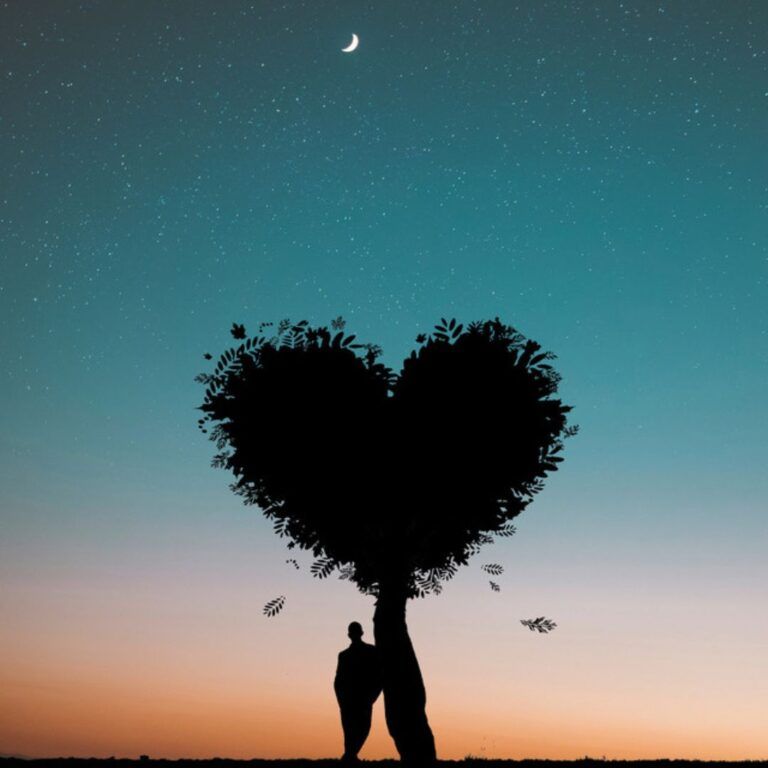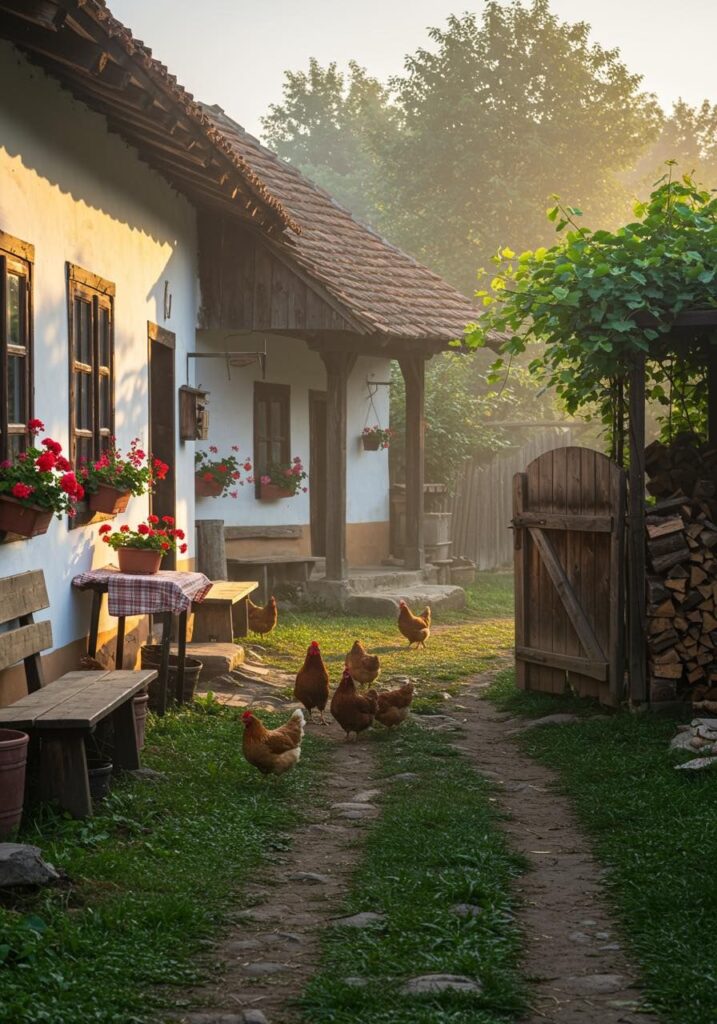
They say the village was born from a sigh — a long, trembling sigh that slipped out of the earth itself. Between two mountains where fog danced like breath in winter, lay a place so small it could vanish from maps and still be remembered in the hearts of travelers who had once stumbled upon it. It was called Lunareth, a name that tasted like moonlight and sorrow.
Lunareth had no festivals for harvest or birth, no celebrations for wealth or weddings. Once a year, however, the villagers gathered under the starlit sky to honor something most people spent their lives trying to forget — their grief.
Every year, on the night when the moon was fullest and most forgiving, they lit lanterns not for what they had lost, but for what they had dared to feel.
No one in Lunareth could remember how the tradition began. Some said it started with a woman who lost her child but refused to hide her mourning. She wandered the streets singing lullabies to the stars, her voice both broken and beautiful. When people tried to console her, she said only, “Do not quiet me. Let my grief breathe.”
That night, she lit a lantern, set it adrift upon the lake, and whispered, “For the courage to love, even when love hurts.”
And from that night on, the lake became a mirror of human hearts — shimmering with lights that floated like memories refusing to drown.
The air of Lunareth always smelled faintly of cedar and rain. Its houses were made of stone and moss, and its streets were narrow, winding, and full of stories. Children grew up learning that grief was not an illness to cure but a season to honor. They were taught to bow their heads not in shame, but in remembrance — for to feel deeply was to be alive.
In the weeks before the Festival of Lanterns, the whole village changed. Cobblers paused their work to weave silk ribbons for lanterns. Bakers shaped moon-shaped loaves filled with honey and salt — for sweetness and sorrow must always be eaten together. The air hummed with quiet preparation, the kind that lived between silence and song.
It was during this season that a traveler named Elias arrived.
He came from far away, a man hollowed by loss, though no one asked what he carried. His coat was torn by wind, and his eyes had the color of rain-soaked ashes. He entered the village at dusk, when the sky was painted in the soft bruises of twilight.
Old Mara, the innkeeper, watched him from the doorway. “You look like a man who’s lost something,” she said, her voice gentle but sharp as flint.
Elias managed a tired smile. “Everything,” he answered simply.
Mara nodded, as if this were the most ordinary confession in the world. “Then you’ve come to the right place. Here, we make peace with our sorrows instead of burying them.”
He stayed in a small room overlooking the lake. That night, he watched villagers floating paper lanterns across the water in practice for the upcoming festival. Their faces glowed in the candlelight, neither joyous nor mournful — something softer, something truer.
He had never seen people treat sadness with such tenderness. Where he came from, grief was hidden behind curtains and forced smiles. Here, it was an art.
Days passed, and Elias learned about Lunareth’s strange customs.
He learned that each lantern must be made by hand. The frame crafted from willow branches — for resilience. The paper dyed with crushed petals — for memory. And the flame lit from another’s candle — for connection.
He learned that before the lantern was released, one must whisper a truth they had never spoken aloud.
“It doesn’t have to be sorrow,” said Mara one afternoon as they folded the thin paper together. “But it must be real. The lantern only floats if your truth has weight.”
Elias smiled faintly, though inside him, truth felt like a locked chest.
On the eve of the festival, the village was a field of quiet light. Thousands of lanterns hung from doorways, swaying like dreams waiting to be set free. The children wore white, the color of beginnings, not endings. The air was thick with the scent of rose oil and pine.
As night fell, the villagers gathered by the lake. The moon rose, perfect and pale, mirrored by a thousand ripples. A hush spread across the crowd — the kind that made every heartbeat sound sacred.
Then the first lantern was lit.
A little girl with trembling hands whispered, “For the mother I never met.”
Her lantern lifted slowly, its flame quivering, and drifted onto the water. The crowd exhaled together, a breath that carried both sorrow and grace.
Next came an old man. “For the friend who forgave me before I asked.”
Then a young woman, her voice barely audible. “For the dream I was too afraid to chase.”
One by one, the lake filled with light. Each lantern glowed not as a symbol of loss, but as a testament to feeling.
Elias stood at the edge of the water, his lantern unfinished. He had come to Lunareth hoping to forget — but everywhere he looked, he was reminded that forgetting was the opposite of healing.
He held the small flame in his hands, and for the first time in years, his throat tightened with something close to honesty.
The woman he had lost had loved lanterns.
Her name was Alina. She used to hang them in their garden — hundreds of them, soft and golden, like captured stars. After her death, Elias couldn’t bear the sight of light. He had smashed every lamp, drawn every curtain, lived in shadow as if darkness could undo memory.
But now, standing before the lake of Lunareth, he realized light didn’t mock grief. It held it. It gave it a shape to rest in.
He finished his lantern — willow, petals, flame — and when it was ready, he whispered the truth he had never dared to say.
“For the love that didn’t end with goodbye.”
He placed it on the water. The lantern wavered, then began to drift, the flame steady, almost proud. He watched it move among the others, finding its place in the constellation of human ache.
And for the first time, Elias wept without shame.
In Lunareth, they said that the lake remembered. That if you came back years later, you could still see your lantern’s reflection somewhere in its depths. The water never forgot the lights it carried.
That night, the festival stretched until dawn. Music rose, soft and haunting — the sound of flutes and heartbeats. People danced barefoot on the grass, slow and gentle, as if afraid to disturb the beauty of what they had shared.
At sunrise, Mara found Elias sitting by the shore, his eyes swollen from crying, but his expression serene.
“It doesn’t go away,” she said, sitting beside him. “But it changes its shape. That’s the gift of grief. It teaches you to carry what you thought would crush you.”
He looked at her and nodded. “I think I understand now. You don’t celebrate loss here — you celebrate the courage to feel it.”
Mara smiled. “Exactly. Because only those who dare to feel deeply ever truly live.”
The following weeks, Elias stayed longer than planned. He helped children paint lanterns, learned the names of flowers that symbolized remembrance, and repaired the broken bridge near the river. The villagers accepted him as if he had always belonged, as though grief itself had led him home.
He found himself laughing again — quietly at first, then freely. He began to write letters to Alina, not out of longing, but gratitude. Each letter ended the same way: “I am learning to live beautifully, even with the ache.”
Years later, Elias became the village’s lantern keeper. His hair turned silver, his hands steady and warm. Every year, when newcomers arrived — eyes hollow, hearts fragile — he greeted them with the same words Mara once said to him:
“You look like someone who’s lost something. Welcome home.”
And when they asked him why Lunareth celebrated grief, he would tell them,
“Because grief is proof that love existed. And love, my friend, is worth celebrating.”
The village of Lunareth thrived quietly for generations. Its name never appeared in history books, but travelers whispered of it in inns and crossroads — the place where sorrow glowed instead of faded.
Some came seeking closure, others seeking courage. But all left with the same truth:
Grief was not a shadow to escape, but a light we carry forward.
And so, every year, under the vast forgiving sky, they lit their lanterns — not for what they lost, but for what they dared to feel.
The lake shimmered with thousands of tiny suns, each flame a heartbeat, each reflection a story. The world beyond might forget, but Lunareth never did.
Because in that village between the mountains, sorrow was not the end of love — it was its echo.
And echoes, if you listen closely, are simply love refusing to die.

Want to read a bit more? Find some more of my writings here-
Book Review: Find Me by Tahereh Mafi
The Most Powerful Inspirational Quotes About Life
I hope you liked the content.
To share your views, you can simply send me an email.
Thank you for being keen readers to a small-time writer.