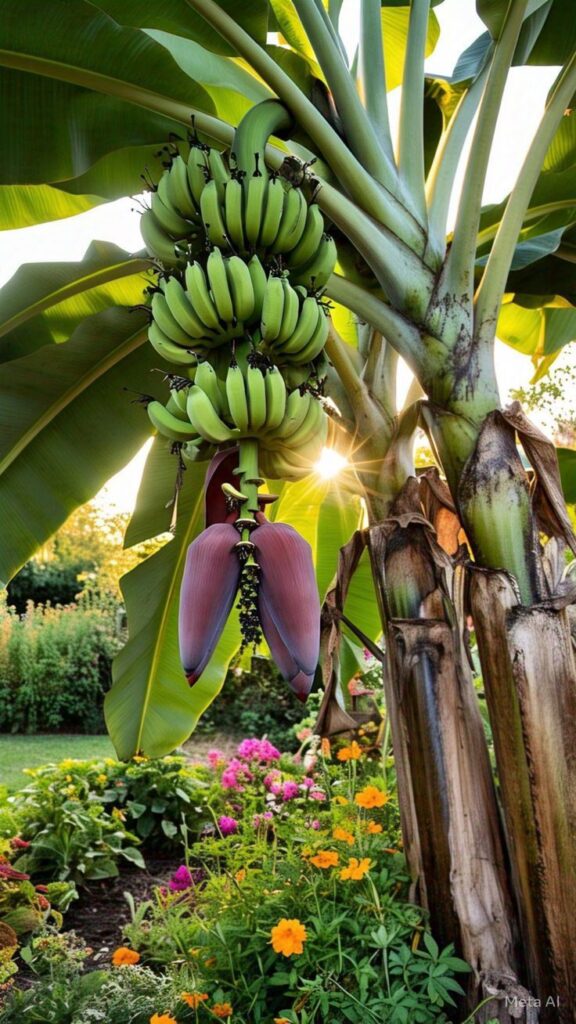
🌿 Introduction: The Magic of the Banana Tree
There are few plants on Earth as generous as the banana tree. Every part of it — from its fruit and flower to its trunk and leaves — serves a purpose. In tropical regions, the banana tree isn’t just a plant; it’s a way of life. You’ll see its shade in villages, its leaves wrapping meals, and its fruit nourishing families across generations.
But beyond being the source of the beloved banana fruit, this extraordinary tree holds a fascinating blend of nutritional, medicinal, ecological, and cultural importance. So, let’s dive deep into the world of the banana tree and explore why it continues to be one of nature’s most versatile gifts to humankind.
🍌 Understanding the Banana Tree: Not Really a Tree!
Despite being called a “tree,” the banana plant isn’t technically one. It’s actually the world’s largest herbaceous flowering plant. Its “trunk” — known as a pseudostem — is made up of tightly packed leaf bases. This pseudostem supports a large canopy of leaves, which can reach impressive heights of 10 to 30 feet depending on the variety.
The banana tree belongs to the genus Musa, native to tropical Southeast Asia, but today, it thrives in over 150 countries, particularly in India, Indonesia, the Philippines, and parts of Africa and Latin America.
Here’s a fun fact: the average banana plant takes 9 to 12 months to grow from a sucker to a fruit-bearing stage. Once it bears fruit, that pseudostem dies — but don’t worry! New suckers emerge from the base to continue the life cycle, making it a symbol of renewal and continuity.
🌱 Anatomy of the Banana Tree: Every Part with a Purpose
The banana tree is a living example of how nature wastes nothing. Let’s look at its anatomy and how each part is useful:
1. Roots:
Banana roots form a fibrous mat that stabilizes soil, preventing erosion. They also help retain moisture, making the banana tree a natural soil conservator.
2. Pseudostem:
Though soft and herbaceous, the pseudostem is sturdy enough to support a heavy bunch of bananas. After harvest, it can be chopped and used as organic compost or even as cattle feed due to its high moisture and fiber content.
3. Leaves:
Banana leaves are large, waterproof, and flexible. In India and Southeast Asia, they are used as natural plates for serving food. Their antimicrobial surface adds subtle aroma to hot meals. Beyond culinary use, they’re also used in religious ceremonies, as roofing material, and as biodegradable packaging.
4. Banana Flower (Banana Blossom):
This deep purple, teardrop-shaped flower is a nutritional powerhouse rich in fiber, iron, and antioxidants. It’s used in traditional dishes, particularly in South India and Thailand. Medicinally, it’s known to regulate menstruation, improve lactation, and reduce anxiety.
5. Banana Fruit:
The heart of the banana tree’s charm — the fruit — is naturally sweet, easily digestible, and rich in potassium, magnesium, and vitamin B6. It’s a go-to snack for energy and hydration.
6. Banana Peel:
Before you throw it away, know this: banana peels contain antioxidants and minerals beneficial for skin and hair. They can be used in composting, cleaning silver, whitening teeth, or even soothing insect bites.
🍃 The Nutritional Brilliance of Bananas
Bananas are one of the most popular fruits worldwide — and for good reason. One medium banana (around 120 grams) provides:
- Calories: ~105
- Potassium: 422 mg
- Vitamin C: 10 mg
- Vitamin B6: 0.4 mg
- Fiber: 3 grams
This makes them an excellent choice for boosting energy, supporting heart health, and maintaining muscle function. The banana tree’s fruit is nature’s perfect snack — portable, nutritious, and comforting.
Athletes adore it for its natural sugars (glucose, fructose, sucrose) that provide instant yet sustained energy. Meanwhile, those dealing with digestive issues rely on bananas’ soluble fiber (pectin) to soothe the stomach and aid bowel regularity.
🌺 Cultural and Symbolic Significance of the Banana Tree
From temples in India to offerings in Bali, the banana tree carries deep spiritual symbolism.
In Hinduism:
The banana tree is sacred — representing prosperity, fertility, and generosity. During weddings, banana trunks are tied at the entrance of homes to invite divine blessings. The fruit is also offered in rituals to deities like Lord Vishnu and Goddess Lakshmi.
In Buddhism:
It symbolizes the transience of life, as the banana plant bears fruit once before dying, reminding us of impermanence.
In Tropical Cultures:
In the Philippines and Indonesia, banana leaves serve as a symbol of hospitality. In African traditions, the tree often represents fertility and endurance, reflecting the resilience of nature.
💚 The Banana Tree’s Role in Sustainability
Few plants are as sustainable as the banana tree. It thrives in poor soil, grows quickly, and leaves minimal waste. Farmers often call it the “zero-waste crop” because every part of it is usable.
- Compost & Organic Fertilizer: The discarded pseudostem and peels enrich soil naturally.
- Fiber & Crafts: Banana fiber extracted from the pseudostem is used to make eco-friendly textiles, ropes, and even paper.
- Biofuel: Scientists are experimenting with banana waste to produce renewable energy sources.
- Animal Feed: Dried leaves and chopped stems make nutritious livestock feed.
Thus, the banana tree contributes significantly to sustainable agriculture and rural economies — especially in developing nations.
🌼 Medicinal and Health Benefits of the Banana Tree
The banana tree isn’t just good for the planet; it’s a natural healer for us too. Every part of it has medicinal value:
1. Banana Fruit:
Rich in potassium, it maintains heart rhythm and muscle function. Its vitamin B6 supports brain health and mood regulation. It’s also excellent for reducing acidity, ulcers, and fatigue.
2. Banana Flower:
Traditionally used to treat menstrual cramps, diabetes, and infections. It contains ethanol extracts that act as natural antidepressants and reduce oxidative stress.
3. Banana Leaves:
Used externally to heal burns, wounds, and insect bites. Their cooling properties are well-known in Ayurvedic medicine.
4. Banana Stem Juice:
This underrated detox drink helps cleanse the urinary tract, prevents kidney stones, and reduces cholesterol levels. It’s especially popular in South Indian households as a natural digestive tonic.
5. Banana Peel:
Contains antioxidants like lutein and catechins. When rubbed on the skin, it can help reduce acne, scars, and dryness.
From Ayurveda to modern herbal medicine, the banana tree is a pharmacy in itself.
🌳 Environmental Benefits of the Banana Tree
Besides feeding and healing humans, the banana tree nurtures the Earth.
- Soil Conservation: Its roots prevent soil erosion in tropical regions prone to heavy rainfall.
- Air Purification: The broad leaves absorb carbon dioxide efficiently, making it an excellent natural air purifier.
- Habitat for Wildlife: Birds, insects, and small animals often rely on banana groves for food and shelter.
- Reforestation: Due to its rapid growth, banana cultivation aids in reforestation and restoration of degraded lands.
🍽️ Culinary Uses Around the World
The banana tree graces cuisines across continents.
- Banana Fruits: Eaten raw, cooked, or dried. In Caribbean and African cuisine, plantains (a starchier banana variety) are fried, boiled, or mashed.
- Banana Flowers: Used in curries, soups, and salads. In Thai cuisine, banana blossoms are served with coconut milk-based curries.
- Banana Leaves: Used to steam fish, rice, and desserts. In South India, “banana leaf meals” or sadhya are a traditional feast experience.
- Banana Stem: Chopped into salads or stews in Sri Lanka and India for its crunchy texture and detox benefits.
Each dish infused with parts of the banana tree carries both taste and tradition.
🌞 Banana Tree in Modern Lifestyle and Industry
In today’s eco-conscious world, industries are rediscovering the banana tree as a sustainable material source.
- Fashion: Banana fiber, also known as Musa fiber, is an eco-alternative to silk. Designers now use it in handbags, clothing, and mats.
- Paper Industry: Banana pulp is being used to make biodegradable paper and packaging materials.
- Beauty Products: Banana extracts are added to hair masks, moisturizers, and serums for their hydrating and antioxidant effects.
- Furniture: Banana fiber boards are gaining traction as an alternative to wood, helping reduce deforestation.
The humble banana tree is fast becoming a green industry hero — merging traditional wisdom with modern innovation.
🌻 Fun Facts About the Banana Tree
- Bananas are berries, while the “banana tree” is technically an herb.
- The world eats over 100 billion bananas every year.
- India is the largest producer of bananas globally.
- The banana genome is 50% similar to humans!
- Bananas naturally contain a small amount of radioactive potassium (K-40) — totally harmless but fascinating.
- The “Cavendish banana” is the most common variety, but there are over 1,000 banana types worldwide.
🌸 Growing a Banana Tree at Home
If you live in a warm climate or can provide indoor humidity, you can grow your own banana tree!
Steps:
- Choose the Right Variety: Dwarf Cavendish or Rajapuri are great for home gardeners.
- Soil: Use well-drained, rich soil with compost.
- Sunlight: Needs full sun — at least 6-8 hours daily.

- Watering: Keep the soil moist but not soggy.
- Fertilizer: Feed with organic compost or potassium-rich fertilizers.
- Care: Remove dried leaves regularly and protect from strong winds.
With a bit of care, your banana plant can bear fruit within 10-12 months, giving you your own tropical harvest right at home!
💬 Conclusion: The Tree That Gives Without Asking
From its root to its fruit, the banana tree embodies generosity. It feeds, heals, shelters, and sustains — a silent guardian of tropical life. Whether you enjoy a sweet banana smoothie, use its leaf for a festive meal, or discover its fiber in a sustainable fabric, you’re witnessing the many ways this plant connects humanity to nature’s abundance.
As Riya’s Blogs often says — the beauty of nature lies in its quiet persistence. And few things represent that truth better than the humble yet extraordinary banana tree. 🌿🍌
Want to read a bit more? Find some more of my writings here-
The City of Second Chances: An Emotional Short Story
Orthodox Christmas Wishes — January 7: A Celebration of Faith, Light, and Togetherness
Book Review: Restore Me by Tahereh Mafi
I hope you liked the content.
To share your views, you can simply send me an email.
Thank you for being keen readers to a small-time writer.