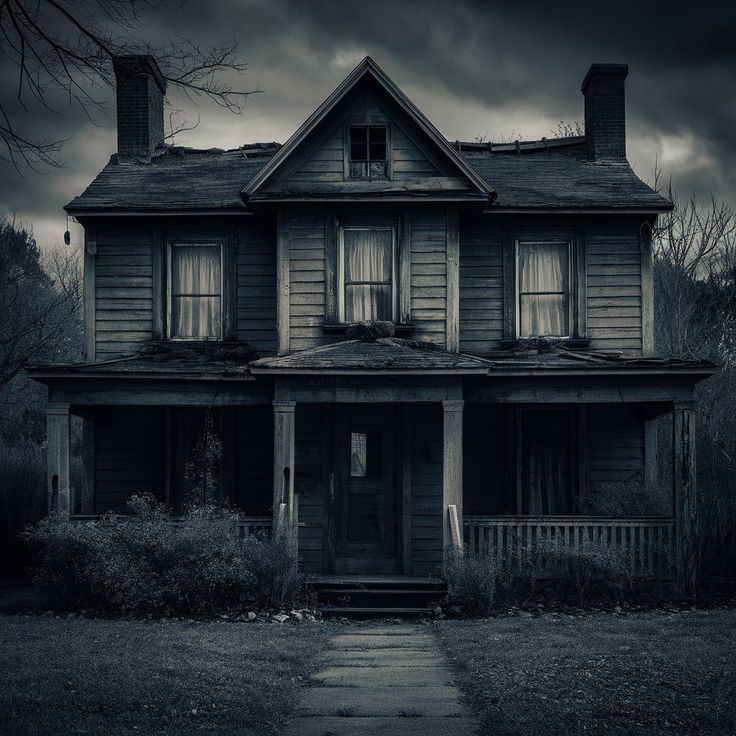
The house had always been kind to you. It creaked, but softly—like old bones stretching after a long sleep. It breathed through the chimney, sighed through the windows, and murmured in the floorboards whenever you walked across them barefoot at night. It wasn’t just a home. It was a memory.
You’d lived there for years, tucked at the end of a winding road that didn’t exist on most maps. The trees guarded it like silent witnesses, their branches folding in prayer every time the wind rose. Inside, the air always smelled faintly of rain and rosemary. You’d tell people the scent came from the garden, but deep down, you suspected the house carried its own perfume—something it remembered from before you.
And that was the strange thing about the house: it remembered.
Every night, it forgot one thing.
At first, you thought it was you. You’d misplaced a photograph of your mother one morning, and blamed yourself for being careless. Then, a week later, the clock in the hallway stopped ticking, its hands frozen at 3:17 as if it had never learned to move. You tried to fix it, but the gear inside was gone. Not broken. Gone.
Soon, it became a pattern. One night, the house would forget the color of the curtains. Another, it would forget the creak of the stair on the third step. Once, it forgot how sunlight used to fall across the kitchen tiles, leaving them cold even when the morning came bright and full.
You tried to tell your friends, but they laughed.
“Houses don’t forget,” they said.
But they hadn’t lived inside one that did.
So, you began to take notes. Scribbled in a worn leather journal with a broken clasp, you listed each loss:
Day 12 – The smell of bread baking vanished.
Day 19 – The sound of the backdoor hinge gone silent.
Day 31 – Portrait of grandfather missing from the hallway wall.
Day 45 – Bedroom mirror no longer reflects the left corner of the room.
It was almost poetic at first. The house was erasing itself like a tired memory, one piece at a time. You’d walk from room to room, whispering reminders to the walls, afraid that silence might swallow what little was left.
“Remember the laughter,” you’d tell the hallway.
“Remember the winter fire,” you’d plead to the living room.
“Remember me,” you whispered to your bedroom each night before sleeping.
For a while, it worked.
The house listened. It held you close, wrapped you in warmth, hummed when the rain fell hard on its roof. You felt like the last candle in an old church, burning small but steady.
Then, one morning, you woke up—and the house had forgotten you.
You knew it instantly. The air no longer felt familiar. The door you’d closed before bed stood wide open, swinging gently as though curious who’d stepped inside. The floorboards were mute beneath your feet. The fireplace was dark, even though you remembered lighting it. The house looked the same, but it didn’t know you.
When you touched the banister, it didn’t shiver the way it used to. The kitchen window, once eager to greet the dawn, wouldn’t open. Even the old clock, which had been silent for months, started ticking again—but not in rhythm. It ticked like a heartbeat that wasn’t yours.
You walked through the rooms like a stranger. Your notes were still there, your handwriting curling across the pages—but your name on the cover was blurred, the ink spreading like a tear stain. You tried to call out, your voice echoing hollow and small.
No one answered.
You made tea, though you couldn’t taste it. You sat in the living room, staring at the place where your mother’s portrait once hung. The house hummed quietly to itself, as if remembering something else—someone else.
That night, you slept poorly. You dreamed of walls shifting, of whispers behind the wallpaper. You saw a child standing in the hallway, holding a candle that didn’t cast light. You heard your own voice saying, “Don’t forget me.”
When you woke, the floor was covered in dust that hadn’t been there before. The shape of your footprints led away from your bed, but they weren’t yours.
Over the next few days, the house grew more forgetful.
It forgot the smell of rain. The soft blue of the guest room. The way sunlight painted the edges of the mirror. You’d leave something on the table—your mug, a pen, a piece of paper—and by the next morning, it would be gone. Sometimes it would return, slightly altered: the mug colder, the pen a different color, the paper blank.
You started locking doors, but locks didn’t matter to a house that forgot what doors were for.
Then, one night, you heard footsteps upstairs. Slow, hesitant, careful. You froze. You hadn’t been upstairs in weeks; the staircase had started to feel longer each time you climbed it. The air thickened as you listened—one step creak, then another, and another.
Finally, you whispered, “Who’s there?”
No answer. Only the faint sound of something shifting—a chair, maybe, or a memory trying to move.
You lit a candle and climbed the stairs. Each flame flicker felt like a breath being held. When you reached the landing, the hallway stretched farther than it should have. The doors were unfamiliar, too many of them, painted in shades you didn’t own.
You tried one. Inside was your old bedroom, but not quite. The wallpaper had changed, patterned with faded roses that smelled like dust. The bed was made, but with sheets you didn’t recognize. On the dresser sat a photo—an old one—of a woman smiling, her hand on a child’s shoulder. The woman looked like you, but her eyes were not yours.
You turned the photo over. On the back, in faded ink, were the words: “Before she forgot.”
The candle flickered violently, and for a second, you saw something move in the mirror. A blur. A shadow that looked too much like you standing behind yourself.
Then the light went out.
After that night, time became uncertain. The days bled into each other. You’d wake to find furniture rearranged, rooms expanded or shrunk, stairs leading to places that didn’t exist before. Once, you found a door behind the bookshelf—a door you’d never seen.
You opened it, and there was the sound of waves. Not crashing or roaring, but soft and constant, as if the ocean had been trapped beneath the floorboards. The air smelled of salt. You stepped closer, but the door closed on its own, sealing the sound away.
You started to think the house wasn’t forgetting out of weakness. It was choosing to forget.
Each memory it lost was replaced by something else—something older. Shadows lingered longer. The mirrors no longer reflected light properly. You swore the paintings blinked when you passed.
And sometimes, at night, you could hear voices speaking from inside the walls. Not whispers, but full sentences, too muffled to understand. Once, you thought you heard your own name. Once, you thought you heard yourself answer.
You tried to leave.
You packed your bags, took the keys, and opened the front door. But beyond it was not the road. It was another hallway—identical to the one you’d just left. You shut the door, your heartbeat quickening, and opened it again. Same result.
The house had forgotten the world outside.
You laughed then, a sound sharp and bitter. “You can’t even remember the way out,” you told it.
The chandelier above you trembled, shedding a single crystal tear that hit the floor and shattered like glass rain.
Days—or maybe weeks—passed. You stopped marking them. You stopped sleeping. The house hummed constantly now, like something alive and restless. You wandered through it, whispering to rooms that didn’t stay the same from one hour to the next.
Sometimes you’d find objects that weren’t yours—a comb, a child’s shoe, a cracked teacup with a name etched beneath it: Elara. You didn’t know anyone named Elara. You thought about writing it in your notebook, but the last few pages were missing. Torn clean out.
The air began to thicken with dust, or maybe memories. It was hard to tell the difference anymore. The walls breathed slower now, as though the house was tired of itself.
You found the old clock again one morning, the one that had stopped at 3:17. Now it ticked backwards.
When you tried to turn away, you heard a voice from behind it.
Soft. Familiar.
“I remember you.”
Your breath caught. “Who are you?”
The voice hesitated, then said, “I’m what’s left.”
The clock hands spun wildly, and the room filled with a low hum that sounded almost like grief.
That night, the house dreamed.
You could feel it. The walls quivered, the floors sighed, and the windows blurred with condensation even though it wasn’t raining. In your sleep, you saw flashes: people walking through the halls wearing clothes from different centuries, their faces blurred, their footsteps leaving no sound.
You woke up gasping, and for the first time, the mirror didn’t show your reflection.
Instead, it showed the house—empty, lit by candlelight, beautiful and ruined.
Then you saw yourself standing in the doorway behind the mirror version of you. You were older there. Tired. But smiling. You reached toward the glass, your fingers trembling, and whispered, “Remember.”
The reflection mouthed the same word, and for a heartbeat, you both existed at once. Then, the mirror cracked.
You fell backward. The sound was like thunder and bone. When you looked again, the crack ran through your reflection’s face, dividing it cleanly in half.
That’s when you realized: the house hadn’t forgotten you by accident. It was protecting itself.
Each memory it erased was a wound it refused to reopen. You were just another thing too painful to keep.
You wanted to hate it, but couldn’t. You’d done the same—locked away memories that hurt too much to name. Maybe forgetting was its way of surviving.
You stopped fighting it after that.
You began to write again, not in your old journal, but directly on the walls—short notes, reminders:
“You lived here once.”
“You were loved.”
“The smell of bread. The sound of rain.”
Some mornings, the words stayed. Other times, the walls would smooth themselves clean by dawn.
You didn’t mind.
The house was quieter now, almost gentle. It forgot slower, as if savoring its last thoughts. You spent your days tracing its patterns, learning which walls remembered the longest, which windows still knew how to open.
And then, one evening, you felt it. A pulse beneath your hand on the wall—steady, faint, alive. You whispered, “You remember me, don’t you?”
For the first time in weeks, the house answered.
The chandelier above flickered once. The air warmed. A faint hum filled the silence.
It wasn’t language, but it was recognition.
And for a moment, you and the house remembered each other again.
You smiled through tears you didn’t feel fall. “It’s okay,” you whispered. “You can forget me. But don’t forget to dream.”
That night, as you drifted to sleep, you imagined the house breathing deep, exhaling centuries of memories—your laughter, your footsteps, your voice—all scattering like dust in the dawn light.
By morning, the bed was empty. The journal was gone. The door stood open.
The house was still. Not calm—just still. Like it was holding its breath.
And somewhere in its walls, faint and fading, a single echo lingered:
“Remember.”

Want to read a bit more? Find some more of my writings here-
Australia Day Messages — Jan 26 (Australia)
Book Review: Twisted Love by Ana Huang
Horror Books Based on Real Events: When Reality Becomes the Scariest Story of All
I hope you liked the content.
To share your views, you can simply send me an email.
Thank you for being keen readers to a small-time writer.