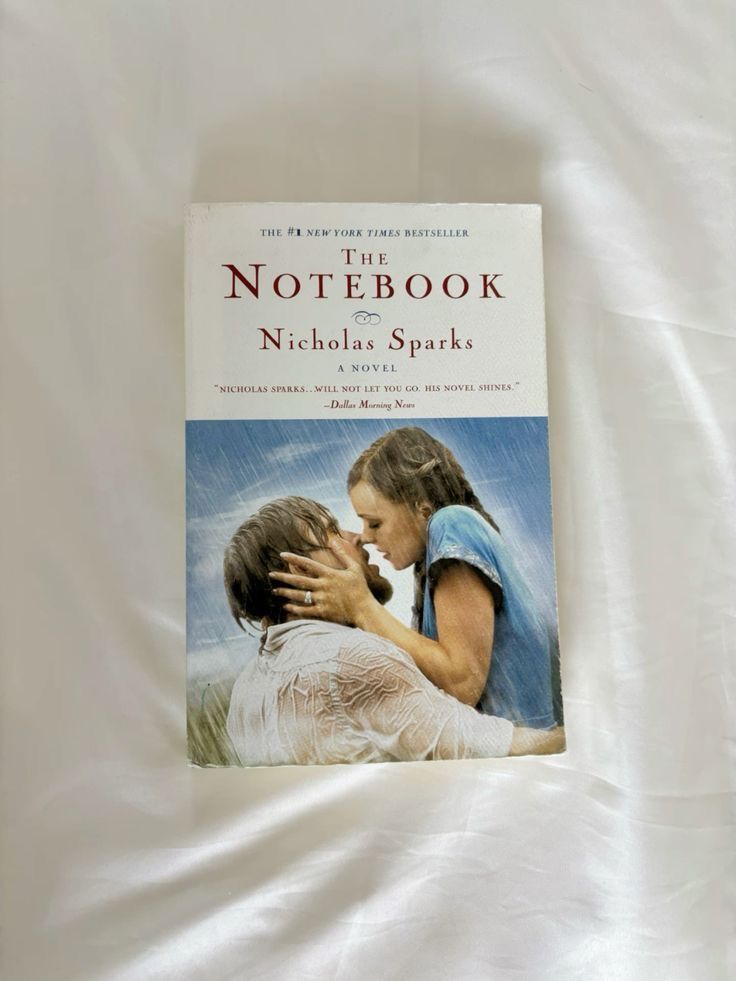
If you’ve ever wondered why The Notebook continues to hold a special place in the hearts of millions — decades after its release — you’re not alone. There’s something about the story that echoes across time, reminding us of love’s endurance, heartbreak, hope, and humanity. In this article on Riya’s Blogs, we take a long, deep, and thoughtful look at the notebook summary — not just the plot, but the emotions, conflicts, memories, and themes that make it unforgettable.
Whether you’re revisiting the novel or discovering it fresh, I hope this journey lets you feel the story as much as you read it.
Setting the Stage — Origins of the Story
The Notebook was first published in 1996 and marked Nicholas Sparks’s debut in published novels. The novel blends simple southern charm with deep emotional undercurrents: love, memory, loss — all wrapped in evocative prose that speaks directly to the heart.
Sparks has said the inspiration behind the story came from the real-life love story of his wife’s grandparents, a couple who stayed married for over sixty years. In The Notebook, he tried to capture the purity, pain, longing, and enduring devotion that such a relationship embodies.
Thus begins the tale of two souls — separated by circumstance, time, and social divide — and yet, bound by an unbreakable connection. The following is the notebook summary in rich detail, with emotional contours intact.
The Framing Story — Old Age, Memory, and a Notebook
The novel begins in present day (or near‑present): an elderly man, named Noah Calhoun, resides in a nursing home in North Carolina. This man, frail and aged, carries with him an old, worn notebook. Every day, he walks down the cold, lonely corridors of the home to a certain room, where a woman — his wife — lives. She suffers from memory loss. She barely recognizes him.
And yet, each day, he opens that notebook and begins to read to her — the story of their life together.
The woman listening is revealed to be Allie Hamilton. Through the stories in that notebook, Noah attempts to reawaken memories in her mind — of love, youth, passion, loss, reunion. This frame narrative is like a fragile lifeline: love offered not just as memory — but as medicine, as hope, as an anchor for a soul slipping into forgetfulness.
This structure — the old telling the past to heal the present — is part of what gives the notebook summary its emotional potency. It reminds us that love isn’t only about beginnings; it’s also about holding on, caring, remembering, and fighting, even when time is unkind.
Flashback to First Love — Noah and Allie’s Summer Romance
The main part of the story takes us back to 1932 (or thereabouts, depending on the adaptation), to a small Southern town called New Bern, North Carolina.
Noah is a simple, kind-hearted young man — working with his hands, raised with modest means. One summer, the Hamilton family comes for a visit. Among them is Allie, a spirited and beautiful young woman from a wealthy, well-to-do family. They come from different worlds — not just in social status, but in upbringing, opportunity, and expectation.
Yet, that summer, amid the warmth of sunshine and the innocence of youth, Noah and Allie meet. Their connection is instant. Their attraction, magnetic.
What starts as timid glances and shy smiles turns into a passionate summer romance — full of walks, heartfelt conversations, the excitement of first love, dreams, stolen kisses, and whispered promises. It’s the kind of love that seems endless when you’re young; that feels like it can conquer anything.
In that time, under the stars and by the water, they dream of a life together — simple, honest, full of love — oblivious to the divides that separate them.
For both Noah and Allie, that summer becomes their benchmark: the moment they define love, and the moment they measure everything else against.
The Divide — Reality, Social Barriers, and Forced Separation
But as summer ends, reality sets in. Allie’s world awaits — expectations, social position, the pressure of family, parental authority. Her parents view Noah as unworthy: a poor boy, without future, without stability. They see the summer romance as nothing more than a fleeting fancy — something to be outgrown when reality returns.
Under familial pressure, and societal expectation, Allie’s mother forbids her from seeing Noah again. She believes their world is different, incompatible.
Faced with a choice — love with uncertainty, or duty with comfort — Allie chooses to go away. She moves on. She becomes engaged to another man (a respectable suitor). She tries to build a life according to the expectations laid for her.
Noah, meanwhile, trying to keep his promise to himself and to his heart, continues to wait, hoping — maybe naively — that love will survive. But silence, time, and distance stretch between them. Years pass. Letters are hidden, hopes fade.
This separation is not just physical; it’s emotional, societal, and spiritual. It shows the cruel reality that sometimes, love alone isn’t enough to fight the weight of convention, fear, and duty.
But as the notebook summary tells us — sometimes love doesn’t die quietly.
Reunion — Eight Years Later, A Photograph, A House, A Decision
Years pass. Life moves on. Allie becomes engaged, preparing for a life aligned with societal expectations. She changes; she tries to forget.
Noah, on the other hand, returns to his old life — but with one mission: to restore a dilapidated plantation house he once promised to rebuild. The house, with its grandeur and decay, becomes a metaphor: a love and dream abandoned but not forgotten — waiting for restoration.
When the restored house is featured in the newspaper, Allie sees it. Something inside her stirs. — a memory, a longing, a voice she thought she had silenced.
She visits the house. She sees Noah. And in that moment, the years melt away. The difference between her world and his world seems trivial. Because love, real love, has a way of collapsing time.
They talk, laugh, remember — and for a moment, the world outside doesn’t exist. The summer returns. The feelings return. The connection — alive, raw, true — sparks again.
Noah, still in love, still hopeful, tries to remind Allie of their past, of what they once had. Allie, torn, realizes the love she thought she buried never died. It waited. Through loneliness, through comfort, through all the pragmatic decisions she made.
They spend a few days together — full of reminiscence, passion, rediscovery. But the past, and the present responsibilities, still hold weight. Allie still has a life built on compromise. Noah still has the hope of being the only constant she ever needed.
They must choose — between a life of expected stability, or a rekindled love that asks everything.
The Heartfelt Choice — Passion Over Practicality
In those days of reunion and rediscovery, Allie comes face to face with the real choice: what does she want her life to mean? What does she want it to be built on?
Is it security and societal approval? Or is it love — unconditional, imperfect, enduring?
She remembers — the thrill of young love, the honesty of Noah’s heart, the dreams they once shared. She feels the yearning for something genuine that doesn’t need justification or planning.
Allie chooses love.
She chooses Noah.
It’s a choice not of convenience but of conviction. Not of ease but of honesty. The decision is painful, difficult, because giving up comfort, reputation, expectations — it’s never easy. But love, when real, asks for that risk.
This resolution becomes the emotional core of the notebook summary — a testament to the power of love when faced with time, societal pressure, expectation.
A Life Together — From Youth to Old Age, Joys and Sorrows
After choosing each other, Noah and Allie build a life together. They marry. They live, love, build memories, share joys, face sorrow, raise children, grow old side by side.
But time doesn’t stop. Love doesn’t guarantee ease. Life brings change. Happiness and heartache. Storms and calm nights.
At some point, Allie falls ill with memory loss (in some versions, dementia or Alzheimer’s disease). The woman who once loved with passion, who remembered every heartbeat and whispered promise, now struggles to remember even the simplest details — faces, names, moments.
For readers, this is heartbreaking. For Noah, it’s a test of devotion.
He chooses to stay. Every day. With love. With patience. With the burden of memory.
He brings out the old notebook — the one filled with their story. He reads to her. He hopes. He waits. He loves.
Even when she doesn’t recognize him. Even when she asks, “Who are you?” — he holds her hand, opens the notebook, and tells the story of their life together.
Because sometimes, love isn’t about fireworks or grand gestures. Sometimes, love is quiet, stubborn, faithful — a daily ritual, a promise kept, a presence felt even in absence.
That is the lasting message of the notebook summary: love endures not just in youth and passion, but in memory, in decay, in silent devotion.
Themes and Reflections — Why The Notebook Resonates, Even Now
Reading the notebook summary isn’t just about following a story. It’s about letting its themes sink in. Here are some of the most powerful ones:
1. Enduring Love Beyond Time and Circumstance
Noah and Allie’s love begins in innocence, blossoms in youth, is torn apart by social differences — yet when reunited, it finds its way back. Their love doesn’t die; it waits. That idea — that true love can survive separation, silence, years of waiting — is central to the novel’s power.
2. Memory as Identity and Connection
When Allie loses her memory, she loses a part of herself — not just facts, but identity, history, love, connection. The notebook becomes more than a book: it’s a lifeline. It’s a bridge to shared memory. It’s proof that a life lived together is worth remembering. That love is worth remembering.
3. The Conflict Between Social Expectation and Authentic Desire
Allie’s initial decision to obey family expectations rather than follow her heart reflects a universal conflict: what society expects of us vs. what our heart truly wants. The Notebook doesn’t romanticize naive love — it shows the cost of compromise, and the courage it takes to choose authenticity over convenience.
4. The Beauty and Pain of Second Chances
Their reunion and renewed love shows that sometimes life offers second chances — and taking them requires honesty, vulnerability, and trust. It isn’t easy, and the risk is real. But the reward — love reclaimed — can be worth it.
5. Aging, Illness, and the Test of Devotion
Love isn’t just for youth. It endures through growing old, through illness, through memory loss. The way Noah handles Allie’s condition — reading to her, loving her even when she doesn’t remember — is a powerful statement about commitment, empathy, and the promise of “till the end.”
6. The Power of Storytelling
The entire structure — an old man reading their life story from a notebook — shows how storytelling itself becomes an act of love and resistance. In that notebook live memories, feelings, truths. Without the narrative, memories fade. With it — love endures.
Why The Notebook Still Echoes — Decades Later
Why does the notebook summary still move people, even after 25+ years since publication?
- Because it wraps timeless emotions — love, loss, memory, hope — into a story that feels real and intimate.
- Because its characters are flawed, human. They fear, they compromise, they make mistakes, but they learn, grow, love.
- Because it doesn’t shy away from pain, sacrifice, heartbreak — yet believes in redemption, reunion, faith.
- Because many readers (and viewers, via film adaptations) have known love, separation, memory loss, longing — and this story echoes those experiences with gentle realism.
- Because at the end of the day, it offers hope: that love, when sincere, can survive.
A Few Reflections — Thoughts from Riya’s Blogs
Having revisited the notebook summary for this post, I realize something: we often think of love stories as fairy tales — perfect, effortless, eternal. But this novel teaches us otherwise. It shows that real love is messy. It demands patience. It requires sacrifice. It survives when we choose to believe even when faith is tested.
Noah and Allie’s love story reminds us that memories matter. Stories matter. And sometimes, love isn’t about grand declarations — it’s about showing up, day after day, even when the world—or memory—is against you.
If you’re in love, if you’ve lost love, if you’ve tried to forget, if you’ve waited — maybe this story will speak to you more deeply than you expect. That’s the magic of The Notebook.
Common Criticisms & Alternate Views — Because Love Stories Aren’t Perfect
Of course, no story — no matter how beloved — is free from criticism. Over the years, some readers and critics have argued that:
- The social divide between Noah and Allie — poor vs. rich — romanticizes unhealthy power dynamics.
- Allie’s decision (both to leave and to return) may reflect societal pressure more than a real voice of her own.
- The portrayal of illness and memory loss is emotionally powerful but may idealize devotion in a way that seems overly sentimental.
And yet, for many readers, the truth lies not in perfection, but in relatability. Because while life doesn’t always offer Hollywood endings, stories like The Notebook remind us of the possibility — and the human yearning — for love, redemption, memory, and second chances.
Perhaps the flaws make the story more human, more honest. And that’s a part of why the notebook summary still lives on, in hearts and conversations around the world.
Final Thoughts — What The Notebook Teaches Us About Love and Memory
If you ask me, The Notebook isn’t just a romance novel. It’s a meditation on love: its fragility, its strength, its vulnerability, its resilience. It’s about youth and age, memory and forgetting, longing and reunion.
It shows that love doesn’t always come at the right time — but sometimes the heart waits. It shows that social expectations can bend, but the soul remembers. It shows that memory is fragile — but love can anchor it.
Reading the notebook summary is like listening to an old man read a weathered notebook in a quiet nursing‑home room — simple, tender, frail — yet powerful, alive, hopeful. And when you close the book, you carry a little of that hope with you.
On Riya’s Blogs, I believe stories like these deserve to be told and re‑told — not only for their romance but for their humanity, their hope, and their reminder that love, in its truest form, can endure even when everything else fades.
I hope this article gives you that feeling.
Want to read a bit more? Find some more of my writings here-
The Kite Runner Summary — A Deep, Beautiful, and Heart-Stirring Exploration
Maine Coon Cats: Meet the Gentle Giants of the Feline World
Levi Bellfield: The British Predator Behind the Milly Dowler Murder
I hope you liked the content.
To share your views, you can simply send me an email.
Thank you for being keen readers to a small-time writer.