In the early hours of July 20, 2012, during a midnight premiere of The Dark Knight Rises in Aurora, Colorado, a quiet neuroscience graduate student named James Holmes stepped into a packed movie theater armed with an arsenal of weapons. Within minutes, 12 people were dead, 70 others injured, and an entire nation was left grappling with one of the deadliest mass shootings in modern American history.
Holmes would later become known as “The Aurora Theater Shooter,” a symbol of the intersection between mental illness, gun control, and the devastating consequences of calculated violence.
Early Life and Academic Brilliance
James Eagan Holmes was born on December 13, 1987, in San Diego, California. He was raised in a middle-class household by parents Robert and Arlene Holmes, both well-educated professionals. From an early age, James was described as a gifted, introverted, and analytical child. Teachers often remarked on his intelligence—his aptitude for science and math was extraordinary.
He graduated from Westview High School in 2006 near the top of his class, participating in the school’s academic and cross-country programs. Those who knew him described him as quiet and socially awkward, yet not outwardly troubled. Friends recalled he had few close connections and struggled to maintain eye contact—a trait often associated with introversion or social anxiety rather than violent tendencies.
Holmes went on to attend the University of California, Riverside, where he earned a bachelor’s degree in neuroscience in 2010, graduating with highest honors. Professors described him as “brilliant” and “meticulous,” though socially detached. He seemed destined for a promising career in medical or scientific research.
The Turn Toward Isolation and Decline
After graduation, Holmes was accepted into the prestigious University of Colorado Anschutz Medical Campus in Aurora for a Ph.D. in neuroscience. Initially, he performed well, but his demeanor soon began to change. By mid-2011, classmates and faculty noticed a decline in participation, motivation, and mood. Holmes began isolating himself further, spending long hours alone in his apartment and disengaging from lab work.
Emails later revealed he was battling suicidal ideation and violent fantasies. He began meeting with university psychiatrist Dr. Lynne Fenton, to whom he confessed thoughts of killing people but refused to specify details. Despite the warning signs, Holmes was not placed under involuntary psychiatric hold—a decision that would later be heavily scrutinized.
In June 2012, just a month before the massacre, Holmes formally withdrew from the Ph.D. program, citing personal reasons. Unknown to those around him, he was meticulously planning one of the most horrifying acts of public violence in modern U.S. history.
The Planning and Preparation
Investigations later uncovered that Holmes spent months preparing for the shooting. He began purchasing weapons and ammunition legally from local gun stores and online retailers:
- A Smith & Wesson M&P15 semi-automatic rifle
- A Remington 870 Express Tactical shotgun
- Two Glock 22 .40-caliber pistols
Between May and July 2012, he acquired over 6,000 rounds of ammunition, body armor, and tactical gear, all without raising red flags in the background-check systems.
He also ordered tear-gas canisters and set about booby-trapping his apartment with homemade explosives connected to trip wires, intended to detonate if anyone entered. His goal, investigators said, was to create a two-stage tragedy—first at his apartment, then at the movie theater, maximizing chaos and casualties.
Holmes recorded a video diary around this time, speaking in a detached, clinical tone about his plans, describing himself as “the agent of chaos.” Psychiatrists would later cite this as evidence of his psychotic delusions and detachment from reality.
The Aurora Theater Shooting: July 20, 2012
Setting the Stage
On July 19, 2012, Holmes mailed a package to his psychiatrist, containing a notebook filled with drawings and writings about killing—but it wouldn’t be discovered until after the shooting.
That night, at Century 16 Theater in Aurora, hundreds of fans gathered for the midnight premiere of The Dark Knight Rises. Holmes bought a ticket for Theater 9, entered around 11:30 p.m., and sat quietly in the front row.
The Attack
Around 12:30 a.m., about 20 minutes into the movie, Holmes exited through the emergency exit door near the screen—propping it open slightly. He went to his car, suited up in tactical armor, a gas mask, and helmet, and armed himself with his firearms.
Re-entering the theater through the same door, he threw two canisters of tear gas into the crowd. As smoke filled the air and panic erupted, Holmes began firing indiscriminately into the audience. Witnesses described a scene of chaos and confusion, some thinking it was part of the movie’s sound effects until the bullets began hitting people.
He shot 82 people in total, killing 12 and injuring 70. Victims ranged in age from 6 years old to 51. The gunfire lasted less than 10 minutes.
The Arrest
As police swarmed the theater complex, Holmes was found calmly standing beside his car in the parking lot.
He surrendered without resistance, telling officers, “I’m the shooter.” He appeared emotionless, dazed, and compliant. Officers described his demeanor as eerily calm—showing neither remorse nor panic.
When investigators searched his apartment later, they discovered dozens of homemade explosives, gasoline, and trip wires—confirming that a second, larger tragedy had been narrowly avoided.
The Investigation and Public Shock
The Aurora shooting became an instant flashpoint in American discourse about gun control, mental health, and public safety. Within hours, the scene outside the theater became a memorial site. Vigils, candlelight gatherings, and national mourning dominated headlines for weeks.
Law Enforcement Findings
Authorities determined that Holmes acted alone. His purchases were all legal; he had no prior criminal record. What shocked investigators was the level of planning and organization—spanning months and executed with clinical precision.
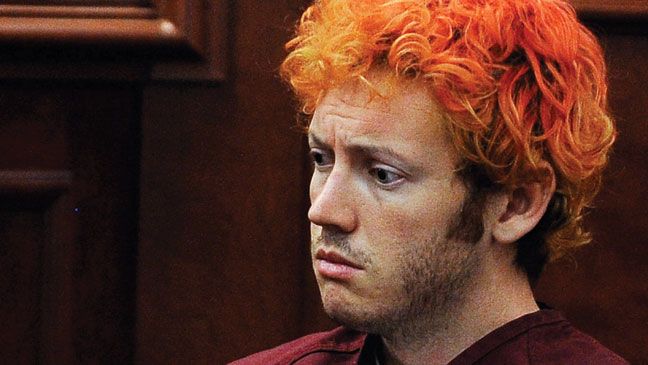
Recovered documents, notes, and online activity revealed a man who saw himself as an experiment in human violence. Holmes had written extensively about his internal “broken mind,” calling his alter ego “The Joker”—though this label, often sensationalized by media, was never verified as his personal identification. He reportedly dyed his hair orange before the shooting, leading to the widespread “Joker” association.
The Trial: People of the State of Colorado v. James Holmes
The trial of James Holmes would become one of the most closely watched and expensive criminal cases in Colorado history.
Pre-Trial and Defense
Holmes was charged with 166 counts, including:
- 24 counts of first-degree murder
- 140 counts of attempted murder
- Explosive possession and use charges
His defense team entered a plea of not guilty by reason of insanity. They argued that Holmes suffered from severe schizophrenia, had lost touch with reality, and was incapable of distinguishing right from wrong at the time of the shooting.
Prosecutors, however, maintained that the level of planning and deliberation—including buying tickets, setting traps, and wearing armor—proved premeditation and criminal responsibility.
Psychiatric Evaluations
Holmes underwent extensive psychiatric testing. The first state evaluation concluded that while he suffered from mental illness, he knew what he was doing was legally wrong.
A second evaluation found similar results: his acts were deliberate, not spontaneous.
This conflicting testimony became the crux of the trial—insanity vs. accountability.
Courtroom Drama and Testimony
The trial began in April 2015 and lasted over three months, featuring more than 300 witnesses and emotional testimony from survivors and victims’ families.
Prosecutors presented a meticulous timeline of Holmes’s planning, calling him “a man obsessed with the value of human life as a number.” They introduced evidence of his weapon purchases, diagrams of the theater, and the booby-trapped apartment.
Defense lawyers painted Holmes as deeply psychotic, describing how his delusions compelled him toward violence as part of a “meaningless moral experiment.” They showcased his journal entries, filled with scribbled graphs, self-diagnosed symptoms, and philosophical ramblings on human worth.
The Verdict and Sentencing
After lengthy deliberations, the jury rejected the insanity defense. On July 16, 2015, Holmes was found guilty on all 165 counts.
The sentencing phase then shifted focus to whether he would receive the death penalty or life imprisonment without parole.
Victims’ families packed the courtroom daily, recounting the lifelong trauma of losing loved ones. Some called for execution, others pleaded for life imprisonment, arguing that death would end his suffering too easily.
On August 7, 2015, after 12 hours of deliberation, the jury failed to reach a unanimous decision on the death penalty. Under Colorado law, that meant an automatic sentence of life in prison without the possibility of parole.
Holmes was later transferred to ADX Florence, a supermax prison in Colorado, housing some of the most dangerous criminals in the United States.
Psychological and Social Analysis
Mental Health
Holmes’s case reignited the national debate on mental illness and mass violence. Experts remain divided on whether his schizophrenia justified his actions or merely co-existed with his moral awareness.
Dr. William Reid, who examined Holmes for 22 hours, testified that the shooter “knew what he was doing, knew it was wrong, and acted anyway.” Holmes’s writings indicated self-awareness of his choices and an understanding of their consequences, even as he framed his motives through the lens of existential despair.
Criminological Profile
Criminologists classify Holmes as a pseudocommando—a mass shooter motivated by revenge, frustration, or delusional grandeur, who plans his assault in meticulous detail and expects to die or be captured.
His pattern fits other post-2000 mass shooters: high education, male, socially isolated, mentally unstable, yet rational enough to plan complex acts.
What set Holmes apart was his scientific detachment—approaching the killings like a psychological experiment rather than an act of rage.
Cultural Impact and Media Coverage
The Aurora shooting coincided with one of the most anticipated movie releases of the decade, which amplified global media attention.
The juxtaposition of cinematic fiction (The Dark Knight Rises) and real-world carnage created an eerie cultural resonance—art and horror colliding in reality.
News outlets across the world covered every phase—from the shooting and trial to survivor stories and gun-law debates. The case reignited questions such as:
- Should background checks include mental-health evaluations?
- Should large ammunition purchases be tracked?
- Can universities do more when students express violent ideation?
Holmes’s name became synonymous with the dark side of American gun culture, and his image—a pale, orange-haired figure in court—became a symbol of senseless violence.
Aftermath: Survivors, Policy, and Change
The Victims and Survivors
Twelve lives were lost that night:
- Jonathan Blunk (26)
- Alexander Boik (18)
- Jesse Childress (29)
- Gordon Cowden (51)
- Jessica Ghawi (24)
- John Larimer (27)
- Matt McQuinn (27)
- Micayla Medek (23)
- Veronica Moser-Sullivan (6)
- Alex Sullivan (27)
- Alexander Teves (24)
- Rebecca Wingo (32)
Over 70 more were wounded, some suffering permanent disabilities and emotional trauma.
In the years following, survivors formed advocacy groups promoting gun-violence prevention and mental-health awareness, such as the Brady Campaign and Survivors Empowered.
Policy and Legal Changes
The Aurora massacre, along with other mass shootings of the 2010s, helped catalyze renewed debate over assault weapon bans and ammunition regulations, though comprehensive reforms remained politically gridlocked.
The tragedy also changed public-venue security standards. Theaters, malls, and universities across the U.S. upgraded emergency exits, surveillance, and lockdown protocols.
Media Ethics and the Notoriety Question
A major question arising from Holmes’s case was how much media attention mass shooters should receive.
Many criminologists argue that excessive coverage gives perpetrators the fame they seek, indirectly inspiring future attackers. Holmes’s face, often splashed across headlines, became emblematic of this controversy.
After Aurora, several major media outlets pledged to focus on victims’ stories rather than the shooter’s persona—a shift seen in later coverage of tragedies like Parkland (2018) and El Paso (2019).
Life in Prison
James Holmes is currently serving his life sentence without parole in federal custody, under special administrative measures due to security concerns. He spends most of his time in isolation, with minimal contact and monitored correspondence.
Reports describe him as subdued, medicated, and compliant. In rare interviews, he has expressed remorse and confusion about his past actions but continues to live under psychiatric supervision. Victims’ families, however, remain skeptical of any expression of regret.
Legacy and Lessons
The Aurora theater shooting reshaped American conversations about:
- Gun control laws and universal background checks
- Mental health intervention systems at universities
- Public safety in large gatherings
- Media responsibility in covering mass violence
It also entered academic literature as a case study in forensic psychology and criminal profiling, demonstrating how intellect and delusion can coexist in catastrophic ways.
Holmes’s case, more than a decade later, stands as a grim reminder that the signs of violence—isolation, psychosis, detachment—often emerge long before tragedy strikes, but systems fail to connect the dots.
Conclusion
The story of James Holmes, the Aurora Theater Shooter, is one of haunting paradox: a gifted neuroscience student turned mass murderer; a young man once studying the human mind who chose to destroy it in others.
His calculated rampage blurred the lines between science, psychosis, and evil—forcing the world to confront uncomfortable truths about mental illness, personal accountability, and the fragility of public safety.
Over a decade later, the Aurora shooting remains a defining symbol of America’s struggle with mass violence—a tragedy that continues to echo in classrooms, courtrooms, and the collective conscience of a nation still searching for answers.
Want to read a bit more? Find some more of my writings here-
Maine Coon Cats: Meet the Gentle Giants of the Feline World
I hope you liked the content.
To share your views, you can simply send me an email.
Thank you for being keen readers to a small-time writer.