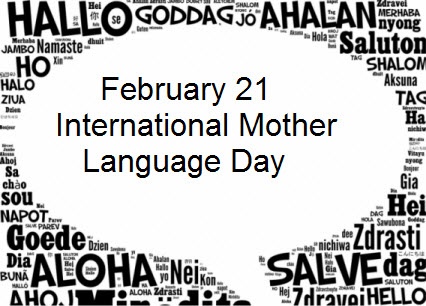
Every year on February 21, people around the world observe International Mother Language Day—often searched simply as Mother Language Day—to celebrate the language we first learn at home and the many languages that shape our communities. It’s a day that sounds warm and cultural (and it is), but it also carries a serious message: linguistic diversity is shrinking, and many communities are at risk of losing their voices—literally—through the decline of endangered languages.
If you’ve ever felt that a word in your mother tongue can express something English (or any “global” language) can’t quite capture, you already understand the heart of this day. Language isn’t just a tool for communication. It is cultural identity, family history, humor, lullabies, prayers, local knowledge, and the subtle ways people make meaning.
In this article from Riya’s Blogs, we’ll cover the essential facts—why Mother Language Day is celebrated, who started it, what the yearly theme means, how language preserves culture, and how we can protect languages—in a simple, engaging way, without making it feel like a textbook.
What is International Mother Language Day and why is it celebrated?
International Mother Language Day is observed on February 21 to promote:
- multilingualism
- respect for linguistic diversity
- awareness about language preservation
- education in the language children understand best (especially early learning)
At its core, it’s a reminder that languages deserve dignity. When a language is ignored, mocked, or pushed out of schools and public life, the people who speak it often feel that they are being pushed out too. So Mother Language Day is about more than language—it’s about belonging, fairness, and keeping cultures alive.
The historical reason behind February 21
This February 21 event is closely associated with the Language Movement in Bangladesh (then East Pakistan) in 1952. Students and activists protested for the recognition of Bengali (Bangla) as a state language. On February 21, several protestors were killed. That sacrifice became a powerful symbol of the idea that language rights are human rights.
The day is now recognized internationally, but its roots come from a real struggle where people risked—and lost—their lives to protect their mother tongue.
Who started Mother Language Day?
Mother Language Day was proclaimed by UNESCO (the United Nations Educational, Scientific and Cultural Organization) in 1999, and it has been observed globally since 2000.
In simple terms:
- The idea gained international momentum after advocacy connected to Bangladesh’s language movement.
- UNESCO formally recognized the observance, turning it into a global platform for language rights, cultural respect, and education.
This is why you’ll often see it described as a UNESCO event each year—because UNESCO plays a central role in organizing, promoting, and framing the day’s message worldwide.
What is the yearly theme?
A common question is: “What is the yearly theme?” Each year, UNESCO highlights a theme for International Mother Language Day. The theme usually connects language to a bigger global issue, such as:
- multilingual education
- inclusion and equality
- cultural heritage
- digital access and technology
- protection of endangered languages
- intergenerational learning (how languages pass from elders to children)
So rather than being a random slogan, the yearly theme is meant to focus global attention on one key area where language policies and community action can make a difference.
Important note (so you get accurate content): the theme changes every year, and UNESCO announces it officially for that year’s observance. If you’re publishing this article for a specific year (like 2026), the most correct approach is to use UNESCO’s official announcement for that year’s theme.
Even if you don’t include the exact theme, you can still explain the theme concept clearly: it’s UNESCO’s way of making Mother Language Day practical—not just celebratory—by directing attention toward real challenges and solutions.
How does language preserve culture?
This is one of the most important ideas behind Mother Language Day: language preserves culture not only through stories and songs, but through everyday life.
Here’s how it happens—simply and clearly:
1) Language carries “untranslatable” meanings
Many languages have words that don’t have perfect translations. These words often reflect what a culture values—community, respect, emotion, nature, spirituality, humor. When a language disappears, those unique ways of thinking can become harder to express and remember.
2) Oral traditions live inside language
Folktales, proverbs, riddles, and local legends are often passed down orally. When a language weakens, these traditions are at risk of being simplified, altered, or forgotten.
3) Identity begins at home
A mother tongue is often the first place we learn how to relate to elders, how to show respect, and how to express love. This is why language is so tied to cultural identity. For many people, speaking their mother language is not just communication—it’s connection.
4) Language holds local knowledge
Indigenous and local languages often contain detailed knowledge about the environment—plants, seasons, weather patterns, farming, healing practices, and regional ecosystems. When a language is lost, that knowledge can be lost with it.
5) Culture survives through continuity
If children stop learning a language, that language may not survive beyond one generation. This is where Mother Language Day becomes urgent: it encourages families and societies to keep language transmission alive, not just “admire” languages from a distance.
Linguistic diversity and endangered languages: what’s at stake?
The world is multilingual, but not all languages are equally protected. Some languages have governments, media industries, school systems, and technology behind them. Others survive mainly through family and community use—and that makes them vulnerable.
Why languages become endangered
Languages usually become endangered when:
- children stop learning them at home
- education happens only in a dominant language
- migration and urbanization separate families from language communities
- media and technology don’t support the language
- social pressure makes speakers feel ashamed or “less modern”
And this often happens quietly. A language doesn’t vanish overnight. It fades: fewer speakers, fewer children learning it, fewer books or songs created in it, and eventually it becomes a language only elders speak.
Why protecting endangered languages matters
When an endangered language disappears, the world loses:
- a unique worldview
- cultural memory and traditions
- literary and artistic expression
- historical records embedded in words and naming
- community identity and dignity
That’s why UNESCO and many global organizations connect Mother Language Day with language preservation and broader social goals like inclusion, education, and human rights.
Multilingualism: the practical power of speaking more than one language
Sometimes people treat multilingualism like a “bonus skill.” In reality, multilingualism is normal for much of the world—and it’s deeply practical.
Multilingual societies benefit when people can:
- learn in their mother tongue early (strong foundation)
- add regional/national languages for wider participation
- add global languages for opportunities and access
This layered approach supports both identity and mobility. It’s not “either/or.” It’s “both/and.”
Also, multilingualism can reduce inequality. If schooling happens only in a dominant language that children don’t speak at home, learning becomes harder, dropout rates can rise, and children may feel less confident. Many education experts support mother-tongue-based early learning as a path to stronger long-term outcomes.
How can we protect languages? (Real actions that actually help)
This is the question that matters most: How can we protect languages? Here are practical, realistic ways—at both personal and community levels.
1) Speak your mother tongue at home (even imperfectly)
The most powerful “language preservation policy” is family use. If you speak your language with parents, grandparents, or children, you keep it alive. Even if you mix languages, don’t stop using the mother tongue entirely.
2) Make it normal—not “special occasion”
Many people only use their mother language during festivals or family gatherings. Try bringing it into everyday life: cooking, chores, jokes, phone calls, bedtime stories.
3) Read, write, and create in the language
Languages stay strong when they produce content. Read poems, short stories, local newspapers. Write captions, diaries, short posts. Even small creative acts build a living language ecosystem.
4) Support mother-tongue education and bilingual resources
If you’re a parent, teacher, or community member, support:
- bilingual storybooks
- children’s learning materials in local languages
- libraries that include regional language content
- programs that teach reading/writing in the mother tongue
5) Document language—especially for endangered languages
For endangered languages, documentation can be urgent. Communities and linguists often work on:
- recordings of elders speaking
- dictionaries and word lists
- writing systems and spelling standards (if needed)
- oral history archives
Even a phone recording of grandparents telling stories—stored carefully with translations—can be meaningful.
6) Push for digital presence
Today, digital visibility matters. A language is more likely to survive if it exists online:
- keyboards and fonts
- social media content
- subtitles and audio content
- basic learning apps and online dictionaries
If a language can’t be typed easily, it’s harder for young people to use it daily.
7) Respect speakers—remove shame from the language
Protection isn’t only technical. It’s emotional and social. If people feel embarrassed to speak their mother tongue in public, the language weakens. Compliment people who speak their language proudly. Normalize accents. Celebrate regional vocabulary without mocking it.
Conclusion
International Mother Language Day, observed every year on February 21, is both a celebration and a call to action. It reminds us that linguistic diversity is a treasure, not a barrier—and that languages are the containers of cultural identity, memory, and community dignity. From its origins connected to the Bangladesh language movement to its global recognition as a UNESCO event, Mother Language Day asks a simple but powerful question: Will we let languages fade quietly, or will we help them live?
The good news is that language preservation doesn’t always require big institutions. It starts in everyday choices: speaking your mother tongue at home, teaching children, creating content, supporting multilingual education, and respecting languages in public life. And when communities, schools, and governments also step in—through education, documentation, and digital support—the chances of protecting endangered languages increase dramatically.
So on this February 21 event, celebrate your language with pride. Use it. Share it. Write in it. Teach it. Because when a language lives, a whole world lives with it.
Want to read a bit more? Find some more of my writings here-
Top 10 Tips for Building Long-Lasting Relationships
Top 10 Self-Care Activities to Try at Home
I hope you liked the content.
To share your views, you can simply send me an email.
Thank you for being keen readers to a small-time writer.