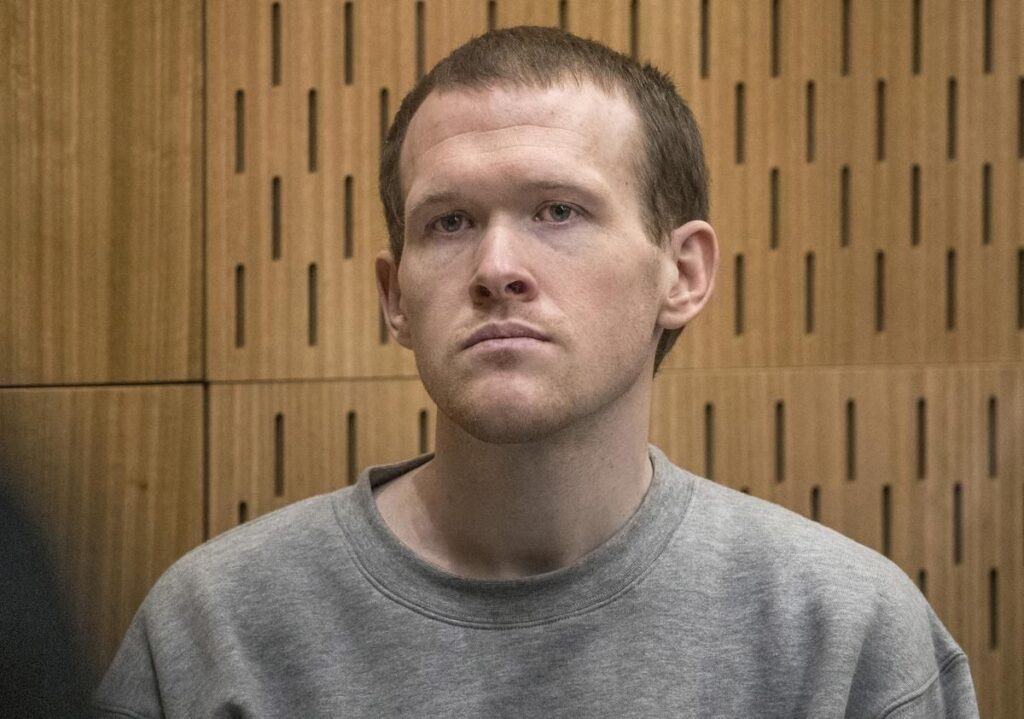
On March 15, 2019, New Zealand—a country often praised for its peace and tolerance—faced one of the most horrifying acts of terrorism in modern history. Brenton Harrison Tarrant, a 28-year-old Australian man, launched a meticulously planned attack on two mosques in Christchurch, killing 51 worshippers and injuring dozens more.
What set this tragedy apart from countless other acts of terror was not only its brutality but also its digital choreography: the attack was livestreamed on Facebook, the manifesto was distributed online moments before the shooting, and the footage spread faster than any platform could contain it.
The event permanently altered how the world understood the intersection of terrorism, technology, and ideology.
Early Life and Background
Brenton Harrison Tarrant was born on July 27, 1990, in the small rural town of Grafton, New South Wales, Australia. His childhood appeared unremarkable—he was raised in a working-class family by his father, Rodney Tarrant, and mother, Sharon Tarrant. Teachers and neighbors later described him as quiet, socially withdrawn, and somewhat of a loner.
His father died of cancer in 2010, an event that friends said deeply affected him. Tarrant was reportedly passionate about physical fitness; he worked as a personal trainer at a local gym. Co-workers recalled that he was polite but introverted, showing little interest in politics or religion at that time.
After inheriting a small sum of money following his father’s death, Tarrant left Australia to travel extensively through Asia, Europe, and the Middle East between 2011 and 2016. He visited dozens of countries—including Pakistan, Turkey, North Korea, and France—and spent considerable time in Eastern Europe. It was during these years of travel, largely spent online and in isolation, that he appears to have developed an extremist worldview.
Radicalization and Ideological Formation
Tarrant’s radicalization was self-directed and largely internet-based. Investigators found no evidence of direct links to terrorist organizations; instead, his ideology formed within the echo chambers of white-supremacist and far-right online communities—particularly forums on 8chan, 4chan, and Facebook groups celebrating ethno-nationalism and anti-immigration rhetoric.
He became obsessed with the idea of a “Great Replacement”—a conspiracy theory originating in France that falsely claims white populations are being systematically replaced by non-white immigrants and Muslims through immigration and higher birth rates. This concept, popularized by far-right ideologues such as Renaud Camus, became the central theme of his 74-page manifesto.
In his writings, Tarrant described himself as an “ethno-nationalist eco-fascist”, portraying the attack as a defensive act to preserve “European culture.” He openly admired other mass killers, including Anders Behring Breivik, the Norwegian terrorist responsible for the 2011 Utøya massacre, whom Tarrant called “a knight and inspiration.” Like Breivik, he saw himself as a soldier in a global war against multiculturalism.
Planning the Christchurch Attacks
Authorities later revealed that Tarrant’s preparation spanned over two years. He legally obtained a New Zealand firearms license in 2017, allowing him to purchase several semi-automatic weapons.
He modified these rifles for higher capacity and engraved them with names of past far-right attackers, historical battles against Muslims, and slogans such as “Vienna 1683”—referencing the Battle of Vienna, a symbolic Christian victory over Ottoman forces.
Tarrant settled in Dunedin, New Zealand, in 2017, living quietly in an apartment complex where neighbors found him unremarkable. He used his time to practice shooting, maintain his physical fitness, and plan the logistics of the attack.
Choice of Targets
He chose Christchurch because of its peaceful reputation and because the city’s Al Noor Mosque and Linwood Islamic Centre represented thriving multicultural communities. His goal was to maximize shock value—to prove that no place, however serene, was safe from extremist violence.
The Manifesto: “The Great Replacement”
Minutes before the attack, Tarrant emailed a 74-page manifesto to New Zealand’s Parliament, media outlets, and government officials. He also posted links on Twitter and 8chan, ensuring global dissemination.
In it, he:
- Declared that the attack was an act of retaliation for “invaders” in the West.
- Cited demographic fears and anti-immigrant rhetoric.
- Stated admiration for previous far-right killers.
- Claimed his act was intended to provoke societal division, fuel polarization, and inspire copycats.
The manifesto was deliberately styled as a media trap—a text designed for virality.
March 15, 2019: The Day of the Attack
At 1:40 p.m. NZDT, Brenton Tarrant began a Facebook livestream from a GoPro camera mounted on his helmet. The 17-minute broadcast mirrored the aesthetics of a first-person shooter video game—a calculated choice to appeal to online extremist subcultures.
Attack on Al Noor Mosque
Tarrant drove to the Al Noor Mosque on Deans Avenue in Christchurch, where hundreds had gathered for Friday prayers. Upon entering, he opened fire indiscriminately, moving room to room.
Within minutes, 42 people were killed—men, women, and children. Survivors later described the confusion as worshippers initially mistook the gunfire for construction noise before realizing the horror.
Journey to Linwood Islamic Centre
After fleeing Al Noor, Tarrant drove across town to the Linwood Islamic Centre, continuing his livestream.
He shot and killed seven more people before being confronted by an unarmed worshipper, Abdul Aziz, who heroically chased him away using a discarded credit-card machine as a weapon.
Tarrant was arrested roughly 21 minutes after the first emergency call, pulled over by police who rammed his car off the road. Inside the vehicle were multiple modified firearms and improvised explosives, indicating plans for further attacks.
Immediate Aftermath and National Shock
The attack devastated New Zealand, a country that had rarely experienced mass violence. Prime Minister Jacinda Ardern called it “one of New Zealand’s darkest days.” Within hours, she denounced it as a terrorist act motivated by hatred and ideology.
Vigils were held nationwide; thousands gathered outside mosques to offer solidarity.
The official death toll reached 51, with another 40 injured, including children as young as three. Victims came from diverse backgrounds—Somalia, Afghanistan, Pakistan, Indonesia, Bangladesh, and others—reflecting the global reach of the tragedy.
Digital Shockwave: Livestreaming Terror
The Christchurch shooting became the first major act of terrorism fully optimized for digital propagation.
Facebook’s platform hosted the livestream, which remained online for 17 minutes before being taken down—but by then, copies had proliferated across Twitter, YouTube, Reddit, and encrypted channels.
Within 24 hours:
- Over 1.5 million re-uploads were detected on Facebook alone.
- YouTube struggled to delete one video every second at the peak of spread.
- The footage was downloaded and mirrored across extremist and “dark-meme” forums, celebrated as propaganda.
This unprecedented online spread forced governments and tech companies to confront a new era of “viral terrorism”—where violence is designed not only to kill but to broadcast ideology in real time.
The Global Policy Fallout
The attack triggered sweeping changes in digital policy and counter-terrorism cooperation.
1. The “Christchurch Call”
In May 2019, Prime Minister Ardern and French President Emmanuel Macron convened global leaders and tech CEOs in Paris to launch the Christchurch Call to Eliminate Terrorist and Violent Extremist Content Online.
Major companies—Google, Facebook, Twitter, Microsoft, Amazon—signed the pledge to develop faster content-moderation systems, AI-based detection, and cross-platform response protocols.
2. Firearms Reform
New Zealand implemented radical gun-control legislation within a month. The government banned most semi-automatic rifles and high-capacity magazines, introduced a mandatory buy-back program, and tightened licensing laws.
The near-unanimous parliamentary vote (119–1) reflected nationwide unity against gun violence.
3. Counter-Extremism Efforts
Authorities established the Royal Commission of Inquiry to examine intelligence failures, online radicalization pathways, and immigration-related misinformation.
Its final report in 2020 recommended enhanced social-media monitoring, community-based early-warning systems, and improved coordination between police and intelligence agencies.
The Trial: A Historic Conviction
Brenton Tarrant’s legal proceedings were as extraordinary as the crime itself. Initially charged with one count of murder, the indictment later expanded to:
- 51 counts of murder
- 40 counts of attempted murder
- 1 count of engaging in a terrorist act—the first application of New Zealand’s anti-terrorism legislation under the 2002 Terrorism Suppression Act.
Court Proceedings
Tarrant appeared via video link from prison in the months following his arrest.
At first, he pleaded not guilty and dismissed his counsel, suggesting he intended to represent himself—a move that alarmed authorities, fearing he might use the courtroom as a propaganda stage.
However, in March 2020, he abruptly pleaded guilty to all charges, sparing victims’ families a prolonged trial.
During the August 2020 sentencing hearing, survivors and relatives delivered harrowing statements.
Prime Minister Ardern called their courage “the strength of a nation.”
Sentence
On August 27, 2020, Justice Cameron Mander sentenced Tarrant to life imprisonment without the possibility of parole—the first such sentence in New Zealand’s history.
The judge described his crimes as “brutal, calculated, and motivated by a deeply held racist ideology.”
Tarrant showed no emotion as the verdict was read.
He is currently held in Auckland Prison, under maximum security and near-total isolation.
Psychological Analysis
While Tarrant refused formal psychological evaluation during trial, experts have analyzed his writings and behavior.
Personality Traits
- Narcissistic grandiosity: Saw himself as a martyr defending Western civilization.
- Callous detachment: His livestream demonstrated emotional flatness even as he murdered.
- Strategic self-presentation: Adopted the aesthetics of online “edgelord” culture, mixing memes with manifesto.
Ideological Blend
Unlike purely religious or political terrorists, Tarrant embodied a hybrid ideology:
- White nationalism
- Eco-fascism (claiming environmental collapse justified ethnic segregation)
- Accelerationism—the belief that violent acts can hasten social collapse and racial conflict.
Psychologists describe this fusion as a “digitally incubated extremism”—where isolation, online validation, and ideological gamification converge.
Impact on Victims and Society
The survivors of Christchurch have become advocates for unity, resilience, and interfaith dialogue.
Victims’ Memorial
In 2021, the Christchurch Memorial Garden opened beside the Avon River, engraved with the names of all 51 victims.
Annual remembrance services draw leaders from around the world.
Community Healing
Muslim organizations and non-profits have collaborated to combat Islamophobia through education, art, and storytelling projects.
The attack, while rooted in hatred, galvanized a movement for tolerance and anti-racism across New Zealand.
Jacinda Ardern’s Leadership
Ardern’s compassionate response—visiting victims wearing a hijab, declaring “They are us”—became a global symbol of empathetic governance.
Her decisive legislative and diplomatic actions positioned New Zealand as a model for crisis leadership.
Digital and Sociopolitical Legacy
1. Redefining Online Responsibility
The Christchurch livestream became a case study for how extremist acts exploit platform architecture—algorithms that reward engagement regardless of morality.
Tech companies now employ “hash-sharing databases” to block re-uploads of violent videos in milliseconds, a direct outcome of this attack.
2. Global Copycat Threat
Within months, similar rhetoric and aesthetics appeared in attacks such as:
- Poway Synagogue shooting (2019)
- El Paso Walmart shooting (2019)
Both perpetrators cited Tarrant as inspiration, proving that his viral fame achieved its grim objective.
Scholars now refer to this phenomenon as the “Christchurch Effect”—the replication of violence through digital memetic spread.
3. Academic and Policy Research
Universities and think tanks worldwide launched studies on online radicalization, meme culture, and extremism.
The attack accelerated international dialogue between governments, AI researchers, and ethicists about content moderation, free speech, and algorithmic amplification.
Cultural Depictions and Media
Mainstream media initially struggled with how to report the attack responsibly—balancing public interest against the risk of glorifying the perpetrator.
News outlets blurred images and avoided mentioning his name in headlines, following guidance from Muslim leaders who urged that attention remain on victims.
Documentaries & Analysis
- “They Are Us” (film, in production) dramatizes Ardern’s leadership response.
- “The Mosque Attacks: Terror in Christchurch” (2019) by New Zealand Television.
- Academic texts such as “Platform Terror: The Christchurch Attack and the Internet Age” dissect the digital mechanics of the crime.
These works collectively highlight that the livestream itself became a secondary weapon—turning mass murder into a mediated performance.
Ongoing Issues and Reforms
Despite global efforts, extremist propaganda continues to circulate on fringe networks. Encrypted messaging apps and decentralized platforms remain difficult to police.
Experts warn that future attacks could exploit emerging technologies like deepfakes, AI-generated manifestos, or live interactive streaming to amplify chaos.
New Zealand’s government continues to invest in:
- Cyber-forensics training
- Community deradicalization programs
- Collaborations with Muslim youth organizations to build resilience online.
Ethical and Philosophical Reflections
Brenton Tarrant’s case forces modern societies to ask hard questions:
- What is the role of technology in amplifying hate?
When a terrorist can reach millions in minutes, responsibility extends beyond national borders. - Can empathy overcome algorithmic division?
The outpouring of compassion in New Zealand contrasted the cynicism of online discourse. - How do we balance free expression with safety?
Governments must navigate the thin line between censorship and protection.
Tarrant’s crime was not merely a human tragedy—it was a mirror reflecting how global connectivity can both unite and destroy.
Conclusion
The Christchurch mosque shootings stand as a defining tragedy of the 21st century—a fusion of ideology, internet culture, and weaponized media.
Brenton Tarrant’s calculated attempt to turn murder into content exposed the vulnerabilities of an interconnected world.
Yet from that horror emerged resilience: communities united, policies evolved, and nations learned that compassion can be as contagious as hate.
In the years since his conviction, the world continues to grapple with the digital ghosts of that day. Every new moderation algorithm, every counter-extremism program, and every remembrance vigil echoes the same commitment: “Never again—not here, not anywhere.”
Want to read a bit more? Find some more of my writings here-
César Armando Librado Legorreta — “El Coqueto”: The Bus Driver Killer of Mexico
Bruce McArthur: The Toronto Landscaper Serial Killer
Book Review: “Powerful” by Lauren Roberts
I hope you liked the content.
To share your views, you can simply send me an email.
Thank you for being keen readers to a small-time writer.