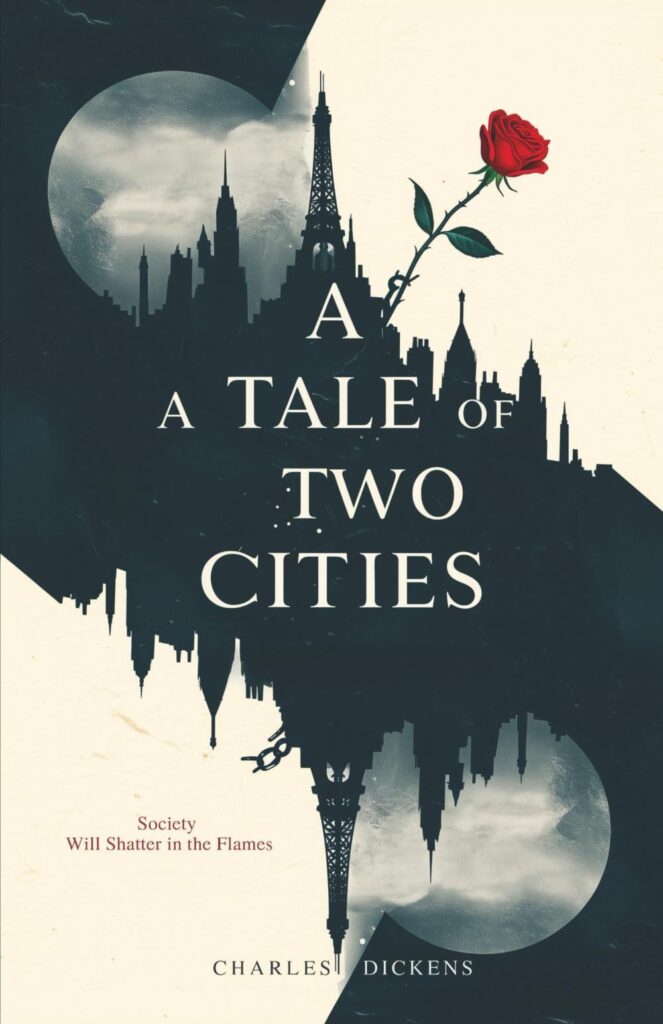
Welcome back to Riya’s Blogs, where we dive into timeless stories that continue to breathe new life into the world of readers. Today, we’re taking on one of the most iconic novels in literary history—Charles Dickens’ A Tale of Two Cities. This article will be your long, reflective, and deeply engaging guide to understanding the plot, themes, characters, emotions, and historical intensity of this extraordinary novel.
Dickens gave us a story filled with love, sacrifice, revenge, redemption, and social upheaval. And if you’ve ever struggled to keep track of who’s who or why things unfold the way they do, this long-form narrative will help you appreciate it in a whole new light.
Settle in with a cup of tea—this is a rich, vivid, and meaningful exploration of a tale of two cities summary, written to be just as captivating as the novel itself.
A Tale of Two Cities Summary: An Introduction to a World on the Brink
Before we plunge into the storyline, let’s understand what makes this novel stand out.
Published in 1859, A Tale of Two Cities contrasts the lives of people in London and Paris before and during the French Revolution. Dickens crafts a narrative that blends:
- Historical drama
- Emotional depth
- Mystery and suspense
- Social critique
- Heartbreaking sacrifice
This isn’t just about two cities—it’s about two worlds, two moral landscapes, and two ways that society responds to injustice.
Throughout this article, we’ll revisit the plot in detail, but also explore how the characters and themes come alive. And yes, you’ll find the keyword a tale of two cities summary woven naturally through the discussion.
The Opening: “It Was the Best of Times, It Was the Worst of Times”
There are famous lines in literature—and then there’s this one.
Dickens opens the novel with a sentence that sets the tone for the entire story. It reflects duality, contradiction, and the contradictions of human existence itself.
The late 18th century was a period when:
- Society longed for change
- Poverty was rampant
- The aristocracy abused power
- Revolution brewed like a storm
And in the middle of all this, Dickens weaves the personal stories of characters whose lives intertwine in the shadow of turmoil.
Book the First: Recalled to Life
The first section introduces us to Jarvis Lorry, a loyal banker, who travels to Paris with a mysterious mission—to bring a man “back to life.”
Not literally, but figuratively.
Dr. Alexandre Manette: The Man Buried Alive in Prison
Dr. Manette was wrongfully imprisoned in the Bastille for 18 long years. The trauma has stripped him of identity, confidence, and even coherent memory. When Lorry finds him, he’s a broken man, living above a wine shop run by Monsieur and Madame Defarge.
He spends his time making shoes—his way of coping, his only anchor.
But slowly, with care and recognition, he is “recalled to life,” reunited with his daughter Lucie Manette, who he believed was dead or lost forever.
This reunion forms the emotional heart of the first book. Lucie becomes:
- His source of healing
- His source of strength
- His connection to the world again
It’s one of the gentlest, most hopeful moments in the entire a tale of two cities summary.
Book the Second: The Golden Thread
Lucie Manette becomes known as “the golden thread” that binds characters together—giving warmth to those haunted by pain or regret.
In London, the lives of several central characters become intertwined.
Charles Darnay and His Escape From the Past
Charles Darnay is a French-born nobleman of the Evremonde family, but unlike his cruel relatives, he is compassionate and devoted to justice.
He rejects his aristocratic inheritance and moves to London to start anew. Yet his past refuses to let him go.
He is put on trial for treason—suspected of passing secrets to France. However, he is acquitted thanks to the clever advocacy of his lawyer, Stryver, and the surprising assistance of Sydney Carton, Stryver’s brilliant but unmotivated colleague.
Sydney Carton: The Most Tragic, Beautiful Soul in the Story
Sydney Carton is perhaps the most unforgettable character in Dickens’ universe.
Lazy yet brilliant
Disenchanted yet deeply feeling
Broken yet capable of immense love
Carton and Darnay look strikingly similar—an important detail that will resurface in the most dramatic way later.
Carton falls hopelessly in love with Lucie Manette, but unlike Darnay, he feels he is unworthy of her. His love becomes a quiet, selfless devotion.
One of the novel’s most beloved lines comes from him:
“For you, and for anyone dear to you, I would embrace any sacrifice.”
These words become the foundation of the novel’s ending—and the ultimate heart of the a tale of two cities summary.
Darnay and Lucie: A Love That Brings Hope
Lucie and Darnay marry, creating a peaceful home built on affection and support.
Dr. Manette blesses the union, even though he experiences a relapse into his shoemaking trauma when he learns Darnay’s real surname.
Still, life in London becomes a serene contrast to the storm brewing across the English Channel.
Meanwhile in France: Revolution Takes Hold
Back in Paris, the oppression of the peasants reaches a breaking point. And Dickens illustrates this beautifully through the symbolic scene of a wine cask breaking in the street.
People scramble to drink the spilled wine—foreshadowing how blood will soon stain the streets the same way.
Madame Defarge emerges as a central figure—cold, relentless, and driven by vengeance for years of aristocratic cruelty.
She knits the names of her enemies into her register, sealing their fate long before the revolution begins.
Book the Third: The Track of a Storm
Everything explodes in the final book.
The French Revolution roars to life, and its violence becomes indiscriminate. Paris becomes a city of chaos, brutality, and fear.
This is where Dickens’ storytelling becomes most cinematic.
Darnay Returns to France—and Is Arrested
Charles Darnay receives a letter begging for help from a former servant. Despite the danger, he returns to France—only to be arrested immediately as an emigrant noble.
No matter how kind he is, his lineage brands him as an enemy of the people.
Lucie and Dr. Manette rush to Paris.
Dr. Manette tries to use his history as a former Bastille prisoner to appeal to revolutionary leaders. It works—at first.
Darnay is released after a dramatic trial.
But then he is arrested again, this time under the influence of the Defarges.
The Truth About Dr. Manette’s Imprisonment
One of the most powerful revelations in the novel is the truth behind Dr. Manette’s imprisonment.
Years ago, the Evremonde brothers (Darnay’s relatives) committed a horrific crime—assaulting and abusing a peasant family. When Dr. Manette tried to report it, they had him thrown into the Bastille.
His long silence and suffering suddenly gain new meaning.
The revolutionaries view Darnay as guilty by blood, even if he had rejected his family’s cruelty.
This revelation seals Darnay’s fate.
He is sentenced to die by guillotine.
Sydney Carton’s Redemption Arc
This is the moment where Sydney Carton’s earlier declaration of love returns as one of the most beautiful acts of sacrifice in literature.
Carton travels to Paris, driven by his deep, unwavering love for Lucie. He accepts that she loves Darnay—but he also realizes he can still protect her happiness.
Because he resembles Darnay, Carton devises a plan:
- He sneaks into Darnay’s prison cell
- Switches places with him
- Has Darnay smuggled out of France with Lucie
- And takes Darnay’s place at the guillotine
His final act becomes one of the most powerful and poetic moments ever written.
Before his death, he whispers the immortal line:
“It is a far, far better thing that I do, than I have ever done;
It is a far, far better rest that I go to than I have ever known.”
This line closes not only the novel but also the emotional arc of sacrifice, love, redemption, and transformation that defines the heart of a tale of two cities summary.
Major Themes in A Tale of Two Cities
To deepen your understanding of the novel, let’s explore its major themes—because Dickens wrote with intention and meaning in every chapter.
1. Resurrection
The idea of being “recalled to life” is everywhere:
- Dr. Manette returns from psychological death.
- Darnay gains freedom and a new identity in London.
- Sydney Carton resurrects his wasted life through sacrifice.
2. Sacrifice
Carton’s sacrifice is the most obvious, but not the only one:
- Lucie sacrifices a life of comfort to nurse her father.
- Dr. Manette sacrifices years to heal his trauma.
- Darnay sacrifices his past to build a new life.
The novel teaches that love often demands surrender.
3. Revenge and Justice
Madame Defarge embodies revenge—cold, unyielding, and consuming.
Dickens reminds us that revenge, even when justified, can lead to destruction. Her hatred devours everything, including herself.
4. Social Inequality
France erupts because of oppression. Dickens highlights how cruelty—when ignored long enough—creates explosive consequences.
He doesn’t justify the violence but explains its roots.
5. Duality
Everything in the novel mirrors something else:
- London vs. Paris
- Darnay vs. Carton
- Love vs. hate
- Death vs. resurrection
This duality enriches the entire narrative.
Why A Tale of Two Cities Still Resonates Today
Even centuries later, readers connect with this novel because:
- It shows us the best and worst of humanity.
- It reveals how society fractures when inequality grows.
- It reminds us that love and sacrifice can transform even the darkest times.
- It gives us characters who feel painfully real—flawed, hopeful, conflicted, human.
And through it all, Dickens teaches that redemption is always possible—even in a world filled with shadows.
That’s why exploring a tale of two cities summary feels as relevant now as it did when Dickens first wrote it.
Final Thoughts: A Story of Love, Loss, and the Light That Never Dies
If you’ve journeyed with me through this long and vivid retelling, thank you. Writing this for Riya’s Blogs was a chance to rediscover the beauty of Dickens’ storytelling—a blend of historical realism and emotional poetry.
Whether you’re reading the novel for the first time or revisiting it, A Tale of Two Cities remains a timeless masterpiece that reminds us of something essential:
Even in the darkest ages, human love can be a guiding light.
Even in the harshest winters, sacrifice can bring spring.
And even when death feels inevitable, redemption can still bloom.
Want to read a bit more? Find some more of my writings here-
Book Review: The Sinner by Shantel Tessier
Book Review: The Perfect Son by Freida McFadden
I hope you liked the content.
To share your views, you can simply send me an email.
Thank you for being keen readers to a small-time writer.