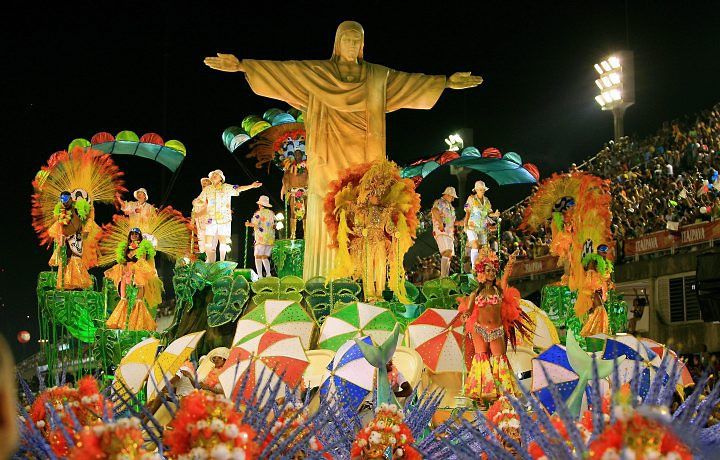
If you’ve ever seen a clip of towering feathered headdresses, glittering floats, drumlines that feel like a heartbeat, and an entire city moving as one—chances are, you were watching Brazil Carnival. It’s one of those events people describe as “once in a lifetime,” and then immediately start planning to go again.
But let’s slow down and answer what people actually search for: What is Brazil Carnival? Where is it held? Why is Samba central? When does it happen? How did it originate?
What is Brazil Carnival?
Brazil Carnival is the country’s biggest celebration and one of the most famous festivals on Earth—often described as the ultimate world carnival. At its core, Carnival is a massive public party leading into Lent (the Christian season of fasting and reflection). In Brazil, that pre-Lent tradition grew into something far larger: a national cultural event powered by music, dance, art, and community.
In simple terms, Carnival is:
- Street celebrations (blocos) with music trucks, dancing, and crowds
- Costume culture ranging from casual themed outfits to jaw-dropping performance wear
- Big competition parades, especially the iconic Rio parade, where samba schools present year-long productions
- A living showcase of Brazil’s cultural heritage, shaped by Indigenous, African, and European roots
So yes, it’s a party—but it’s also performance, identity, neighborhood pride, and serious artistry.
When does it happen?
Carnival doesn’t have a fixed date on the calendar. It’s tied to Easter, which is why you’ll hear people say, “It depends on the year.”
Here’s the basic idea:
- Carnival peaks in the days leading up to Ash Wednesday
- Ash Wednesday begins Lent
- Lent is counted backward from Easter Sunday
That’s why Carnival is often a February festival, but it can drift into March depending on when Easter falls that year.
How to find the exact dates: look up “Carnival Tuesday” or “Ash Wednesday” for the year you care about. The most famous parades and street events usually cluster across the long weekend through Tuesday night, though celebrations often start earlier and can stretch well beyond.
Where is it held?
Carnival happens all across Brazil, but different cities have different “styles” of Carnival. Think of it like the same holiday expressed through different local personalities.
Rio de Janeiro: the headline act
When people imagine Brazil Carnival, they’re usually picturing Rio. The city’s most famous event is the samba school parade, held in the Sambadrome (a parade stadium built specifically for this show). This is where the legendary Rio parade happens—large-scale, competitive, choreographed, and incredibly polished.
But Rio also has street Carnival: thousands follow local “blocos” (street groups) that play everything from samba to pop, with people in costumes dancing for hours.
Salvador (Bahia): the sound-truck Carnival
In Salvador, the energy is driven by music trucks known for pulling huge dancing crowds. It’s less “stadium performance” and more “the city turns into a moving concert.” Afro-Brazilian traditions are especially visible here, and the vibe is powerful, rhythmic, and nonstop.
Recife and Olinda (Pernambuco): frevo, maracatu, and tradition
These cities are famous for frevo music and dance, giant puppets, and a more “folk festival” feel. It’s intensely local, colorful, and deeply connected to regional culture.
São Paulo and beyond
São Paulo has a major samba school parade too (also in a Sambadrome), and many other towns and coastal areas host their own versions. In other words: tourism Brazil during Carnival isn’t limited to Rio—you can choose the style that fits you.
Why is samba central?
If Carnival had a heartbeat, it would be the drums of samba.
Samba became central because it grew out of Afro-Brazilian communities—especially in Rio—and evolved into a musical language that expresses celebration, resilience, and collective joy. Over time, samba became deeply linked to Carnival through the rise of samba schools (community-based groups that prepare all year for the parade competition).
A few key reasons samba dominates the Rio-style Carnival:
- It’s built for movement. Samba’s rhythm is made for dancing in large groups, in the street or on a parade route.
- It’s communal. Samba schools aren’t just dance teams—they’re neighborhood institutions with musicians, costume designers, storytellers, and families involved.
- It tells stories. Each samba school chooses a theme (an enredo) and builds a full narrative through song, dance, floats, and costumes.
- It’s tradition + innovation. Samba stays rooted in history while constantly reinventing itself through new compositions, choreography, and visual design.
So when you see samba dance at Carnival, it’s not random entertainment—it’s a cultural engine that connects music, identity, and community pride.
How did it originate?
Carnival’s deepest roots are European: pre-Lent celebrations existed in Catholic countries for centuries. In Brazil, these traditions arrived through Portuguese colonization. Early festivities included rowdy street games and public mischief—often referenced in historical discussions as “Entrudo,” a rough, chaotic style of celebration.
Over time, Brazil’s Carnival transformed through the cultural reality of Brazil itself:
- African influence became central through the forced migration of enslaved Africans and the survival of Afro-Brazilian musical and spiritual traditions
- Urban growth in places like Rio created large, dense communities where public celebrations spread rapidly
- New musical forms emerged, including samba and other styles that became Carnival soundtracks
- Organized groups developed into the samba schools, turning Carnival into both a street festival and a structured performance culture
By the early 20th century, samba schools and formal parades became increasingly established in Rio, eventually growing into today’s world-famous competitions.
That mix—European calendar tradition plus Afro-Brazilian rhythm and Brazilian creativity—is exactly what gives Brazil Carnival its unique identity.
The Rio parade: how it actually works
The Rio parade isn’t just people dancing down a street. It’s closer to a live theater production—except it’s massive, competitive, and powered by percussion.
A top-tier Rio samba school parade typically includes:
- A samba-enredo (theme song) created for that year’s story
- A bateria (drumline) that drives the tempo and energy
- Ala sections (groups) with coordinated costumes and choreography
- Floats that look like moving sculptures
- Flag bearers and lead performers with traditional roles
- Judging criteria that can include rhythm, harmony, costumes, theme interpretation, and overall execution
What makes it special is the scale: these are communities presenting something they’ve built with months (often a full year) of work. It’s artistic, competitive, emotional—and still unbelievably fun.
The costume festival side of Carnival
Calling Carnival a costume festival is true—but it can mean different things depending on where you are.
In street Carnival:
- People wear anything from simple themed outfits to full creative costumes
- Comfort matters (heat, walking, crowds), so many go for light, expressive looks
- Glitter, bright colors, and playful accessories are common
In samba school parades:
- Costumes are part of the narrative, designed like stage wardrobe
- Many are handmade, detailed, and built for performance under lights
- Some are intentionally extravagant—feathers, sequins, towering structures—because the visual impact is part of the competition
Either way, the costume culture isn’t just about looking good. It’s about participating. Carnival invites you to become part of the scene, not just watch it.
Cultural heritage and why Carnival matters beyond the party
It’s easy to see Carnival as “just tourism,” but for Brazilians it also functions as cultural memory and community expression. Samba schools often preserve local histories, honor Afro-Brazilian identity, respond to politics, and celebrate stories that don’t always get space elsewhere.
And while Carnival itself is huge, many of the cultural forms tied to it—like samba traditions and Northeast Brazilian dance and music—are recognized internationally as important intangible cultural heritage. That recognition reflects something locals already know: these traditions carry history, identity, and meaning.
So yes, Brazil Carnival is fun. But it also acts like a living museum—except the exhibits dance, sing, and invite you to join.
Tourism Brazil: how to experience Carnival wisely
If you’re planning to go (or dreaming about it), here are practical realities that make the experience smoother:
- Choose your city based on your vibe.
Want the iconic spectacle? Rio. Want street-concert energy? Salvador. Want traditional local culture? Recife/Olinda. - Book early.
Prices and availability shift fast around Carnival. - Respect crowd dynamics.
Street events can be packed. Pick meeting points, keep essentials minimal, and stay aware of your surroundings. - Hydrate and pace yourself.
Carnival is a marathon. - Learn a little samba rhythm.
You don’t need to be “good.” Just knowing the basic pulse helps you feel the festival rather than only watching it.
On Riya’s Blogs, the goal is always to make big cultural events feel understandable and approachable—and Carnival is a perfect example of something that looks overwhelming until someone explains it simply.
Conclusion
Brazil Carnival is more than a festival—it’s a national celebration that blends history, community, music, and spectacular art. It happens across Brazil, but the Rio parade remains the most globally recognized symbol of the event, driven by samba schools that prepare all year to tell stories through rhythm and performance. Samba dance sits at the center because it’s built for collective movement and cultural expression, rooted in Afro-Brazilian tradition and shaped by Brazil’s unique history.
If you remember just three things, let them be these:
- Carnival is a moveable February festival (sometimes March), tied to the Easter calendar.
- It’s celebrated nationwide, but each city offers a different style—choose what fits you.
- Samba, costumes, and community storytelling are what turn it into the unforgettable world carnival people travel across the globe to experience.
Want to read a bit more? Find some more of my writings here-
February 20 – Presidents’ Day (USA): Meaning, History, and How Americans Observe It
I hope you liked the content.
To share your views, you can simply send me an email.
Thank you for being keen readers to a small-time writer.