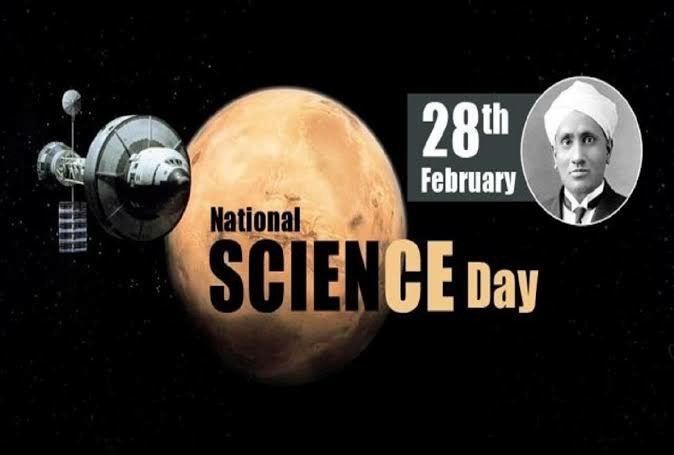
Every year on February 28, India celebrates National Science Day—a day that’s both a tribute to a landmark scientific achievement and a reminder that science isn’t “only for scientists.” It’s for students, teachers, innovators, entrepreneurs, policy makers, and really anyone who benefits from better health, safer infrastructure, smarter technology, and a more informed society (which is all of us).
National Science Day is observed to spark scientific awareness, encourage curiosity, and highlight how research and innovation shape real life—from vaccines and clean water to satellites, smartphones, and climate solutions. And importantly, it is tied to one of the most iconic moments in India science history: the C.V. Raman discovery popularly known as the Raman Effect.
In this article (from Riya’s Blogs), we’ll cover the essential questions people search for: Why is National Science Day celebrated? Who was C.V. Raman? What is the theme? How is it observed? Why is science important? We’ll keep it simple, engaging, and detailed.
Why is National Science Day celebrated?
National Science Day is celebrated on February 28 to mark the discovery of the Raman Effect by Indian physicist Sir C.V. Raman on February 28, 1928. This discovery was a turning point, not just for Raman personally, but for India’s scientific identity on the global stage.
To understand why this date matters so much, it helps to look at what the day is meant to achieve in modern India:
- Celebrate a historic Indian scientific achievement
The day honors a moment when an Indian scientist’s work gained worldwide recognition and helped build confidence in Indian research. - Promote scientific temper and curiosity
National Science Day encourages people—especially students—to ask questions, test ideas, and think logically. - Strengthen research culture and innovation
A healthy nation doesn’t only consume technology; it creates it. The day brings attention to labs, universities, start-ups, and institutions that drive new knowledge and innovation. - Connect science to everyday life
Science isn’t limited to textbooks. It shows up in agriculture, medicine, transport, communication, disaster management, and even the way we understand misinformation.
In short: National Science Day is celebrated to honor a major scientific milestone and to build a deeper, wider culture of science in India. That’s why it’s not just a “science students’ day”—it’s a national reminder that scientific thinking helps a country grow.
Who was C.V. Raman?
If you’ve ever searched “Who was CV Raman?” you’ll usually see him described as one of India’s greatest physicists. That’s accurate—but it’s also worth knowing what made him so influential.
Sir Chandrasekhara Venkata Raman (C.V. Raman) was an Indian physicist best known for discovering the Raman Effect, a breakthrough in the study of light. His work earned him the Nobel Prize in Physics in 1930, making him the first Asian person to win a Nobel Prize in the sciences (Physics, Chemistry, or Medicine). That recognition mattered hugely at a time when India was still under British rule, and global science spaces were dominated by Europe and America.
Raman wasn’t famous because he had endless resources. He became famous because of how he used observation, experimentation, and deep thinking to uncover something fundamental about nature.
What people often find inspiring about Raman is that his story highlights a powerful idea: world-class science can come from curiosity and persistence, not only from expensive infrastructure.
What was the C.V. Raman discovery (Raman Effect), and why was it important?
Now to the heart of the day: the Raman discovery.
The simple explanation (no heavy physics)
When light passes through a transparent material—like a liquid, gas, or solid—most of it scatters without changing. But Raman found something special: a very small part of the scattered light changes its wavelength (in other words, its “color signature” changes slightly).
That shift happens because light interacts with the molecules inside the material. Molecules can vibrate and rotate in different ways, and those tiny energy changes affect the scattered light.
This phenomenon is called the Raman Effect.
Why this discovery mattered
At first, it might sound like “okay… light changes a bit, so what?” But the impact was massive because the Raman Effect became a new way to “read” the molecular makeup of a substance.
Over time, this discovery helped create Raman spectroscopy, a technique used widely today in:
- Chemistry and material science (identifying compounds, studying structures)
- Medicine and biology (research applications, tissue studies in advanced labs)
- Pharmaceuticals (quality checks, verifying ingredients)
- Forensics (identifying substances)
- Environmental science (studying pollutants and materials)
- Industry and manufacturing (non-destructive testing)
So the Raman Effect isn’t just a historical story. It’s a scientific tool that still supports modern innovation.
And that is exactly why February 28 event celebrations often include demonstrations about light, spectroscopy, and how scientists identify materials—because it connects a “big discovery” to real-world use.
What is the theme of National Science Day?
Many people ask: “What is the theme?” because National Science Day usually has a guiding focus each year.
Here’s the key thing to know:
- National Science Day generally has an annual theme, usually announced by relevant government science bodies and associated organizations.
- The theme is meant to highlight an important area—like sustainable development, scientific innovation, technology for society, or strengthening research ecosystems.
Because themes can change every year, the safest way to get the official theme for the current year is to check announcements from India’s science governance and communication bodies (for example, government science departments and national science communication agencies).
But even without the theme, the purpose stays consistent: build scientific awareness, celebrate Indian scientific contributions, and encourage education and research.
If you’re organizing an event, you can use the official theme as your umbrella—and then tailor activities around it (more on that below).
How is National Science Day observed in India?
National Science Day is observed across India in a lively and practical way. It’s not usually a “holiday” in the sense of staying home. Instead, it’s a day when schools, colleges, research institutions, science centers, and community groups run programs designed to make science feel exciting and accessible.
Here are common ways it’s observed:
1) School and college programs
This is where the day really shines. Many institutions organize:
- Science exhibitions and fairs
- Model-making competitions
- Poster and slogan competitions (often linked to scientific awareness)
- Quiz competitions on India science history, space, health, environment, and innovation
- Debates and talks on why science matters and how research helps society
The goal is not to memorize facts—but to build curiosity and confidence.
2) Lectures, seminars, and panel discussions
Universities and institutes often host:
- Talks by professors, researchers, or industry experts
- Sessions on research careers and scholarships
- Discussions on ethical science, misinformation, AI, climate, public health, etc.
This is also where “research culture” gets highlighted—because students see what real research looks like, beyond textbooks.
3) Science outreach and public engagement
National Science Day is also used to reach the broader public through:
- Science demonstrations (simple experiments that explain big ideas)
- Public exhibitions at science centers
- Community sessions in libraries, museums, and local halls
- Online campaigns that popularize science stories and Indian scientists
These activities make science feel approachable—even for people who don’t consider themselves “science people.”
4) Awards and recognition
Many organizations use this day to:
- Recognize student innovators
- Reward science teachers and mentors
- Celebrate research achievements
- Encourage young scientists through fellowships, grants, and competitions
Recognition matters because it tells students: “Your curiosity has value.”
5) The “February 28 event” approach: making it feel special
If you’re planning a February 28 event, the best celebrations usually have two ingredients:
- Something hands-on (experiments, models, demos)
- Something inspiring (stories of discovery, careers, impact)
That balance keeps it from feeling like “just another school function.”
Why is science important? (And why National Science Day still matters)
Now the bigger question: Why is science important?
Science is important because it helps us understand reality and make better decisions—at the personal level and at the national level. But let’s make that real and practical.
Science improves everyday life
Think of what you rely on daily:
- Clean drinking water and sanitation systems
- Medicines, vaccines, and diagnostics
- Internet, GPS, and communication networks
- Farming techniques, weather forecasting, and food storage
- Transport safety, building materials, and energy systems
All of this comes from research, testing, and innovation.
Science builds critical thinking
Scientific thinking teaches people to ask:
- What is the evidence?
- Is this claim testable?
- Are we confusing correlation with causation?
- Is this source reliable?
In a world of fast misinformation, scientific awareness is not optional—it’s a life skill.
Science strengthens India’s future through innovation
India’s growth depends not only on services and consumption, but also on:
- Stronger R&D in universities and industry
- Collaboration between academia and startups
- Affordable innovation in health, agriculture, energy, and climate tech
- A culture where research is respected and supported
That’s what people mean when they say “research culture.” It’s the environment where young people feel encouraged to experiment, where labs are supported, and where society understands that research takes time—but pays off in big ways.
Science connects to national pride—without becoming propaganda
National Science Day is a good example of healthy pride: it celebrates India science history through a real discovery that changed global science. It reminds us that Indian minds have contributed to human knowledge—and can keep contributing, if we invest in education and research.
Conclusion
National Science Day (February 28) is celebrated to honor the C.V. Raman discovery of the Raman Effect and to strengthen scientific awareness across India. It’s a day that connects a proud moment in India science history to a bigger mission: improving education India, building a stronger research culture, and encouraging innovation that solves real problems.
Whether you observe it by attending a lecture, joining a quiz, setting up a small experiment at home, or simply learning the story of C.V. Raman, the spirit is the same: science belongs to everyone. And a country that treats curiosity as a strength will always be better prepared for the future.
Want to read a bit more? Find some more of my writings here-
February 20 – Presidents’ Day (USA): Meaning, History, and How Americans Observe It
February 26 – National Tell a Fairy Tale Day (Fairy Tale Day)
February 25 – Carnival (Brazil): A Simple, Detailed Guide to the Brazil Carnival Experience
I hope you liked the content.
To share your views, you can simply send me an email.
Thank you for being keen readers to a small-time writer.