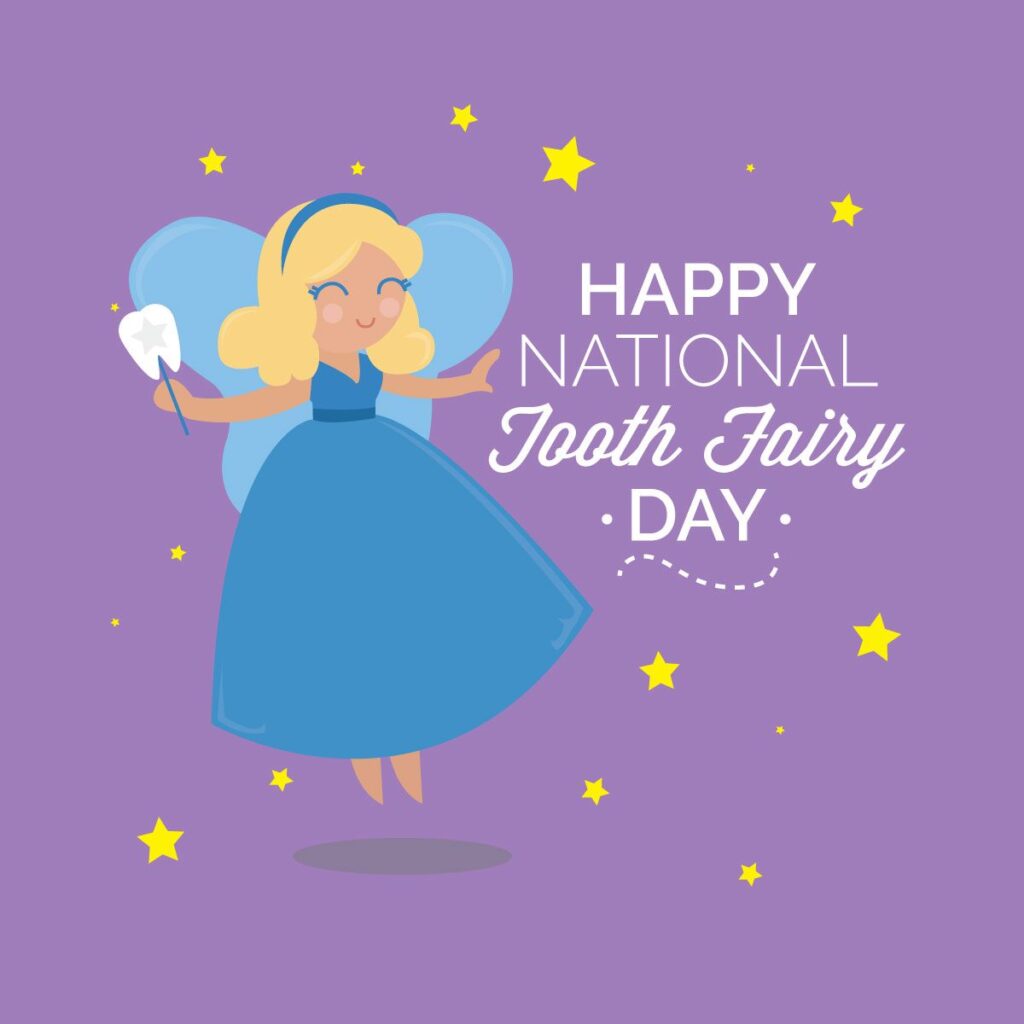
If you’ve ever found a tiny tooth tucked under a pillow and a child whispering, “Do you think the Tooth Fairy came?”, you already understand the magic of Tooth Fairy Day. Celebrated as a lighthearted February 28 event, National Tooth Fairy Day is a fun little reminder of one of childhood’s most loved rituals—losing a baby tooth and receiving a small surprise in return.
This isn’t a formal public holiday with official ceremonies. It’s one of those fun holidays that lives in family routines, classroom conversations, and bedtime excitement. And honestly, that’s what makes it so charming. Tooth Fairy Day is about more than coins and glitter—at its best, it’s a gentle way for parents to turn a slightly scary milestone (a tooth falling out!) into something exciting, comforting, and memorable.
In this article (from Riya’s Blogs), we’ll cover the essential facts people search for: What is Tooth Fairy Day? Why do kids believe in it? Where did the tradition start? How is it celebrated? And what are global tooth fairy customs?
What Is Tooth Fairy Day, and Why February 28?
Tooth Fairy Day is an unofficial celebration of the Tooth Fairy tradition—when a child loses a baby tooth, places it under their pillow, and “the Tooth Fairy” swaps it for a small gift, money, or a note while they sleep.
You may notice something interesting: in many places, people mention Tooth Fairy Day more than once a year—commonly February 28 and also August 22. That’s because these “national days” are often created informally by communities, calendars, and pop culture rather than by governments. Over time, multiple dates can become popular. February 28 stuck as a recognizable day to celebrate the tradition, share cute stories, and do tooth-themed activities with kids.
If you’re a parent or caregiver, it can be a helpful timing cue too—late winter is a great moment for a gentle refresh on brushing habits, dentist visits, and healthy routines, without making it feel like a lecture.
Why Do Kids Believe in the Tooth Fairy?
This is one of the most common questions: Why do kids believe in it? The short answer is that children are naturally wired for imagination, and the Tooth Fairy sits perfectly in that world.
Here are the deeper reasons it works so well:
1) It turns a milestone into a story.
Losing baby teeth is normal, but it can feel strange to a child—something wiggly in their mouth, then suddenly it’s gone. A magical character gives the event a storyline that feels safe and exciting.
2) It softens anxiety.
For some kids, the idea of a tooth falling out can be uncomfortable or even scary. A comforting tradition—“Put it under your pillow and something good happens”—can replace fear with anticipation.
3) It fits into “trusted magic.”
Many children grow up with playful folklore characters (Santa, the Easter Bunny, friendly fairies). The Tooth Fairy becomes part of that same trusted pattern: adults encourage it, older siblings whisper about it, and the result (a coin or note) “proves” it.
4) It gives kids a sense of control.
The ritual has steps: tooth falls out → place it somewhere special → wake up to a surprise. Kids love routines because routines feel predictable.
5) It’s a bonding tradition.
Whether it’s a simple coin or a handwritten note, it’s a small moment of attention that tells the child: “This matters. You’re growing up, and we’re celebrating you.”
A lot of families also use the Tooth Fairy tradition as part of parenting culture—not in a heavy way, but as a gentle tool for encouragement, comfort, and connection.
Where Did the Tooth Fairy Tradition Start?
People often assume the Tooth Fairy has existed forever, but the truth is more interesting: the modern Tooth Fairy is relatively recent, even though baby teeth customs are ancient.
Older baby tooth customs (before the “fairy”)
Across many cultures, children have long been taught to do something specific with a lost tooth. These customs weren’t always about money. Often they were about luck, safety, or symbolism—because for most of history, people treated body parts (even tiny teeth) with special care.
Common older traditions included:
- Throwing the tooth onto a roof or into a specific place (often while saying a phrase or wish).
- Burying the tooth, sometimes to protect the child or ensure strong adult teeth.
- Burning the tooth in a hearth fire (in some old European traditions), linked to beliefs about preventing bad luck or misfortune.
- Offering the tooth to an animal (especially rodents), because rodents’ teeth grow constantly—symbolically representing strong, healthy teeth.
The “tooth mouse” connection
One of the most famous global cousins of the Tooth Fairy is the tooth mouse. In parts of Europe and Latin cultures, a mouse character collects teeth and leaves a gift. Examples include:
- Spain and many Spanish-speaking countries: a tooth-collecting mouse often known as Ratoncito Pérez.
- France: La Petite Souris (the little mouse).
These are not modern internet inventions—they’ve been part of children’s folklore for generations. The characters differ, but the emotional purpose is the same: make tooth loss feel positive.
The modern Tooth Fairy (as we know it)
The specific idea of a fairy visiting at night and exchanging the tooth for money is widely associated with 20th-century English-speaking culture, especially in the United States. It grew through parenting habits, children’s stories, newspapers, and entertainment. Over time, it became standardized: tooth under pillow, small reward, morning surprise.
So when someone asks, “Where did the tradition start?” a fair, accurate answer is:
- Tooth-related folklore is ancient and global, with many customs about what to do with baby teeth.
- The Tooth Fairy as a fairy who swaps teeth for money is more modern, shaped by 20th-century storytelling and family traditions.
How Is Tooth Fairy Day Celebrated?
Because Tooth Fairy Day is an informal holiday, celebration looks different in every home. Some families go all-out with glitter trails. Others keep it simple with a coin and a smile. There’s no “right” way—just what fits your child and your values.
Here are easy, meaningful ways to celebrate Tooth Fairy Day on February 28 (or anytime a tooth is lost):
1) Make the tradition feel special (without making it complicated)
A tiny ritual goes a long way:
- Use a small “tooth pillow” with a pocket.
- Place the tooth in a little envelope or tooth-shaped box.
- Leave a mini note “for the Tooth Fairy” (kids love this).
2) Write a Tooth Fairy note that sounds real
A short handwritten message can feel more magical than money. You can keep it sweet and simple:
- “Congratulations on your brave wiggly tooth!”
- “Keep brushing—your grown-up teeth are on the way!”
- “Thank you for taking such good care of your smile.”
This works especially well if you want to focus on encouragement rather than rewards.
3) Keep the reward aligned with your family
Some families leave money, others leave stickers, a small toy, or a book. In many households, money has become common because it’s simple and consistent. But it doesn’t have to be big. The point is the moment, not the amount.
If you want to avoid comparison stress (“My friend got five dollars!”), you can:
- Keep it consistent each time.
- Explain that different Tooth Fairies do things differently.
- Focus on notes, keepsakes, or a special breakfast instead.
4) Use it as a gentle dental-care reset
Tooth Fairy Day can naturally connect to healthy habits:
- Let your child pick a new toothbrush.
- Try a “two-minute brush challenge” with a timer or song.
- Talk about why brushing matters in a calm, non-scary way.
This is where the tradition becomes more than folklore—it becomes a helpful bridge between fun and real-life learning.
5) Turn it into a “kids celebration” moment
If you want something bigger (especially for classrooms or playgroups), try:
- Tooth-themed crafts (paper teeth, fairy wings, mouse masks)
- A tooth trivia game (“How many baby teeth do humans have?”)
- A simple storytime featuring a Tooth Fairy book
- A “smile chart” activity about brushing and flossing
6) Make a keepsake if your child loves memory boxes
Some families save baby teeth, others don’t—and both are normal. If your child is sentimental, a small labeled box can feel meaningful. If not, you can still mark the moment with a photo, a note, or a little “First Tooth” journal entry.
Global Tooth Fairy Customs: How Different Cultures Do It
One of the most fascinating parts of Tooth Fairy Day is realizing the Tooth Fairy isn’t the only character in town. Around the world, tooth traditions reflect local folklore and values.
Here are a few well-known patterns of global tooth fairy customs:
- The Tooth Mouse (Spain/France/Latin cultures): A mouse collects the tooth and leaves a small gift. The mouse idea makes symbolic sense—rodents have famously strong, ever-growing teeth.
- Roof Tossing Traditions (parts of Asia and the Middle East): In some places, children throw a tooth onto the roof or into the air while making a wish for a strong replacement.
- Burying the Tooth (various regions): Some families bury the tooth in the ground, sometimes linked to beliefs about growth, protection, or luck.
- Keeping the Tooth (modern families worldwide): Many parents today keep baby teeth as keepsakes, even if they still do a Tooth Fairy exchange.
Even when the details change—fairy vs. mouse vs. a wish—the emotional meaning stays consistent: celebrating growing up and transforming a slightly weird bodily moment into something positive.
Conclusion: Why Tooth Fairy Day Still Matters
So, what is Tooth Fairy Day really about? It’s about making childhood feel magical in small, gentle ways. It’s about turning a wiggly tooth into a story your child can enjoy instead of fear. And it’s about a tradition that’s surprisingly universal—proof that across cultures, parents have always looked for creative ways to help kids feel safe as they grow.
On February 28, you don’t need a big plan. You can celebrate with a note, a coin, a hug, or a silly Tooth Fairy joke at breakfast. The goal isn’t perfection—it’s connection. Because years from now, most people don’t remember how much they got under the pillow.
They remember that someone made growing up feel like something worth celebrating.
Want to read a bit more? Find some more of my writings here-
February 26 – National Tell a Fairy Tale Day (Fairy Tale Day)
February 25 – Carnival (Brazil): A Simple, Detailed Guide to the Brazil Carnival Experience
I hope you liked the content.
To share your views, you can simply send me an email.
Thank you for being keen readers to a small-time writer.