

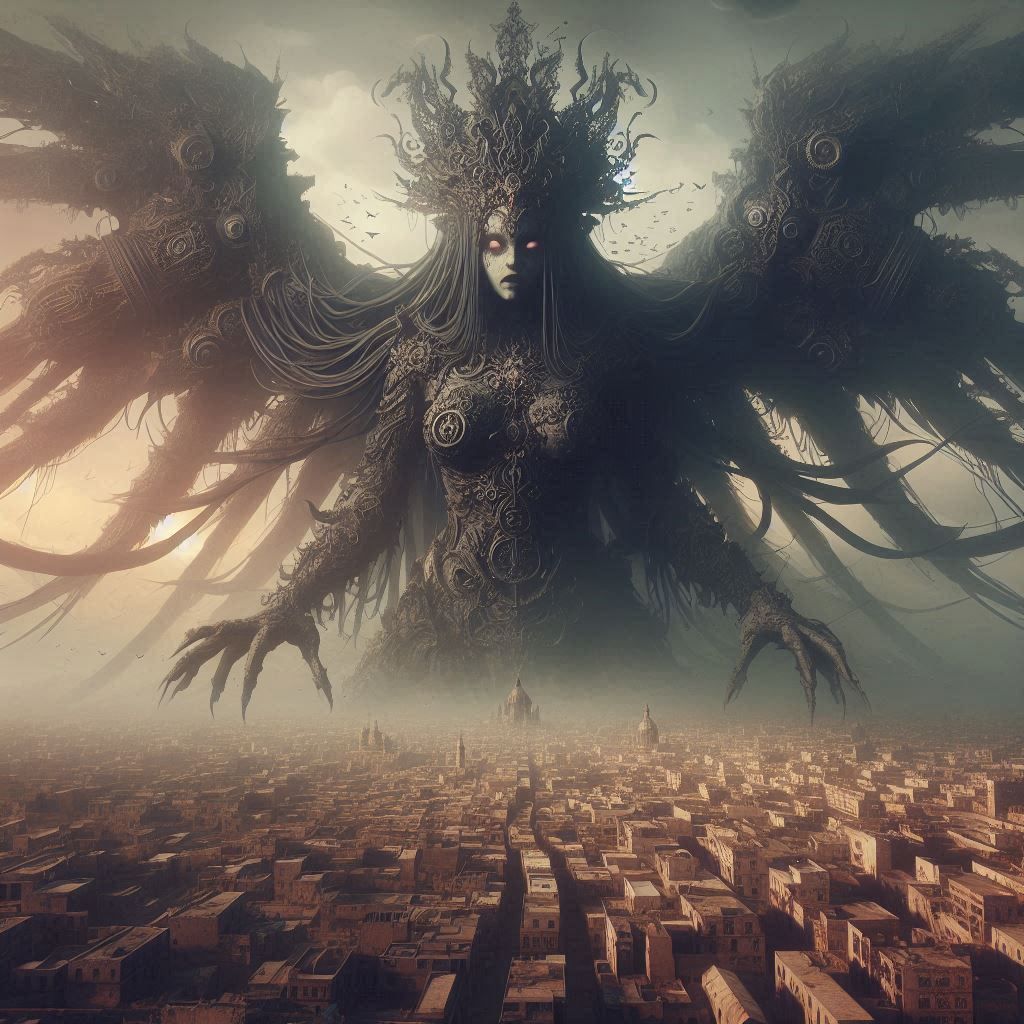
Have you ever sat in the dark, watching a horror film, only to realize the monster on screen isn’t just a figment of imagination — but a story your grandmother once whispered to you by candlelight?
That’s the allure of mythological horror — a genre where faith, folklore, and fear meet halfway between heaven and hell.
Unlike the jumpscare-filled haunted houses of Western horror, mythological horror creeps through the sacred and the cursed — turning divine myths, cultural legends, and age-old beliefs into chilling narratives. And perhaps nowhere is this blend as hauntingly powerful as in Indian cinema and literature, where mythology itself is a living force.
🌕 What Is Mythological Horror?
At its heart, mythological horror fuses myth — the divine, the legendary, the cosmic — with the primal dread of horror. It takes stories of gods, demons, curses, and creation myths, and reimagines them in darker, psychological ways.
Whereas a traditional ghost story makes you fear the unseen, mythological horror makes you fear the known. It asks terrifying questions like:
- What if the goddess you worship isn’t just benevolent?
- What if the demon in scripture never died?
- What if karma itself turned into a creature that hunted sinners?
In simple terms, mythological horror meaning lies in using sacred myths and cultural tales as the foundation for terror.
It’s where belief becomes the monster.
🌸 The Haunting Beauty of Bulbbul: Mythological Horror in Modern India
Let’s start with one of the most striking examples of mythological horror movies in India — Bulbbul (2020).
Produced by Anushka Sharma’s Clean Slate Filmz and directed by Anvita Dutt, this Bengali gothic tale is set in colonial Bengal, wrapped in crimson moonlight and poetic dread.
🕯️ The Premise
Bulbbul, a young child bride, grows up in a feudal mansion overshadowed by patriarchal power. As men in the village begin dying mysteriously, whispers of a chudail (a vengeful female spirit) echo through the trees.
But Bulbbul isn’t about a ghost who kills for revenge. It’s about a woman’s transformation into a divine embodiment of justice — half goddess, half demon — a symbol of rage against the cruelty she endured.
This is where Bulbbul rises beyond ordinary horror — it’s not just about fright, but about awakening. The chudail, traditionally a cursed spirit with twisted feet, is reborn as a feminist avenger, a mythical force reclaiming agency.
The film reinterprets folklore through empathy — the creature of horror becomes the goddess of resistance.
🔱 Mythological Horror Meaning in Indian Culture
In India, myths are more than stories — they are inherited truths, sung in temples and lived in rituals.
When horror seeps into these stories, it feels deeply personal.
Mythological horror meaning in Hindi could be described as “puraani daastaanon ka bhoot” — when our old stories come back to life, not as prayers, but as warnings.
From the asuras and rakshasas of the Ramayana and Mahabharata, to the yakshinis and pretas of folk tales, Indian mythology already teems with supernatural beings.
But what makes Indian mythological horror movies different is their rootedness — every curse feels local, every spirit feels familiar.
👁️ Mythological Horror Movies in Bollywood and Beyond
While Bulbbul brought poetic grace to the genre, it’s far from alone. The Indian film industry has quietly built a fascinating mythological horror movies list that spans languages and generations.
🕉️ Bollywood’s Mythic Nightmares
- Tumbbad (2018) – The gold standard of Indian mythological horror movies.
It tells the tale of Hastar, a forgotten god of greed, locked away for eternity. The visuals — dripping in gold and mud — are both grotesque and divine. Tumbbad isn’t just a horror film; it’s an allegory of human greed, where worship turns into sin.
It’s easily among the best Indian mythological horror movies ever made. - Maa (upcoming, starring Kajol) – Buzz surrounds Kajol’s mythological horror film Maa, said to blend divine motherhood with chilling possession. The film reportedly explores the idea of a mother embodying a goddess and a demon at once — a perfect example of mythological horror meaning made flesh.
- 1920 (2008) – Though often called a haunted love story, the undercurrent of exorcism and faith taps into horror mythological creature lore — invoking rituals and deities as protectors against evil.
🌺 Bengali Mythological Horror Movies
Bengali cinema has always flirted with the spiritual and the spectral.
Beyond Bulbbul, classics like Raktabeej and Chhaya echo old beliefs about goddesses and curses. The idea of the feminine divine — Shakti — often doubles as both savior and destroyer, giving mythological horror movies Bengali their poetic edge.
🔥 South Indian Mythological Horror Movies
If Bollywood’s horror leans toward allegory, South Indian mythological horror movies embrace spectacle and ritual.
- Arundhati (2009) – A Telugu masterpiece that defined mythological horror movies Telugu audiences adore. Arundhati, a reincarnated princess, must face an ancient evil. Temples, curses, reincarnation — every frame drips with divine symbolism.
- Kanchana (2011) and the Muni series – Though comedic at times, these films use Hindu rituals, possession, and divine justice to craft unforgettable south Indian mythological horror movies.
- Kumki and Devi – These Tamil films touch upon folk spirits and godly intervention, walking the fine line between fear and faith.
Together, these regional stories prove that mythological horror movies India doesn’t just belong to one language — it’s a collective reflection of how deeply mythology shapes Indian fear.
📚 Mythological Horror Books: Where Words Weave the Divine and the Dark
Before there were films, there were stories whispered by the fire — stories that blended faith with fright.
Some of the most haunting mythological horror books include:
- “The Fisherman” by John Langan – A modern masterpiece that merges American folklore with cosmic terror.
- “The Devourers” by Indra Das – Set in Kolkata, this Indian novel uses shapeshifters and myths to explore human identity.
- “The Only Good Indians” by Stephen Graham Jones – Indigenous myth and horror collide, showing how ancestral guilt manifests as vengeance.
- “Circe” by Madeline Miller – While not horror in the traditional sense, its mythic isolation and tragic transformation exude the quiet dread of mythological horror meaning — the fear of divine fate.
In India, modern writers are beginning to blend Puranic mythos with horror, creating Indian mythological horror literature that stands on its own — think ghostly gods, cursed temples, and reincarnated deities seeking revenge.
👹 Mythological Horror Creatures Around the World
Every culture has its demons. And mythological horror creatures often reflect the fears and desires of their people.
| Region | Mythological Horror Creature | Origin Myth |
| India | Chudail, Vetala, Rakshasa | Spirits of vengeance, cursed beings, and undead guardians from Vedic and folk lore |
| Japan | Onryō, Yūrei | Vengeful spirits — think “The Ring” or “Ju-On” |
| Greece | Medusa, Lamia | Punished women transformed into monsters |
| Scandinavia | Draugr | Undead Norse warriors haunting burial mounds |
| Native America | Wendigo | Spirit of hunger and greed — devours humanity itself |
| Africa | Tokoloshe | Mischievous, often malevolent spirit |
| Philippines | Aswang | Shape-shifting vampire-like creature feeding on unborn children |
These creatures inspire horror mythological creature movies, reminding us that every civilization hides a monster beneath its myths.
🎬 Best Mythological Horror Movies (Across Cultures)
Let’s take a cinematic tour through some of the best mythological horror movies around the world that shaped the genre’s identity:
- The Wailing (South Korea, 2016) – A shamanic mystery mixing Christianity and Korean folklore.
- Pan’s Labyrinth (Spain, 2006) – A dark fairytale exploring myth and war.
- The Witch (USA, 2015) – Puritan faith meets pagan horror — one of the finest explorations of mythological horror meaning in cinema.
- Tumbbad (India, 2018) – As mentioned, a visual poem of greed and divinity.
- Arundhati (Telugu, 2009) – Divine feminine versus demonic past.
- Bulbbul (Bengali-Hindi, 2020) – Gothic feminism in mythic red tones.
- Under the Shadow (Iran, 2016) – Islamic myth meets post-war trauma.
- The Ritual (UK, 2017) – Pagan gods and guilt in the Nordic forest.
These films don’t just scare you — they haunt you with belief. That’s the essence of mythological horror movies — faith weaponized into fear.
⚖️ Faith vs Fear: The Emotional Core of Mythological Horror
The best mythological horror stories are not about monsters, but morality.
They explore what happens when the sacred turns sinful — when devotion curdles into obsession.
In Tumbbad, worship becomes greed.
In Bulbbul, faith becomes vengeance.
In Arundhati, reincarnation becomes retribution.
This genre thrives on paradox — light birthing darkness, purity masking evil. It asks the question:
“If gods can punish, who punishes gods?”
That unsettling doubt is what keeps viewers awake long after the credits roll.
🌗 Why Indian Mythological Horror Feels So Personal
India doesn’t need imported demons. Our own myths are rich enough to birth nightmares.
Every region has its lore —
- The Brahmadaitya of Bengal,
- The Mohini Pisachi of Kerala,
- The Preta of North India,
- The Betal of Maharashtra.
These beings once filled bedtime tales; now they fill cinema screens.
That’s what makes Indian mythological horror movies so uniquely emotional — they awaken childhood memories of stories that were supposed to protect us but instead terrify us.
And perhaps that’s why Riya’s Blogs celebrates this genre — because mythological horror is not just about demons and deaths. It’s about stories that shaped our very sense of right and wrong — and what happens when that moral fabric unravels.
🔮 Mythological Horror in the Age of Streaming
Streaming platforms like Netflix and Amazon Prime have opened global doors to Indian creativity. Films like Bulbbul, Tumbbad, Qala, and the upcoming Maa prove that audiences crave meaning along with mayhem.
Meanwhile, web series like Asur and Adhura blur the line between crime thrillers and mythological horror movies hindi, using the myth of Kali Yuga and the return of ancient evil to anchor their stories.
With each new release, we’re seeing a renaissance of Indian mythological horror — intelligent, layered, and deeply rooted in belief.
🕰️ The Future of Mythological Horror
The future belongs to stories that look backward — that mine the past for new fears.
Imagine:
- A horror film based on Shani Dev’s curse.
- A psychological thriller on Karna’s guilt.
- A dark fantasy about Ahalya’s stone-bound curse.
These aren’t mere legends — they’re waiting to become scripts, novels, nightmares.
The next decade could see India leading the world in mythological horror movies — because our cultural fabric is already woven with mystery, morality, and myth.
💬 Final Thoughts: When Myths Start to Bleed
In a world obsessed with realism, mythological horror reminds us that belief itself can be terrifying.
It’s not about whether gods or ghosts exist — it’s about what happens when they do, inside our minds.
So next time you hear a folktale, or walk past an old shrine, or see the moon glowing blood-red like in Bulbbul — ask yourself:
Is it just a story?
Or is it a warning from the myths that made us?
Because in the end, mythological horror doesn’t just live in books or screens.
It lives in us — in the stories we inherit, and the fears we pretend not to believe.

Want to read a bit more? Find some more of my writings here-
60 Writer Quotes That Speak to Every Word-Lover’s Soul
National Brownie Day — December 8
The Day the Wind Forgot to Blow: A Poem About Losing a Loved One
I hope you liked the content.
To share your views, you can simply send me an email.
Thank you for being keen readers to a small-time writer.



One Response
It’s difficult to find well-informed people in this particular topic, but you sound
like you know what you’re talking about! Thanks