Written by: Katyayani Mishra
One of my favourite albums by Taylor Swift is Reputation (2017), which explores the themes of revenge, loss, and love. It explores the facets of friendship and what it feels like to be vulnerable behind closed doors because the world easily engulfs you if you are sweet or welcoming to them. One of the most intimate albums created by her (in my opinion). I am not a Swiftie; I don’t go crazy about her or any artist, for that matter. I love music, the very reason why I am even writing this in the first place. What drove me to her music first was this album, and I found this album at a time when I was feeling lost, and I needed something to resonate with my deepest feelings of wanting to fight back. That’s when I found Reputation. Of course, it became a recent trend on Instagram after she got all her master’s back. I think she was unconventional with that album because she came back and hit back at every remark made on her through that album.
It’s one thing when you have your trusted people against you; it’s another when the whole internet goes against you with a hashtag next to your name, going viral with snake emojis. Taylor Swift, the world’s only artist who’s a billionaire, with music being the source of income and with having a huge fan base worldwide wide that her music has become a course and a degree in several universities, that needs to means something.
What you don’t see behind her trail of boyfriends’ images and her publicity ever since she debuted is her sincere passion and dedication to music. As she expressed herself in her documentary, Miss Americana (2020), “We’re people who got into this life because we wanted people to like us, because we were intrinsically insecure.” “Because we liked the sound of people clapping, because it made us forget about how much we feel like we’re not good enough.”
For years, Swift avoided the “loss of innocence” trope that other pop stars leaned into and preferred to stay safe for parents and young fans alike. Though Reputation as an album tore that resistance of hers with darker aesthetics, black leather, bold red colour, it gave her creative freedom, a new direction in which she could move forward. It was like she had to prove something. She no longer had to carry the weight of being “America’s sweetheart.” She sharpened her vocals, improved her dancing skills, and her music bridges were to perfection. It was her answer to, “If you think my music is bad, I’ll make it better.” She reinvented herself.
Event(s) that led up to the making of this Album
The Kaidashian-Snapchat controversy that reshaped Taylor Swift’s public image began with the long-running feud with Kanye West. His infamous interruption of her 2009 VMA acceptance speech, tensions came up till 2016 when he released the song Famous with the lyric, “I feel like me and Taylor might still have sex/Why? I made that b**** famous.” Swift publicly condemned the lyric, but the damage was done after Kardashian releasing the edited Snapchat clips of a phone call in which Swift appeared to be approving the lyric, which sparked the viral hashtag #TaylorSwiftIsOverParty and widespread accusations that she was manipulative, fake, and playing the victim. With the resemblance of snake emojis, mockery, and criticism, Taylor faced personal and political attacks that extended far beyond her music. It was quite ironic to see her being taken down by the same social media tools that had helped her ascend into superstardom. The same tools that allowed her to directly connect with fans. The same tools that encouraged her fans to create and share content and build online communities devoted to Swift’s life and music.
After the “Famous” controversy, she expressed that she felt as though her fears had come true. Her vulnerability came out when she said, “When people fall out of love with you, there’s nothing you can do to make them change their mind,” she said. “They just don’t love you anymore.”
As a matter of fact, she retreated from the public eye because she thought that’s what people wanted from her, and she came back with Reputation (2017), her sixth studio album, which marked a dramatic shift from her earlier songwriting of romanticism and polished pop to darker and more confrontational themes exploring revenge, betrayal, power, and survival. The snake imagery struck a chord with her fans as it was now embraced as a symbol of empowerment rather than insult.
The Essence of her album
Unlike her previous albums, there was no countdown, no media publicity. She had deleted all her posts before posting a hint of a snake figure for her album on Instagram. Earlier, she would stage elaborate launches that would be standing at the centre of attraction and attention. Though with this album, she stepped aside. There were no press tours or interviews. “She needed to not explain that album.” She just made a stark declaration on Instagram: “There will be no further explanation. There will just be Reputation.”
As Taylor said in an interview, she couldn’t stop writing, and she needed to release that album without speaking about it, because most of the questions wouldn’t have been about music. The making of the album was cathartic. It became a shield and a form of self-defence. However, through her Stadium Tour, she took fans on an immersive experience, allowing them to fall in love with her and also enter a darker universe.
What does the album mean to me?
Before Reputation, there was a different image about her, but after that album was released, things changed for her. It was iconic.
The cover of the album is in the same font as the header of The New York Times, published, referring to the negative portrayal done by the media. Probably one of the most “badass” references made by her was the phone call in the song & music video Look What You Made Me Do, which was an indirect dig at Kim Kardashian and Kanye West. Even in her Stadium Tour, you could see Snake balloons referring to the hashtag snake emoji that was trending on Twitter.
Swift opens “Reputation” by immediately addressing her image as a woman defined by her romantic relationships, choosing to push back with a defiant tone. The first track, “…Ready for It?”, blends the excitement of falling in love with darker undertones, incorporating criminal metaphors, bank heists, robbers, and thieves to frame the idea of finding a “partner in crime.” Inspired partly by Dostoevsky’s “Crime and Punishment,” it sets the stage for the album’s recurring themes of love, risk, and reinvention.
In “End Game,” featuring Future and Ed Sheeran, she explores the possibility of real love that can withstand gossip and the weight of a public image. Next is “I Did Something Bad,” where the narrator unapologetically manipulates men, followed by “Don’t Blame Me,” a sultry track comparing love to an intoxicating, addictive drug.
The first four songs on the album “Ready For It?”, “End Game,” “I Did Something Bad,” and “Don’t Blame Me” are particularly aggressive and highlight the theme of vengeance.
Swift describes “Delicate” as the album’s “first point of vulnerability.” Here, she openly wonders whether her tarnished reputation might sabotage a new romance, questioning whether someone could love her for who she really is, despite her public baggage.
Defiance returns with “Look What You Made Me Do,” which Swift initially wrote as a poem while grappling with feelings of betrayal and mistrust. Its most memorable lyric, “I’m sorry, the old Taylor can’t come to the phone right now. Why? Oh, ’cause she’s dead,” became the album’s central statement, a direct response to the infamous phone recording between her and Kanye West that Kim Kardashian made public.
While the album has been labelled a revenge album, I view it as a love album.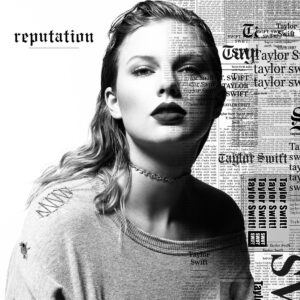
The record then softens into sensuality with “So It Goes…,” which describes physical intimacy as a way of escape, full of imagery of smeared lipstick and scratch marks. “Gorgeous” takes a more playful turn, capturing the giddy excitement of meeting someone new, even while already in a relationship. This tension builds into “Getaway Car,” a cinematic track that uses crime-scene metaphors and references Bonnie and Clyde to describe leaving one lover behind in search of freedom with another.
In “King of My Heart,” Swift shifts toward a more straightforward love song, calling herself her partner’s “American queen” and mapping out the phases of a relationship in the song’s structure, with each verse, pre-chorus, and chorus representing a new chapter in the story. “Dancing With Our Hands Tied” is more reflective, revisiting a past romance from when she was 25 and portraying intimacy as both refuge and fragility.
“Dress” is one of her most openly sexual songs and one of my favourites on the album, where she admits she bought a dress solely for the purpose of having it taken off. In sharp contrast, “This Is Why We Can’t Have Nice Things” plays as a biting satire, inspired by lost friendships and betrayed trust. It recalls her lavish Fourth of July parties and aims at her critics with lines about champagne-soaked betrayals, ending with her mocking the very idea of forgiveness.
The final stretch of the album turns tender. “Call It What You Want” finds her at peace, no longer concerned about salvaging her reputation but focusing instead on the healing power of love that lifts her above the chaos. Finally, “New Year’s Day” closes the album with intimacy and quiet romance, not the kiss at midnight, but rather the presence of someone steady enough to help clean up the morning after. For Swift, the simplest moments, like waking up next to someone who stays, are more romantic than any grand gesture.
Closing Remarks
When the world shut down, her music continued to thrive. Even while facing name-calling and battling body image issues, Taylor Swift was out there touring with her album 1989. When the noise became overwhelming, she chose silence, stepping away from the media spotlight, only to return with a powerful record that reclaimed her control and identity. It was a reminder to everyone: she’s not going anywhere, and she never will.
She reflected that amidst the “battle raging on” outside, she found comfort in quiet moments with loved ones and began creating a newfound private life on her own terms, “for the first time” since starting her career.
Over the years, Swift has transformed her life into song. Her fans don’t just listen to her albums; they experience her journey alongside her. They feel her heartbreak, joy, resilience, and reinventions through the lyrics she writes. That’s why Reputation was never just an album; it was a manifesto. It encouraged her fans to flip the narrative, to rise from the ashes, and to believe in their own strength when the world tries to tear them down.
At the peak of public scrutiny, even while enduring her sexual harassment trial, Swift allowed her fans to witness her most vulnerable moments. She embraced being overwhelmed, human, and real. This vulnerability is what sets her apart. Throughout her career, she has never drawn a line between her life and her art or between herself and her supporters. Through every success and setback, Taylor Swift has not just survived; she has redefined what it means to be an artist in the modern age. Today, she is more than a pop star; she embodies the music industry itself.