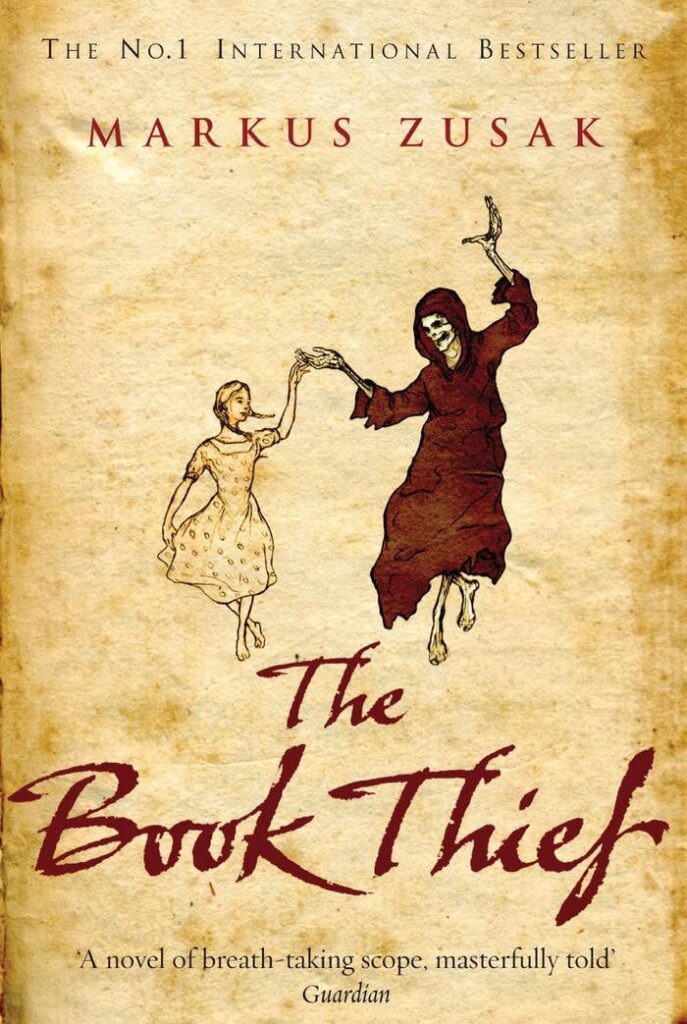
There are some books that don’t just tell a story—they cling to your soul, refusing to leave even long after you’ve turned the final page. The Book Thief, written by Markus Zusak, is one of those rare novels. It is deep, poetic, emotional, and profoundly human. And in this The Book Thief summary, I want to take you on a slow, thoughtful journey through the world of Liesel Meminger, the girl who stole books and, unknowingly, stole our hearts as well.
If you’re reading this on Riya’s Blogs, welcome—this space is where we unfold stories that matter, stories that remind us what it means to be alive, compassionate, flawed, frightened, and yet deeply hopeful.
So grab your tea or coffee, sink into your favorite reading spot, and let’s walk through the snow-covered streets of Nazi Germany, where a young girl tries to make sense of a violent world through words she both steals and cherishes.
Why “The Book Thief” Still Matters Today
Before diving into the plot, let’s pause for a moment. Why does a novel set during World War II resonate so much with modern readers? Why do people keep searching for The Book Thief summary decades after its publication?
Because this story isn’t just about war. It’s about kindness in dark times. About friendship when hatred is the norm. About the power of storytelling when the world seems to be falling apart. And perhaps most importantly, it’s about ordinary people caught in extraordinary moments of history—people who try to survive, love, dream, and protect one another despite overwhelming fear.
The book’s narrator, Death, tells us early on that humans both haunt and fascinate him. And that’s exactly why this story feels so timeless: it mirrors our fragility and our resilience equally.
A Narrator Like No Other: Death Speaks
One of the most striking things about the novel—and what must be mentioned in any The Book Thief summary—is its narrator. Death is not cruel here. Nor is he heartless or violent. Instead, Death is tired. Curious. Sometimes even gentle. He sees more than he wants to. He carries souls he never asked to carry. And he watches Liesel’s story unfold with a kind of weary tenderness.
This choice of narrator is a masterpiece on its own.
Death’s perspective gives us both distance and closeness. We see the story unfold with a certain inevitability, yet we also cherish the tiny moments of joy because Death notices them with surprising affection. He admires humans because, despite everything, “they endure.”
And Liesel’s endurance captures even his attention.
Liesel Meminger: The Girl with a Heart Full of Pain and Pages
The novel opens with tragedy. Liesel is traveling by train toward her new foster home when her younger brother dies suddenly. At his graveside, Liesel steals her first book—The Gravedigger’s Handbook. She can’t read yet, but the simple act of taking the book becomes a symbol of both loss and survival.
Liesel arrives on Himmel Street in the small town of Molching with terror, grief, and distrust. Her new foster parents, Hans and Rosa Hubermann, become the anchors of her world, though in very different ways.
Hans Hubermann—The Heart of Himmel Street
Hans is gentle when the world is harsh. He plays the accordion, paints houses, and has patience thick enough to calm even the most terrified child. He finds Liesel’s stolen book, but instead of punishment, he offers her comfort. He stays awake with her during her nightmares, reading the stolen book slowly, teaching her the magic and power of words.
Their bond is one of the most touching aspects of the story.
Rosa Hubermann—Tough Love with a Soft Core
Rosa is Liesel’s foster mother, and she is loud, brash, and wonderfully rude in a way only a German mother can be. She affectionately calls everyone a Saukerl or Saumensch, but beneath her grumbling exterior is fierce, protective love. Rosa works tirelessly washing clothes for wealthier families, though as the war advances, her customers disappear.
While Hans is the softness of the household, Rosa is its spine.
Rudy Steiner—The Lemon-Haired Boy Who Loved Liesel
No The Book Thief summary would be complete without Rudy—Liesel’s best friend, partner in crime, and the boy who always asked for a kiss. Rudy idolizes Jesse Owens and foolishly paints himself black one night, causing a stir in the town. He is brave, mischievous, loyal, and tender.
Rudy steals food, challenges bullies, runs like the wind, and becomes Liesel’s protector and confidant. Their friendship is the golden thread woven through the darkest parts of the story.
And though Death hints several times that Rudy will die young, we still fall in love with him, still cheer for him, still ache when the truth unfolds.
The Arrival of Max Vandenburg: A Secret That Changes Everything
One night, Hans receives a knock on the door that changes the course of their lives. A young Jewish man named Max Vandenburg arrives, starving and terrified. He is the son of a man who once saved Hans’s life during World War I. Hans had promised to help if the family ever needed it—and now that promise is being called in.
Max hides in the Hubermann’s basement, forming a deep and tender friendship with Liesel. They are both haunted by nightmares, both burdened by loss, both seeking refuge in words.
Max writes stories for Liesel—beautiful, handmade books crafted on painted-over pages of Mein Kampf. His presence brings danger, but also immense meaning to Liesel’s life. Her understanding of courage, loyalty, and injustice deepens profoundly during this time.
Books as Lifelines: Liesel the Reader, Liesel the Thief
Words are central to this story. They are weapons. They are comfort. They are rebellion. They are escape.
Liesel steals several books throughout the novel, each representing a milestone in her emotional journey. From bonfires to libraries, from the mayor’s house to snowy basements, books become her sanctuary. They help her make sense of a world gone mad.
One of the most powerful scenes occurs when Liesel reads aloud in a bomb shelter to calm the terrified neighbors. In a moment when death feels inches away, words become a shield against despair.
The Bombing of Himmel Street: A Heart-Shattering Climax
Even though Death warns us early on, nothing prepares the reader for the devastation of the final bombing on Himmel Street.
Liesel survives only because she fell asleep in the basement while working on her own book. When she emerges, she finds everyone she loves—Hans, Rosa, Rudy—gone.
The grief is unbearable. Liesel holds Rudy’s body and cries, finally giving him the kiss he always wanted but never received in life. This moment is one of the most painfully beautiful scenes in the book.
Death is there too, watching quietly, holding her words close.
Liesel’s Life After Himmel Street
After the war, Liesel is taken in by the mayor and his wife. Eventually, she grows older, moves to Australia, and builds a life until one day, Death meets her again—this time gently, respectfully.
He returns her book, The Book Thief, which she had written about her life.
And in one of the novel’s most iconic lines, Death says he is “haunted by humans.”
It’s the perfect ending for a story that shows the worst and best of humanity intertwined.
Why This Story Stays With Us
Even as I write this for Riya’s Blogs, I feel the weight and beauty of this novel all over again. The Book Thief is more than a story about war—it’s a meditation on love, loss, and the fragile threads that connect us.
It teaches us that kindness is a rebellion.
That friendship is a lifeline.
That words carry immense power.
That even in the darkest times, there is a spark of hope.
And perhaps that is why so many readers seek out The Book Thief summary—because this book touches a part of the human heart that longs for meaning, compassion, and connection.
Final Thoughts
If you’ve never read The Book Thief, I hope this summary nudges you gently toward it. If you have read it, maybe this brought back the bittersweet memories of your first encounter with Liesel, Rudy, Hans, Rosa, and Max.
This story reminds us that even in a world full of cruelty, the small acts of courage—teaching a child to read, hiding a friend in a basement, sharing stolen apples, playing the accordion—are what make humanity extraordinary.
And as Death himself gently reminds us, humans are beautiful despite (or perhaps because of) their contradictions.
Want to read a bit more? Find some more of my writings here-
The Metamorphosis Summary: Transformation, Alienation, and the Fragile Thread of Humanity
A Tale of Two Cities Summary: A Deep, Beautiful Walk Through Dickens’ Masterpiece
Book Review: The Perfect Son by Freida McFadden
I hope you liked the content.
To share your views, you can simply send me an email.
Thank you for being keen readers to a small-time writer.