The first thing I remember is the sound of rain.
Not the kind that lashes or roars, but the kind that falls like an apology — soft, endless, and full of something unspoken.
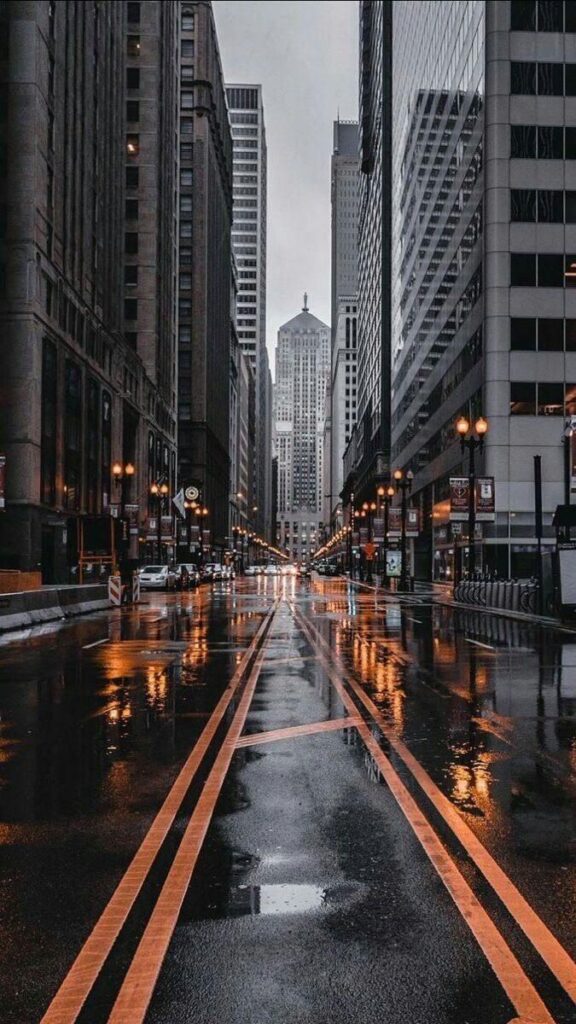
When I opened my eyes, I was lying in the middle of a cobblestone street. The air smelled faintly of petrichor and citrus, and the buildings around me glowed in muted gold, as if someone had painted over the world with nostalgia. Signs in languages I couldn’t read flickered above quiet cafés. Somewhere far off, a clock chimed thirteen times.
I sat up slowly, realizing I wasn’t cold, wet, or hurt — just… lighter. As though someone had lifted a weight off my chest I didn’t know I’d been carrying.
Then I saw the sign.
It was etched into a marble arch at the end of the street, words glimmering faintly in the rainlight:
“Welcome to the City of Second Chances.”
A woman walked past me carrying a bouquet of blue lilies. She didn’t look surprised to see me there. In fact, she smiled — a quiet, knowing smile that reached the corners of her eyes. “First time?” she asked.
I nodded, though my throat felt dry. “Where am I?”
“Where everyone wishes they could be,” she said, her voice both kind and haunting. “But only those who died wishing otherwise ever arrive.”
Before I could ask what she meant, she was gone — turning down an alleyway lined with mirrors that reflected versions of her walking in different directions, each carrying a different flower.
I stood, dazed. The city around me seemed endless — streets curling in gentle spirals, bridges arching over canals that shimmered like mercury, towers rising and bending like glass spun in dreams. The rain never stopped, but it didn’t soak; it only shimmered on skin and disappeared like breath on glass.
A tram rolled past, its headlights soft like candlelight. Painted on its side were the words: “Departures Every Hour. Return Optional.”
I didn’t know where it went.
I didn’t know where I’d come from, either.
But as I looked into one of the rain-dark windows, I saw myself — the reflection of a man I used to be. And that’s when it hit me.
I was dead.
The memory unfolded like a bruise pressed too hard. A road. Headlights. A decision I never made in time. A voice on the phone saying “Please, just come home.” And then — nothing.
But here I was, breathing again in a city that shimmered like memory.
And somewhere deep inside me, something whispered — you have one day.
One day to fix the moment that broke you.
I began to walk.
Every street felt familiar and foreign at once, as if built from the fragments of other people’s regrets. There were parks where swings moved by themselves, cafés where laughter hung in the air like music even when no one sat at the tables, and doorways that led to places that looked suspiciously like old homes — if you dared to open them.
I passed a man sitting on a bench feeding invisible pigeons. He looked up at me, eyes gray as fog. “You should hurry,” he said softly. “The city doesn’t wait for anyone. Midnight comes sooner than you think.”
“Midnight?”
He nodded. “That’s when the second chance ends. After that, you fade.”
“Fade?”
“Into peace,” he said. “Or into nothing. Depends on what you make of the day.”
His words lingered as I walked on.
It wasn’t hard to notice the others — the wanderers. Some wept quietly, staring into puddles that showed reflections of scenes not their own. Some clutched letters that glowed faintly in their hands. Some stood frozen before doors, afraid to open them.
And then there were the guides — people like the woman with lilies — who seemed to belong here, helping the lost find their way to the moment that had broken them.
I wondered who mine would be.
The answer came at the corner of Haven Street and Memory Row. A small shop stood there, its window filled with clocks — all stopped at different times. Inside stood a man in a gray waistcoat polishing the glass face of a pocket watch. He looked up as I entered.
“Ah,” he said, as if expecting me. “Another visitor from the edge.”
“I— I think I’m lost.”
He smiled gently. “That’s precisely why you’re here.” He gestured to the hundreds of clocks around him. “Every one of these belongs to someone who came through. Each stopped the moment they died.”
I stared at them — tiny heartbeats frozen in time.
“Do I have one?” I asked.
He reached beneath the counter and pulled out a small clock, its hands trembling faintly at 7:12. “You do. And it’s still ticking — which means your chance remains.”
He placed it in my palm. It was warm, pulsing faintly like something alive.
“What do I do?”
He looked at me with eyes that seemed to hold centuries. “Follow the sound.”
And then, I heard it — a faint ticking, almost beneath hearing, like a whisper of my own heartbeat calling from somewhere deep in the city.
I stepped outside again. The rain had stopped. The sky had turned a muted violet, and the streets shimmered with reflection.
As I walked, the ticking grew louder, leading me through alleys and bridges until I stood before a familiar door — painted green, chipped at the edges, just like the one to my old apartment.
My hand trembled as I reached for the knob.
And when I opened it — I stepped into my past.
Inside, everything was exactly as it had been.
The same cracked mug by the sink, the same half-written note on the counter, the same faint hum of the refrigerator that used to annoy me at night. Time hadn’t moved here — it was frozen in the exact breath I’d left behind.
I heard footsteps.
And there she was.
Maya.
Her hair was still wet from the rain, twisted into a loose braid. She wore that old gray sweater she used to steal from me. Her face — the face I’d memorized a thousand times — turned toward me with that same mixture of worry and hope.
Except this wasn’t me she saw. It was him — the version of me that was still alive in this memory. Sitting on the couch, phone in hand, debating whether to call her back.
I stood frozen by the doorway, watching a ghost of my own indecision.
The clock on the wall ticked 7:12.
That was it — the moment that broke me.
The argument had been small, meaningless. She had asked me to meet her, to talk, to not go to that stupid office dinner I didn’t even care about. I had said something cruel, something meant to hurt — and then refused to pick up when she called later that night. She’d been driving, crying, her phone still glowing on the passenger seat when the truck came around the corner.
And by the time I reached the hospital, it was too late.
I thought that was my punishment — to live with that forever. I never knew there’d be something worse: to die before ever telling her I was sorry.
Now I was standing in front of the same door, heart pounding, one day to fix what I couldn’t in a lifetime.
I tried to step closer, but something stopped me — a shimmer in the air, like invisible glass. The old man’s words echoed in my head: Follow the sound.
The clock in my hand pulsed. Its faint ticking merged with the rhythm of my heart.
And then — I understood.
I wasn’t supposed to change the past physically. The City didn’t let you interfere directly; it let you witness, understand, and reach across the distance with something purer — truth. Regret wasn’t erased by rewriting, but by acceptance.
Still, I had to try.
I knelt by the memory of myself, whispering, though I didn’t know if he could hear.
“Pick up the phone.”
The version of me hesitated. His thumb hovered over the screen, his face tense.
For a second, I swore he looked right at me — not seeing, but feeling. Like a flicker in his chest.
And then, for the first time, the phone started to ring again.
He stared at it, torn.
“Pick it up,” I whispered again. “Please.”
He didn’t.
The phone stopped ringing.
Maya turned away, shoulders shaking.
The version of me slumped back, pressing his palms to his eyes, muttering words I couldn’t hear.
And the room began to blur. The edges dissolved into gray, the ticking grew faint.
I stepped back, heart sinking.
The scene melted away, replaced by the cobblestone streets again. The City loomed around me, lights dimming to a faint amber.
“You tried,” said a voice behind me.
It was the woman with the lilies. She was leaning against a lamp post, her flowers glowing faintly blue in the twilight.
“I failed,” I said bitterly.
“No,” she said softly. “You remembered.”
“What good is remembering if I couldn’t change it?”
She tilted her head, studying me. “Change isn’t always about doing something differently. Sometimes it’s about seeing it differently.”
I didn’t understand — or maybe I didn’t want to.
She sighed. “Come with me.”
We walked through the streets as the rain returned — soft, silver threads stitching light across the stone. The city had grown quieter. Many of the wanderers were gone now, their clocks dim, their faces peaceful.
“Where do they go?” I asked.
“Wherever the peace leads them,” she said. “Some move on. Some return — if their hearts find reason enough.”
“Return?”
She smiled faintly. “To life. But only if their story isn’t finished.”
We crossed a bridge arched over a canal glowing faintly blue. Beneath the surface, I saw reflections of people — not the ones walking above, but the ones they might have been. Each ripple showed a different version of their lives: choices made, words spoken, hands held or not.
She stopped halfway across. “Look down,” she said.
I did.
The water showed my reflection — but not the man who had died. It showed a version of me who had picked up the phone, who had met Maya at that café, who had held her through the storm.
He was older, gentler. His eyes held peace.
“Is that who I was supposed to be?” I asked quietly.
“No,” she said. “That’s who you could still be.”
I frowned. “But I’m dead.”
She turned toward me, her expression unreadable. “The City gives second chances, not guarantees. You have until midnight. What you do with that time — that’s what decides what follows.”
I looked back down. The reflection shimmered, and I thought I saw Maya beside him — laughing, alive.
My chest ached with something I hadn’t felt in years — hope.
“I need to see her,” I said.
The woman nodded. “Then find her. But remember — time in the City doesn’t flow like yours did. It listens to the heart, not the clock.”
I clutched the small timepiece in my hand. It was ticking faster now.
The streets bent and reshaped themselves as I ran — doors shifting, bridges moving, buildings unfolding into new paths. It was as if the city itself wanted to help.
And then, at the edge of it all, I found the garden.
It was hidden behind an old gate wrapped in vines. The air smelled like lavender and rain, and in the center was a single wooden bench beneath a willow tree.
She was there.
Maya.
Not as a memory — but real. The same gray sweater, the same quiet sadness in her eyes. She looked up as I approached, and somehow, I knew she recognized me — not as the man she left behind, but as the one who never said goodbye.
“You found me,” she said softly.
“I’ve been looking since I lost you,” I whispered.
She smiled faintly. “You didn’t lose me. You just stopped listening.”
I sat beside her. The willow leaves brushed our shoulders like blessings.
“I tried to fix it,” I said. “But I couldn’t.”
“Because it was never yours to fix,” she replied gently. “You can’t undo pain. You can only understand it.”
I turned toward her, eyes burning. “Then why bring me here? Why give me this day if not to change it?”
“To forgive yourself,” she said simply.
The words hit harder than any truth I’d ever known.
The rain deepened, soft and rhythmic, and I realized that for all these years — even beyond death — I’d carried guilt like armor. I had built my afterlife out of punishment, not peace.
And she — the part of her that lingered — had been waiting not for an apology, but for me to let go.
I reached for her hand. It felt warm, steady. Real.
“I’m sorry,” I whispered.
“I know,” she said. “And now you can rest.”
The clock in my hand glowed. Its hands began to slow, the ticking gentling like a heartbeat finding calm.
But something inside me rebelled.
“What happens when it stops?” I asked.
She looked up at the sky. “Then you choose — to stay gone, or to go back and live differently.”
“Back?”
She nodded. “The City doesn’t grant life to those who waste it. But if your heart is ready, it might send you home — not to the same life, but to another chance at it.”
I stared at her, torn between peace and longing.
“If I go,” I whispered, “I’ll lose you again.”
She smiled sadly. “You can’t lose what love has already changed.”
And then she leaned forward, pressing her forehead to mine.
“Live better, this time,” she said. “That’s all the universe ever asks.”
The world around us began to dissolve into light. The willow shimmered. The city blurred.
I tried to hold on, but her voice was fading — soft, like the last note of a song you never want to end.
Then there was silence.
And darkness.
And then — a heartbeat.
Slow. Steady. Mine.
When I opened my eyes, I was in a hospital room. The beeping of machines, the smell of antiseptic, the weight of reality crashing back in waves.
A nurse rushed over. “He’s awake!”
I blinked, dazed. “Where…?”
“You were in a car accident,” she said gently. “You’ve been in a coma for two days.”
Two days.
But in the City, it had been one.
I touched my wrist — and there, faintly imprinted against my skin, was the outline of a tiny clock.
7:12.
Still ticking.
I closed my eyes, and for the first time in forever, I didn’t feel regret. Just quiet gratitude — for pain, for love, for the impossible mercy of a second chance.
And somewhere, far beyond the veil of this world, I swore I heard rain.
Want to read a bit more? Find some more of my writings here-
A Friendly, Deep Dive into Victorian Surnames
Orthodox Christmas Wishes — January 7: A Celebration of Faith, Light, and Togetherness
Book Review: Restore Me by Tahereh Mafi
I hope you liked the content.
To share your views, you can simply send me an email.
Thank you for being keen readers to a small-time writer.