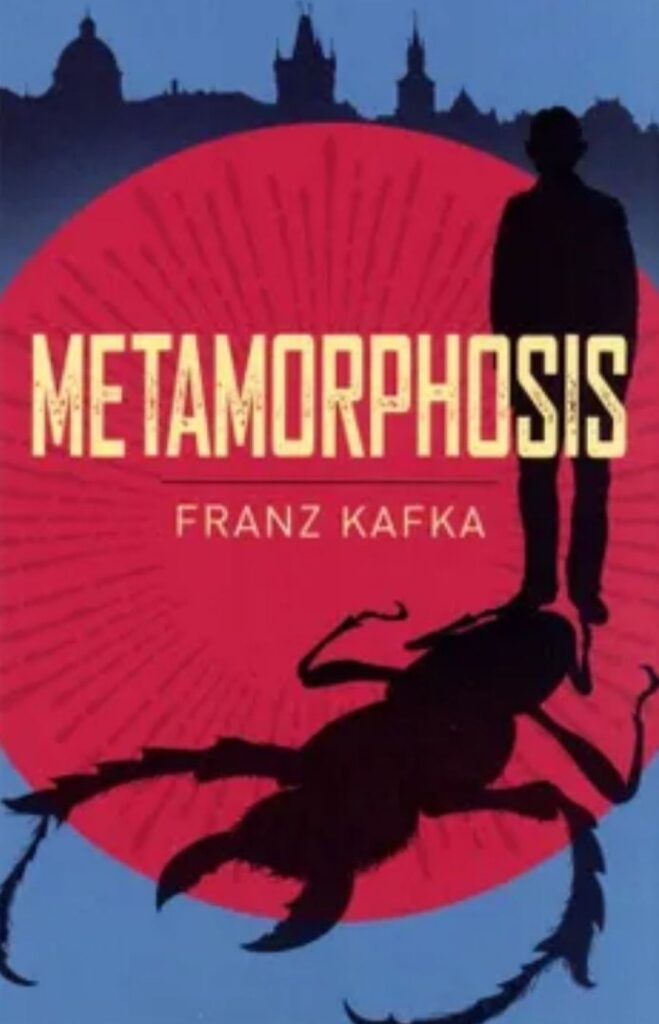
There are stories that stay with us not because they are comfortable to read, but because they unearth hidden fears — fears about purpose, identity, belonging, and the coldness that lurks beneath routine human relations. The Metamorphosis is one such haunting tale. It does not just shock you with its premise; it unsettles you with its truth.
In this the metamorphosis summary, we will journey through the bizarre and tragic transformation of a man — his inner life, his familial bonds, his humanity — and how an absurd event reveals deep truths about society, identity, and the meaning we assign to human worth. As always, this is a post on Riya’s Blogs, written with sensitivity and love for literature.
Whether you first encounter the story now, or revisit it with old eyes, I hope this summary helps you appreciate the layers beneath the surface — the sorrow, the betrayal, the existential emptiness, and the final longing for release.
Introducing the Story — What Happens in The Metamorphosis
The opening of The Metamorphosis hits you like a punch. In one of literature’s most unforgettable first lines, the protagonist — Gregor Samsa — wakes up one morning, expecting a routine day as a travelling salesman. Instead, he finds himself transformed into a monstrous insect-like creature.
This transformation is sudden, unexplained, and completely alters the course of his life. Gregor — once a diligent worker, the family’s breadwinner, the connector between household and wider world — becomes an alien being in his own room, in his own home. His physical change mirrors an inner alienation he perhaps already felt, but which now becomes visible, grotesque, impossible to ignore.
What follows is not a tale of heroism or magical redemption. Rather, it’s a grim unfolding of neglect, fear, misunderstanding, and the slow decay of compassion. As you read this the metamorphosis summary, you’ll see how the story captures the tragedy of dehumanization — turning the ordinary into the uncanny, and asking: what makes us human? And when that is lost, what remains?
The Samsa Family Before the Change — Context Matters
To grasp the full weight of Gregor’s metamorphosis, we need to understand his life before the transformation:
- Gregor worked as a travelling salesman. As the only income earner, he supported his parents and younger sister.
- His work was grueling — early mornings, constant travel, pressures from his employer. Still, he held on, sacrificing his comfort and desires for the family’s welfare.
- Emotionally, Gregor seems to be a dutiful, albeit somewhat constrained, young man — fulfilling responsibilities, silently shouldering burdens, rarely complaining.
So when he transforms, the rupture is not just physical — it’s existential. The structure that defined his identity dissolves: no job, no social value, no human normalcy. In that void, the metamorphosis begins — not just of his body, but of his world, and those around him.
The Transformation — From Man to “Vermin”: What Changes, How, and Why
Let’s walk step by step through Gregor’s transformation and its immediate aftermath — the central arc of our metamorphosis summary.
- When Gregor wakes up, he finds his body changed: a hard, armored back, many legs, inability to control his limbs as before.
- At first, Gregor tries to carry on: he thinks about his day, his job, the boss, the train he must catch. His mind remains human — rational, anxious, accustomed to routine.
- But when he tries to speak and open the door for his family — mother, sister, father — his voice has changed. What emerges is not human speech, but a garbled, insect‑like sound that no one understands.
- His mother collapses; his father recoils; his sister is horrified. The once‑familiar family dynamic collapses instantly under shock, fear, disgust.
- Gregor is confined to his room — the door locked, the household restructured around his absence. No more work, no more respect, no more belonging. His room becomes both refuge and prison.
This moment marks the dark turning point: Gregor is alive, but he is no longer seen as alive. The metamorphosis is literal — but also symbolic: it reflects invisibility, dehumanization, the chasm between appearance and identity.
Life in Isolation — The Slow Decline and the Crushing Weight of Alienation
As days pass, the metamorphosis summary takes us deeper into suffering — physical, emotional, relational. Kafka doesn’t spare us the details, but rather submerges us into them, forcing empathy, discomfort, reflection.
Alienation and Isolation
Isolation becomes absolute. Gregor is cut off not only from society but from his own family:
- He cannot communicate. Even if he could, his insect body repels them. Conversations once easy become impossible.
- He listens to his family behind closed doors. He sees them discussing rent, jobs, worry, shame — without him. Their tone shifts: once appreciation, slowly to resentment.
- His room, once personal, becomes storage for unwanted things. Furniture is moved, the door stays shut. The area becomes a tomb of his former life.
In this isolation, Gregor’s humanity — his memories, his love, his pain — becomes invisible. The metamorphosis summary here becomes a chilling allegory: what happens to those who lose social value, who no longer “produce,” who are judged by appearance, not essence.
Loss of Identity and Self‑Worth
Gregor’s transformation strips him of the roles that defined him: provider, son, brother. Without them, what remains?
- His sense of self fractures. Inside, he remains human — thinking, remembering, longing — but outside, he’s a “vermin,” a burden.
- His family’s love, once rooted in gratitude for his labor, gives way to cold pragmatism. When his utility disappears, so does their compassion.
- Even when small gestures of care remain — food, cleaning, the occasional music — they feel hollow, hesitant, reluctant. The family’s fear overshadows their concern.
The metamorphosis summary thus becomes a meditation on worth: Are we valued for who we are — or for what we provide? And when we cease to provide, what becomes of love, respect, belonging?
The Family’s Transformation — The Price of Normalcy and Self‑Interest
The metamorphosis doesn’t affect Gregor alone. His transformation triggers a shift in the entire family — perhaps more chilling than his physical change.
- Grete, his sister, begins as caretaker — bringing him food, cleaning his room, checking on him.
- But over time, her compassion erodes. What begins as pity and responsibility becomes resentment, fear, and disgust. Eventually, she sees him no longer as her brother, but as a burden — even a monster.
- Mother and father retreat too — father becomes aggressive, almost hostile; mother becomes paralysed between love and horror. Their concern shifts from love for Gregor to protecting their social standing, their jobs, their stability.
- The family takes on lodgers to manage income. Their home transforms: the burden is shifted, cleaned up, erased. Gregor’s room becomes a storehouse. Their lives resume — but without him.
In many ways, the family’s metamorphosis is worse than Gregor’s: from unity to fragmented individuals, from human bonds to cold transactions, from compassion to convenience. The metamorphosis summary here becomes a harsh mirror — of how easily our humanity can be compromised when survival or convenience demands it.
The End — Death, Release, and the Aftermath
Kafka does not grant redemption. He does not heal wounds. Instead, he draws everything to a bleak, final conclusion — one that still echoes with tragic weight.
- As Gregor’s health deteriorates — emotionally, physically — he withdraws. He barely eats, seldom moves. The wounds inflicted (literal and metaphorical) fester.
- One evening, after hearing his sister playing violin — a fleeting moment of connection, of human art — Gregor emerges, drawn to it. But when the lodgers see him, they are terrified. Their disgust and anger finally break the family’s resolve.
- Grete, the sister, now speaks up: the creature is not Gregor, she insists. They decide: the “vermin” must be removed in order to restore their life.
- That night, Gregor retreats to his room. At dawn, alone and broken, he dies. His body is discovered; the family discards him. A dreadful liberation.
- In the aftermath — the lodgers are expelled, the family decides to move to a smaller, more affordable home; they talk about Grete’s future, her marriage prospects. Life goes on — for them. Their burden lifted, their prospects renewed — at the cost of Gregor’s life.
This ending cements the novella’s central tragedy: the metamorphosis was not only physical. It revealed what our societies — and even our families — might become when value is tied solely to output, when love is conditional, when empathy is dependent on convenience.
Themes & Symbolism — What The Metamorphosis Really Explores (Beyond the Horror)
A good the metamorphosis summary doesn’t stop at plot. The strength of Kafka’s novella lies in its layered symbolism, existential questions, and psychological honesty. Let’s explore the major themes and what they tell us about human existence.
Alienation & Isolation
Gregor’s transformation is the ultimate literalization of alienation — from family, society, humanity. His insect form becomes a metaphor: for anyone who feels unseen, unheard, devalued. The locked door, the closed room, the hidden body — all signal a separation deeper than walls.
Even before the metamorphosis, Gregor’s life as a travelling salesman — disconnected from home, emotionally distant, burdened by obligations — hints at alienation. The metamorphosis only amplifies what was already there.
Identity, Self‑Worth, and Utility
One of the most piercing questions the story asks: what makes a human valuable? Gregor’s worth was tied to his job — his ability to earn and support his family. But when that disappears, so does his dignity, his identity, his place.
Kafka challenges the notion that identity is fixed, or inherent. Instead, it becomes fragile, contingent — on perception, on social acceptance, on utility. When these conditions falter, identity fractures.
The Absurdity of Existence & Existential Horror
No explanation is ever given for Gregor’s transformation. There is no reason, no curse, no moral cause — it simply happens. This randomness underlines the absurdity of existence: sometimes life changes inexplicably, violently, cruelly.
This existential dread — the sense that stability is an illusion, that identity is fickle — is characteristic of what we often refer to as “Kafkaesque.” The metamorphosis summary must confront it: the horror is not just in the body, but in the realization that human dignity can crumble with indifferent ease.
Dehumanization and Societal / Familial Hypocrisy
By reducing Gregor to a “vermin,” his family and society reveal how quickly empathy can vanish when faced with discomfort. The human who provided becomes the creature who repulses; the son becomes a shame; the brother becomes a burden.
This is not only about Gregor’s suffering. It is a reflection on societal structures: under capitalism, under poverty, under obligation — people can be valued only for what they produce, not for who they are.
Sacrifice, Betrayal, and the Tragic Cost of Escape
Gregor’s sacrifice — working tirelessly for his family — becomes a liability. When he can no longer serve, he is cast aside. The metamorphosis becomes a betrayal: by body, by family, by the promise of love.
The story is a grim answer to: what if sacrifice fails? What if dependency becomes disgust? What if love hinges not on loyalty, but on convenience? The metamorphosis summary here becomes a caution — about the fragility of trust when transactional value underlies relationships.
Why The Metamorphosis Still Resonates — Its Timeless, Painful Relevance
You might wonder: this story was written over a century ago (first published 1915). Yet, the metamorphosis summary resonates deeply today. Why?
- Because alienation — from work, from family, from identity — remains universal in modern life. Many people feel unseen, undervalued, trapped in roles that weigh heavier than any cage.
- Because questions of identity, self‑worth, and dehumanization are still urgent — especially in societies that emphasize productivity, social status, and utility.
- Because mental illness, social exclusion, family breakdown, and economic pressure are realities. Kafka captures not just a horror story, but a human condition many silently live through.
- Because the absurd — the unexplainable, the unjust — is not just fiction. Life sometimes turns surreal, cruel, illogical. And stories like this give shape to that pain.
On Riya’s Blogs, I believe stories like The Metamorphosis matter — not to comfort you, but to remind you, to provoke empathy, to hold up a mirror to uncomfortable truths, and maybe to help you find solidarity with others who feel alien, unseen, or discarded.
Personal Reflections — What The Metamorphosis Taught Me
Writing this metamorphosis summary forced me to reflect:
- On the thin veneer that separates “human” from “vermin” in society — how labels, perception, and convenience can override compassion.
- On the fragility of identity when it’s tied to roles rather than intrinsic worth.
- On the tragedy of love and family when they are conditional — when they measure not by heart, but by usefulness.
- On the absurd randomness of life — and how quickly stability can crumble without warning.
- On the power of empathy, if only we resisted the instinct to ignore what disturbs us.
If you read The Metamorphosis (or even this summary), I hope you carry forward a bit more humanity — for yourself, and for those who may feel as invisible, as forsaken, as Gregor did.
Conclusion: The Metamorphosis Summary — More Than a Horror Story, a Human Mirror
At surface level, The Metamorphosis is surreal and disturbing: a man wakes up transformed into a bug. But beneath that shock lies a tender, tragic, brutally honest portrayal of alienation, identity collapse, societal hypocrisy, and human fragility.
This metamorphosis summary is more than a retelling — it’s an invitation: to question what we value, how we love, how we treat those who are different, who suffer, who fail to meet societal expectations. It asks us: when do we lose sight of the person, focusing only on performance? When do we abandon compassion for convenience?
On Riya’s Blogs, I offer this summary not to give you answers, but to give you space: space to feel, to question, to empathize. Because stories like The Metamorphosis may be painful — but they deserve to be heard. They force us to reckon with our humanity, our judgments, our assumptions.
And perhaps — just perhaps — remind us why empathy, dignity, and recognition matter so deeply.
Want to read a bit more? Find some more of my writings here-
A Tale of Two Cities Summary: A Deep, Beautiful Walk Through Dickens’ Masterpiece
Book Review: The Perfect Son by Freida McFadden
I hope you liked the content.
To share your views, you can simply send me an email.
Thank you for being keen readers to a small-time writer.