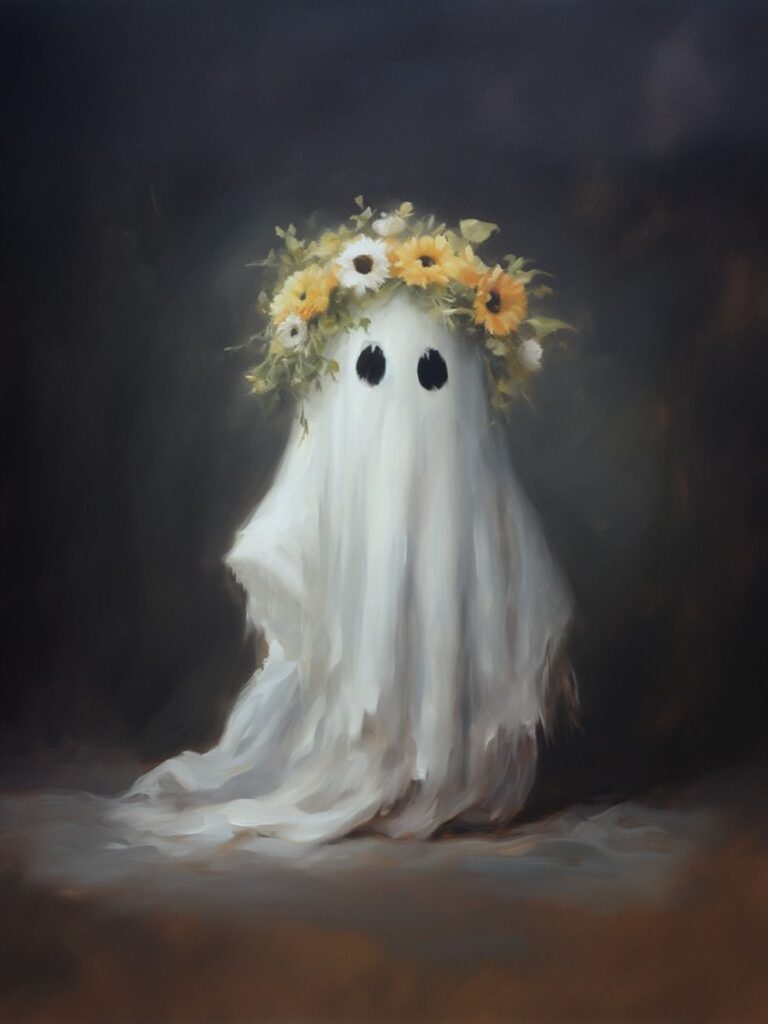
No matter where you are in the world — from the misty moors of Scotland to the bustling cities of Japan, from the deserts of Egypt to the forests of India — one thing unites humanity: ghost stories. They transcend borders, languages, and beliefs. They haunt bedtime tales, sacred scriptures, and late-night campfire conversations. So, why ghost stories are universal across cultures? Why do we, as a species, find comfort, fascination, and even thrill in telling tales of the dead?
Welcome to another thought-provoking piece on Riya’s Blogs, where we explore the fascinating intersection of history, psychology, and storytelling — this time through the eerie yet beautiful lens of ghost stories.
👻 The Universal Appeal of the Unknown
Before we dive deep, let’s start with the obvious question — why ghost is so famous? Why do the dead refuse to leave our imagination?
Ghosts are humanity’s oldest mystery. They embody what we fear most — the unknown — yet they also represent what we yearn to understand — the afterlife. Every culture, from ancient civilizations to modern societies, has grappled with death and what lies beyond it. And out of that eternal curiosity was born the ghost story.
Whether it’s a banshee wailing in Irish folklore, a vengeful spirit in Japanese legends, or a “chudail” from Indian tales, ghosts are the emotional echoes of humanity’s struggle with mortality. They allow us to talk about death without saying “death” — a narrative coping mechanism that gives form to the formless.
That’s precisely why ghost stories are universal across cultures essay after essay: they are both a mirror of our fears and a bridge to our beliefs.
🕯️ Ghosts in Different Cultures: A Shared Yet Diverse Tale
When we explore ghosts in different cultures, we find that every civilization has its own unique version — shaped by local religion, climate, geography, and philosophy — yet the underlying structure remains hauntingly similar.
1. Asia: Spirits and Karma
In countries like India, China, and Japan, ghosts often embody unfinished karma or unresolved emotions. Hindu beliefs describe “prets” — souls trapped between life and death because of incomplete rituals or lingering attachments. Japanese folklore gives us “yūrei,” spirits of those who died with strong emotions, unable to move on. Even in modern anime and horror films, the aesthetic of the ghost remains deeply tied to this spiritual imbalance.
2. Europe: Guilt and Restless Souls
In European traditions, ghosts often appear as warnings or omens. Shakespeare’s plays are rich with spectral imagery — most famously Banquo’s ghost in Macbeth, which represents guilt and moral corruption. It’s not merely a scare tactic. Rather, why did Shakespeare include Banquo’s ghost? Because the supernatural in his works always exposes inner truths. Ghosts hold up a mirror to the living, revealing sins that refuse to stay buried.
3. Africa and Indigenous Beliefs: Ancestors Among Us
Many African and Indigenous American tribes view ghosts not as something to fear but as ancestral spirits — guides who protect and advise. The line between the living and the dead is thin; storytelling serves as a form of remembrance and reverence. This deep respect turns ghost stories into sacred stories, echoing through generations.
4. Middle East: Djinns and Shadows
In Middle Eastern folklore, “djinns” are entities that exist between the realms of the seen and unseen. Some benevolent, others malevolent, they represent the mystery of duality — light and dark, good and evil — and mirror the human soul’s complexity.
💀 How Do Ghost Stories Relate to Beliefs About the Afterlife?
If we peel away the layers, we find that ghost stories and afterlife beliefs are inseparable. From ancient Egyptian “Book of the Dead” rituals to the Buddhist idea of reincarnation, every belief system tries to answer the same questions: Where do we go when we die? Do we linger? Can we return?
Ghost stories make these questions tangible. They dramatize the liminal space between life and death, between belief and fear. They let us imagine that the soul continues, that consciousness survives.
In this sense, ghost stories aren’t merely scary — they’re deeply philosophical. They offer emotional comfort to the living, suggesting that our loved ones might still be “here,” watching over us — or perhaps reminding us of promises unkept.
That’s why in times of grief, people often report seeing or dreaming of the deceased. It’s a universal human attempt to bridge the gap between worlds — to make meaning from loss.
📜 Ghost Story History: From Campfires to Cinema
The ghost story history stretches back thousands of years.
- Ancient Roots: Clay tablets from Mesopotamia (around 3,000 BCE) already spoke of spirits haunting the living. Egyptians believed in “Ka” and “Ba,” parts of the soul that could wander after death.
- Medieval Era: Europe saw ghost stories infused with religious overtones — purgatory, sin, and redemption became central themes.
- Victorian Era: This was the golden age of ghost stories. With rapid industrialization and scientific discovery, people were torn between faith and reason. Authors like M.R. James, Charles Dickens (A Christmas Carol), and Henry James (The Turn of the Screw) gave shape to invisible fears.
- Modern Times: Today, horror movies and horror stories are everywhere — from Netflix to Reddit threads like “why ghost stories are universal across cultures quora”. We may no longer believe in haunted castles, but we are captivated by haunted minds.
The importance of ghost stories hasn’t diminished. If anything, they’ve evolved — from oral tales to digital folklore. Every TikTok paranormal video or Reddit ghost confession is the modern version of the same ancient impulse: to share, to shiver, to seek.
🔮 The Psychology Behind Ghosts
So, how ghost stories shape our emotions? Why do we get goosebumps even when we “know” it’s fiction?
Psychologists explain it through the fight-or-flight mechanism. When we hear eerie sounds or read about unseen entities, our brain releases adrenaline — preparing us for danger. But since we know we’re safe (sitting by the campfire or scrolling through a “quora ghost story”), the thrill becomes addictive. It’s fear with a safety net.
There’s also the concept of “agent detection” — an evolutionary trait. Early humans who assumed that a rustle in the dark might be a predator survived more often than those who ignored it. That instinct remains. We’re wired to sense presence — even in its absence.
And deeper still, ghost stories serve a cultural function: they help societies reinforce moral codes. Every haunting has a cause — betrayal, greed, injustice. The message? Our actions echo beyond death.
🏰 Ghost Stories in Literature: Shakespeare to Today
Let’s revisit Shakespeare, because why did Shakespeare include Banquo’s ghost continues to intrigue scholars and storytellers alike. The scene in Macbeth is iconic not because it’s scary, but because it externalizes Macbeth’s guilt. The ghost isn’t “out there” — it’s inside his conscience. The supernatural here becomes psychological.
Similarly, in modern works — from The Sixth Sense to The Others — ghosts symbolize regret, denial, and emotional entrapment. Ghost stories story explained often reveals that the true haunting isn’t from the dead — it’s from within.
Even platforms like Vedantu include “The Ghost Story Vedantu” as part of learning literature — emphasizing that ghost tales aren’t just entertainment; they’re reflections of moral and emotional complexity.
🧭 The Importance of Ghost Stories in Society
You might wonder: in this age of science and skepticism, why ghost stories are still important?
Because they aren’t really about ghosts. They’re about us.
- They Preserve History: Many “dark history stories” — from haunted castles to colonial mansions — are storytelling vessels for pain, loss, or injustice that official records omit. The ghosts speak for those silenced.
- They Connect Communities: Sharing ghost stories binds people — over campfires, in classrooms, or online forums. They’re communal experiences that make fear a shared emotion rather than a solitary one.
- They Spark Imagination: Horror isn’t just fear — it’s creativity. Every haunting invites interpretation, every flicker of a candle becomes a story seed.
- They Reflect Change: As societies evolve, so do their ghosts. Ancient spirits became Victorian specters; now, they’re digital phantoms — emails from the dead, haunted AI, or echoes in smart devices. Even technology can’t escape our instinct to mythologize the unknown.
📺 Modern-Day Sacred Stories and Ghosts
You might ask — are there modern day examples of sacred stories that echo ghostly themes?
Absolutely. Today’s films, podcasts, and true crime shows often take the place of ancient oral traditions. Shows like The Haunting of Hill House or Paranormal Witness explore not only fear but grief, family, and memory — the same sacred emotional ground ghost stories have always walked.
In many ways, these are the sacred stories of modern society. They may not involve gods or temples, but they explore what it means to be human — our longing for connection, our guilt, our desire for closure.
🌑 Why Ghost Is So Famous: The Human Obsession With Death and Memory
So ultimately, why ghost is famous? Why ghost is so famous across all generations and geographies?
Because ghosts make the invisible visible. They give narrative to what science can’t fully explain. They blend emotion, morality, and imagination into one universal language.
To believe in ghosts is to believe in memory — that nothing, not even death, truly erases us. Every whisper, every shadow, every cold chill reminds us that we are part of something larger, something timeless.
That’s the heart of why ghost stories are universal across cultures — they keep our stories alive, even when we’re gone.
💬 Conclusion: We Are the Stories We Leave Behind

From ancient myth to digital folklore, from ghost story history to today’s Reddit confessions, the thread remains unbroken. Ghost stories will never die — because they evolve with us.
They are how we process love, loss, fear, and faith. They connect the physical and the spiritual, the personal and the collective. And perhaps most importantly, they remind us that our stories — like our spirits — continue to echo long after we’re gone.
So, the next time you hear a floorboard creak at midnight or feel a chill when no window’s open — don’t just be afraid. Listen. Every culture tells ghost stories not to scare us away from the dark, but to teach us to see through it.
And that’s the beautiful, universal truth behind why ghost stories are universal across cultures essay after essay, from ancient temples to the pages of Riya’s Blogs.
Want to read a bit more? Find some more of my writings here-
Book Review: Harry Potter and the Goblet of Fire
Pedro Alonso López: The Monster of the Andes
The Library at the End of Dreams: Dark Fantasy Short Story
I hope you liked the content.
To share your views, you can simply send me an email.
Thank you for being keen readers to a small-time writer.