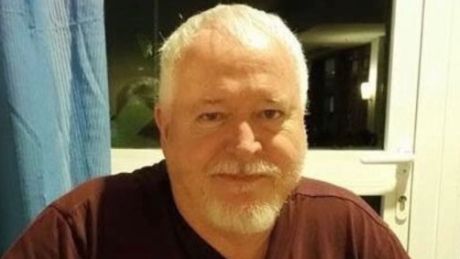
Between 2010 and 2017, the quiet neighborhoods around Toronto’s Gay Village became the hunting ground of a seemingly harmless man with a beard, a smile, and a gardening van.
That man was Bruce McArthur — a landscaper, grandfather, and church volunteer who turned out to be one of Canada’s most prolific and disturbing modern serial killers.
Early Life and Background
Thomas Donald Bruce McArthur was born on October 8, 1951, in Lindsay, Ontario, Canada.
He grew up on a farm near Woodville in a conservative Presbyterian family. McArthur later described his upbringing as strict and repressive, especially regarding sexuality — a tension that would linger throughout his life.
He married in the 1970s and had two children. By outward appearances, he led a normal suburban life: a traveling salesman, family man, and active member of the local church.
But beneath that façade, McArthur wrestled with closeted homosexuality during a time when open acceptance was rare in rural Canada. He came out in the late 1990s, around the same time his marriage dissolved.
After moving to Toronto, McArthur became a fixture in the Church and Wellesley area — the city’s historic Gay Village — where he found belonging, friendships, and, eventually, his victims.
From Landscaper to Killer
In the 2000s, McArthur built a small but successful landscaping business, Artistic Design, catering to clients across Toronto’s upper-middle-class neighborhoods. His work granted him access to secluded backyards, garages, and sheds — places he would later use for horrifying purposes.
McArthur’s victims were primarily men with ties to Toronto’s LGBTQ+ and South Asian or Middle Eastern communities. Many were new immigrants, closeted, or vulnerable, factors that allowed him to operate undetected for years.
He met several victims on dating apps or through personal connections in the community. Once in his apartment or vehicle, he used sexual restraints, sometimes as part of consensual encounters — but soon escalating to murder. Police later found “kill trophies” in his possession, including photographs taken of his victims’ bodies after death.
The Murders (2010–2017)
McArthur’s confirmed victims are:
- Skandaraj “Skanda” Navaratnam – vanished 2010
- Abdulbasir Faizi – missing 2010
- Majeed Kayhan – missing 2012
- Soroush Mahmudi – disappeared 2015
- Dean Lisowick – missing 2016
- Selim Esen – vanished 2017
- Andrew Kinsman – disappeared 2017
- Kirushna Kanaratnam – disappeared 2016, identified 2018
All eight were eventually identified through DNA and forensic evidence from planters and soil samples recovered from McArthur’s clients’ properties.
Investigators discovered human remains buried in large garden planters behind a home on Mallory Crescent, one of his landscaping sites — a revelation that horrified the public.
How Bruce McArthur Was Caught
For years, Toronto’s LGBTQ+ community had voiced concerns about missing men from the Gay Village, but early police investigations produced few results.
In 2012, detectives even questioned McArthur in connection with the disappearance of Majeed Kayhan, but lacking evidence, they released him.
It wasn’t until June 2017, after the disappearance of Andrew Kinsman, that the pattern became undeniable. Police uncovered a note in Kinsman’s calendar reading simply, “Bruce.”
This clue led investigators to McArthur, who was already on their radar.
On January 18, 2018, police arrested him after surveilling his apartment. During a raid, officers rescued a ninth man found handcuffed and alive, moments away from becoming another victim. That man’s survival was the critical turning point.
Investigation and Forensics
The investigation, code-named Project Prism, became one of the largest forensic operations in Canadian history.
- Forensic anthropology teams excavated soil from more than 100 planters.
- Cadaver dogs and ground-penetrating radar were used at multiple landscaping sites.
- DNA analysis linked dismembered remains to missing-person files dating back to 2010.
- Police uncovered dozens of photographs of deceased victims stored on McArthur’s computer — most showing them staged and posed after death.
This evidence painted a portrait of a killer who planned meticulously, treated his victims as “projects,” and sought control even after their deaths.
Trial and Conviction
In January 2019, Bruce McArthur pleaded guilty to eight counts of first-degree murder. His plea spared the community a lengthy trial but did little to ease the shock.
He was sentenced to life imprisonment with no possibility of parole for 25 years, meaning he will be eligible in 2044, at age 93.
Justice John McMahon described the crimes as “pure evil”, noting McArthur’s exploitation of trust within a marginalized community that had already struggled for safety and visibility.
Psychological and Criminological Analysis
Experts have classified McArthur as a sexual sadist and organized killer, driven by power, secrecy, and control rather than passion or ideology.
His double life — family man, community helper, trusted tradesman — fits the “mask of normalcy” seen in many organized offenders. The trophies, photographs, and burial methods suggest paraphilic tendencies combined with a profound lack of empathy.
Unlike impulsive killers, McArthur’s crimes show planning, ritual, and compartmentalization — a serial predator functioning in plain sight.
Public Reaction and Police Controversy
The case ignited national outrage and soul-searching within Canada.
Community advocates accused the Toronto Police Service of ignoring warnings from LGBTQ+ activists for years, particularly when several men of color had vanished without urgency.
Subsequent reviews found bias and procedural errors, prompting reforms in how missing-persons cases are handled and how police interact with marginalized communities.
McArthur’s case also prompted media reflection on coverage disparities — why certain victims, often white or female, receive more attention than racialized or gay men.
Life in Prison
McArthur is currently serving his life sentence at an undisclosed maximum-security facility in Ontario.
Reports describe him as cooperative and compliant, showing little visible remorse. He remains largely isolated from other inmates due to his notoriety and age.
Media and Cultural Impact
The crimes spurred several documentaries and investigative specials, including:
- “The Bruce McArthur Murders” (CBC Docs)
- “Village of the Missing” (TVO, 2019)
- Netflix-style international adaptations exploring themes of hidden predators and institutional neglect.
Beyond sensationalism, McArthur’s case has become a sociological landmark, prompting discussion about:
- The vulnerability of marginalized communities
- Failures of law enforcement in queer spaces
- The psychology of concealment and double lives
Conclusion
Bruce McArthur was not a shadowy drifter or an outcast — he was a neighbor, a gardener, and a trusted friend.
His crimes remind us that evil can be banal, hidden behind routine smiles and familiarity. Between 2010 and 2017, he transformed Toronto’s Gay Village from a symbol of pride into a scene of fear — until one calendar entry and one survivor ended his reign of terror.
McArthur’s story remains a chilling emblem of modern serial crime: the predator hiding in plain sight, weaponizing trust, and burying truth beneath everyday normalcy.
Want to read a bit more? Find some more of my writings here-
Book Review: Reckless by Lauren Roberts
Book Review: Powerless by Lauren Roberts
Book Review: “Powerful” by Lauren Roberts
I hope you liked the content.
To share your views, you can simply send me an email.
Thank you for being keen readers to a small-time writer.