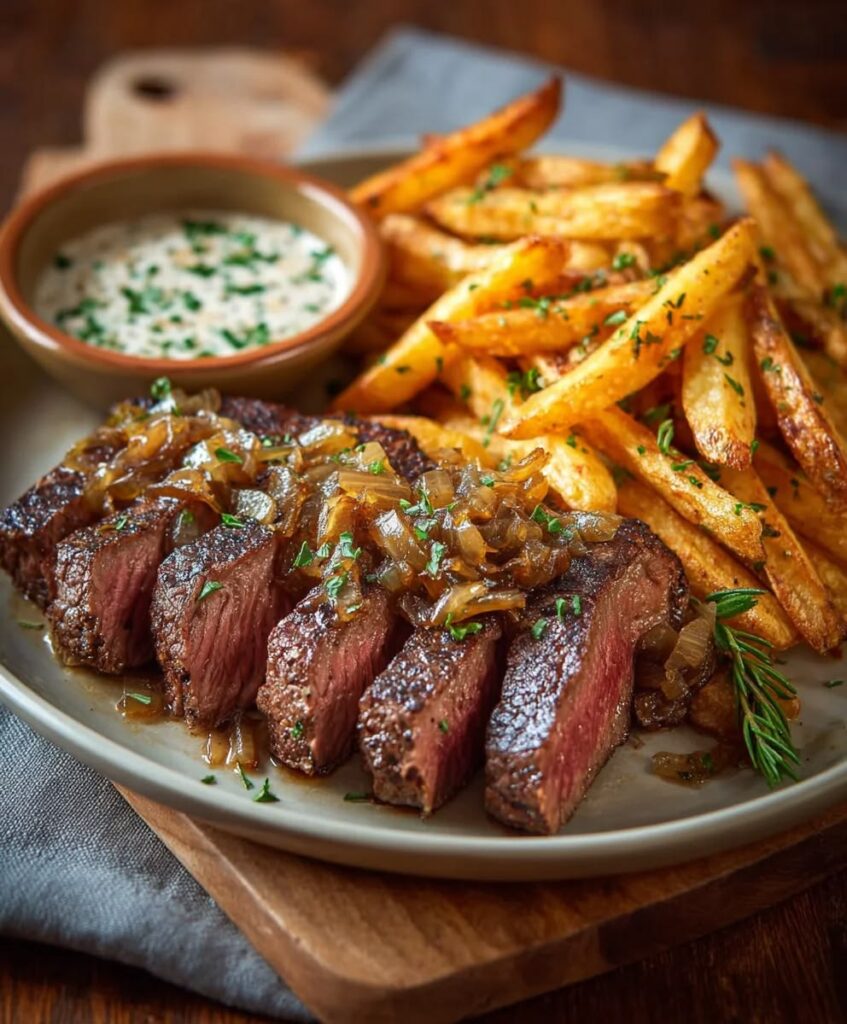
There are some dishes in the culinary world that feel like poetry on a plate — simple, timeless, and indulgent without being excessive. Among them, steak frites stands tall as one of the most beloved pairings of all time. It’s the kind of dish that can make a Parisian bistro come alive, a Sunday dinner feel luxurious, and a food lover sigh with satisfaction after every bite.
At first glance, steak frites — literally “steak and fries” — seems straightforward. But anyone who has ever savored a perfectly cooked ribeye alongside crisp, golden frites knows it’s much more than that. It’s a masterclass in contrast and balance — juicy meat meets crunchy potatoes, richness meets simplicity, and every bite feels like a small celebration.
In this article, we’ll explore everything about steak frites: its history, how to make it perfectly at home, the best cuts and sauces, the science behind cooking steak right, and even how chefs around the world are reinventing this French classic.
Welcome to a dish that defines indulgence — welcome to steak frites.
1. The Origins of Steak Frites: A Culinary Love Story
Like many great dishes, steak frites was not invented overnight. It’s the result of generations of culinary tradition from both France and Belgium, countries that have long debated who truly deserves the credit.
Belgium, famous for its fries (frites), claims that the pairing originated there. After all, Belgians take their fries seriously — fried twice in beef tallow, served piping hot, and crisped to perfection. On the other hand, France, with its love for steak and sauces, perfected the art of pairing a tender cut of meat with this iconic side.
Most historians agree that steak frites rose to popularity in the 19th century, becoming a staple in Parisian brasseries — casual yet elegant restaurants where workers, artists, and intellectuals dined side by side. It was comforting yet refined, indulgent yet familiar — everything French cuisine embodies.
Today, steak frites is celebrated across Europe and beyond — from fine dining restaurants in New York to rustic cafés in Brussels. It’s a dish that’s traveled the world, yet it has never lost its roots in simplicity and flavor.
2. The Secret Behind the Perfect Steak
If you’ve ever wondered why some steaks melt in your mouth while others feel tough and chewy, the answer lies in two things: the cut and the technique.
Choosing the Right Cut
The traditional steak frites often features cuts like:
- Ribeye – rich, marbled, and flavorful.
- Sirloin (Entrecôte) – tender, juicy, and slightly leaner.
- Flank or Hanger steak (Onglet) – deeply beefy with a bit of chew, often preferred in bistros.
- Filet mignon – buttery soft, though less traditional due to its mild flavor.
For the perfect steak frites, the goal is to balance tenderness and flavor. French chefs often swear by the hanger or ribeye cut because of their bold, beef-forward taste that stands up beautifully to fries and sauce.
Cooking Techniques
The golden rule: Don’t overcook it.
Steak frites is at its best when the meat is cooked medium-rare to medium — allowing the fat to render and the fibers to relax, creating a juicy, tender bite.
The best cooking methods include:
- Pan-searing in cast iron: Creates that irresistible crust.
- Basting with butter: Adds richness and depth.
- Resting before serving: Allows juices to redistribute for maximum tenderness.
Seasoning is minimal — just salt, pepper, and maybe a sprig of thyme or a smashed clove of garlic in the butter. When done right, every bite sings of craftsmanship and care.
3. The Art of the Perfect Frites
If steak is the star, fries are the supporting actor that steals the show.
Good frites aren’t just potatoes — they’re golden perfection, crisp on the outside and fluffy inside.
The Belgian Frying Method
Belgium’s famous double-fry technique is what gives fries their addictive texture:
- First fry (blanching) – Potatoes are fried at a lower temperature (~325°F / 160°C) until tender but not golden.
- Resting – They’re cooled or frozen to firm up.
- Second fry – Fried again at a higher temperature (~375°F / 190°C) to achieve that crisp, golden exterior.
This process locks in moisture and creates that iconic crunch that defines frites.
Use starchy potatoes like Russets or Bintje, and if you want to go all out, fry them in beef tallow — the old-school secret to unbeatable flavor.
Seasoning
Salt should be added immediately after frying, so it clings to the hot surface. Some chefs add a pinch of truffle salt or parmesan for a modern twist, but even a sprinkle of sea salt can elevate a good fry to greatness.
4. Sauces: The Soul of Steak Frites
One of the most beautiful aspects of steak frites is how it welcomes sauces like a blank canvas. Each variation tells a story — of region, of chef, of personal taste.
Classic French Sauces
- Béarnaise Sauce: Rich and tangy, made from clarified butter, egg yolks, vinegar, tarragon, and shallots. A steak frites favorite.
- Peppercorn Sauce (Sauce au Poivre): Creamy with a peppery kick — bold yet elegant.
- Red Wine Reduction: Deep and aromatic, often paired with sirloin or ribeye.
- Café de Paris Butter: A compound butter made with herbs, mustard, anchovies, and brandy — melts over the steak like liquid gold.
Modern Twists
In contemporary kitchens, chefs are experimenting with everything from chimichurri and blue cheese butter to miso glaze and smoked aioli. Yet no matter how you dress it, the essence remains: balance richness with brightness.
5. How to Make Steak Frites at Home
Bringing steak frites into your kitchen isn’t as intimidating as it seems. With patience and a few pro tips, you can recreate that Parisian brasserie magic right at home.
Step-by-Step Recipe
Ingredients
- 2 ribeye or sirloin steaks
- 3–4 large russet potatoes
- 3 tbsp butter
- 2 garlic cloves (crushed)
- 1 sprig thyme or rosemary
- Salt & pepper to taste
- Oil for frying (vegetable or beef tallow)
For Sauce (Optional Béarnaise)
- 2 egg yolks
- 1 tbsp white wine vinegar
- ½ cup melted butter
- 1 tsp tarragon
- Pinch of salt
Step 1: Prepare the Frites
Peel and cut potatoes into ¼-inch sticks. Soak in cold water for 30 minutes to remove excess starch. Pat them dry.
Heat oil to 325°F and fry the potatoes for 5–6 minutes (they should look pale). Remove and let them rest on paper towels or refrigerate.
Increase oil temperature to 375°F and fry again until golden and crisp. Drain, season with salt immediately, and keep warm.
Step 2: Cook the Steak
Bring steak to room temperature. Pat dry and season generously with salt and pepper.
Heat a cast iron pan until it just starts to smoke. Add a splash of oil, then place your steak in. Don’t move it — let it sear for 2–3 minutes per side.
Add butter, garlic, and thyme, and baste the steak with the melted butter for another minute. Remove and rest for 5–10 minutes before slicing.
Step 3: Whip Up the Sauce
For Béarnaise, whisk egg yolks and vinegar over a double boiler until slightly thick. Slowly drizzle in melted butter while whisking continuously. Add tarragon and season to taste.
Step 4: Assemble & Serve
Plate the steak next to a generous pile of frites. Drizzle the sauce or place it on the side for dipping. Maybe add a simple green salad with Dijon dressing for balance.
And there it is — a restaurant-worthy steak frites meal in your own kitchen.
6. The Nutritional Side of Steak Frites
Steak frites might sound indulgent — and it is — but it doesn’t have to be unhealthy. The key lies in portion control and preparation.
A lean cut like sirloin paired with air-fried or oven-baked fries can turn this into a surprisingly balanced meal rich in protein, iron, and healthy fats.
Avoid drowning it in sauces, use olive oil instead of heavy butter when possible, and opt for sweet potato fries or a side of greens to lighten things up.
After all, food isn’t just fuel — it’s joy. And steak frites, in moderation, is the kind of joy worth savoring.
7. The Global Journey of Steak Frites
Though born in Europe, steak frites has become a global ambassador of comfort food.
- In New York, it’s served in upscale brasseries with truffle fries.
- In Argentina, it’s paired with chimichurri instead of Béarnaise.
- In Japan, wagyu replaces ribeye, creating an umami-packed version that melts in your mouth.
- And in India, home chefs are giving it a twist with spiced butter and masala fries — a cross-cultural culinary dream.
This adaptability is what makes steak frites eternal — it evolves, yet never loses its heart.
8. Common Mistakes to Avoid (and How to Fix Them)
Even seasoned cooks make mistakes with steak frites. Here’s how to avoid the most common ones:
- Overcooking the Steak:
Always use a thermometer — 130°F for medium rare. Rest it before slicing. - Skipping the Resting Step:
If you cut too early, the juices will run out. Let it breathe. - Using the Wrong Potatoes:
Waxy potatoes won’t crisp well. Stick to starchy varieties like Russet. - Crowding the Fryer:
Too many fries at once lowers the oil temperature, resulting in soggy frites. - Underseasoning:
Salt brings the dish to life — don’t be shy with it. - Using Cold Steak:
Let it come to room temp before cooking to ensure even doneness.
By mastering these details, you’ll never settle for a subpar steak frites again.
9. A Symbol of Everyday Luxury
What makes steak frites so enduring is its ability to feel special yet accessible. It’s not caviar or foie gras — it’s a plate that speaks to the heart.
In a world of fusion dishes and molecular gastronomy, steak frites reminds us that sometimes, the simplest things are the most extraordinary. It’s that feeling of sitting by a café window, sipping wine, and letting every bite remind you that life is delicious.
As we often say on Riya’s Blogs, the joy of food lies not just in the taste but in the story it tells — and steak frites tells one of passion, patience, and the timeless beauty of balance.
10. Bringing It All Together
So, what makes steak frites truly unforgettable?
It’s the harmony. The way the crispness of the fries cuts through the richness of the meat. The way a drizzle of sauce transforms a simple bite into something divine. The way it feels indulgent, even when made at home on a weeknight.
It’s the kind of dish that doesn’t shout for attention — it simply is. Effortless, elegant, and endlessly satisfying.
Whether you’re a food lover exploring French cuisine or someone craving comfort with a touch of class, steak frites is your answer. It’s a reminder that good food doesn’t need complexity — just care, craft, and a little bit of butter.
From the kitchens of Paris to your own dining table, steak frites is proof that perfection can be found in simplicity.
And if there’s one dish that captures the spirit of slow living, good eating, and culinary romance — this is it.
Bon appétit.
Want to read a bit more? Find some more of my writings here-
Top 25 Quotes That Make You Believe in Love Again
Urban Legends and Their Place in Modern Horror Writing
Top 25 Dark Aesthetic Quotes for the Deep Soul
I hope you liked the content.
To share your views, you can simply send me an email.
Thank you for being keen readers to a small-time writer.