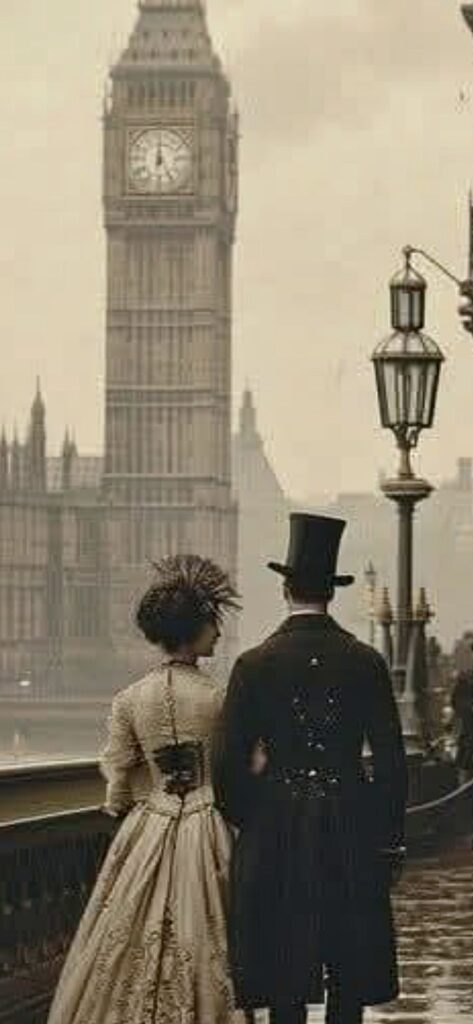
When one hears “Victorian fashion,” often dramatic crinolines and corsets come to mind. But the 1870s fashion decade is a pivotal moment — one of transformation, subtle rebellions, and refined extravagance. It’s a period where silhouettes shift, materials evolve, social mores intertwine with dress codes, and fashion becomes a complex language of status, propriety, and identity.
On Riya’s Blogs, I love exploring how clothing isn’t just “pretty”—it tells stories of economics, gender, technology, and culture. In this article, we’ll walk through 1870s fashion in all its forms: women’s dress, men’s wear, underpinnings and accessories, regional variations, and its legacies. And yes, we’ll see 1870s fashion repeated (gently) in key places to underscore its presence.
Let’s begin by setting the scene.
Historical & Cultural Context
Before diving into gowns and waistcoats, it helps to picture what was going on in the world in the 1870s:
- The Industrial Revolution was well underway. Textile mills, mechanized looms, synthetic dyes, and faster transportation (railways, steamships) made fabrics and styles more accessible than ever before.
- The latter Victorian era (Queen Victoria reigned until 1901) was a time of tightening social norms, moral earnestness, and an increasingly stratified society. Fashion was a signal of class, virtue, and status.
- Photography was increasingly common, and fashion plates and printed periodicals circulated widely, spreading styles across continents.
- Women’s roles were still largely domestic in many places, but there was tension: suffrage movements, debates about “rational dress,” and the early stirrings of change in women’s clothing freedoms.
In this environment, 1870s fashion becomes not just about glamour, but about negotiation: how to seem refined, proper, modern — yet not scandalous.
Women’s Fashion in the 1870s
Perhaps the richest area of style change in the decade lies in women’s dress. Let’s break it down into shapes, fabrics, occasions, and underpinnings.
Silhouettes and Shape
One of the hallmarks of 1870s fashion is the shift of emphasis toward the back of the skirt, creating a pronounced rear profile. Earlier decades had favored broad crinolines and hoops all around; by the 1870s, the volume reduced and was drawn to the posterior in what later evolves into the bustle look.
- Skirts in the early 1870s might still feature a modest “crinoline” or hoop, but it is flatter in front and more voluminous behind.
- As the decade advances, the bustle begins to take shape: draped overskirts, swags, and folds in back, lashes and bows, and cascading fabric layers (trains and trailing scarves) add drama.
- The overall silhouette is more elongated — narrower from waist to hem, rather than a drastic bell-shape.
- Bodices tend to be well-fitted, nipped in at the natural waist, often with a slight flare over the hips, depending on the year and fashion house.
Thus 1870s fashion is a balancing act: volume without overwhelming bulk, structure without rigidity, and (importantly) visual interest at the back.
Bodices, Sleeves & Necklines
The bodice is central to a woman’s look, and in 1870s fashion there is a delicate dance between modesty and decoration.
- Daywear bodices typically have high necklines (standing collars or modest lace insertion), long sleeves (often tight or with slight fullness at the shoulder), and buttons or lace-downs at the front.
- Evening bodices/dresses open the neckline more: square, off-the-shoulder, or a modest dip in front. Shorter sleeves, often with decorative ruffles, lace, or bouffant ornamentation, become more common for formal evenings.
- A favorite trick was to build a “false vest” or “false waistcoat” effect with contrasting fabric, as though a vest is layered beneath the bodice.
- Trimmings — lace, ruche, fringe, ribbons, passementerie — are widely used at collars, cuffs, and bodice seams to embellish without overwhelming.
Fabrics and Colors
The palette and textiles of the 1870s are a study in sophistication.
- Silks, satins, taffetas, velvets, and brocades are popular for formal wear. For daytime, lighter fabrics like printed muslins, lightweight woolens, and fine cottons come into use.
- The growing use of synthetic dyes (aniline dyes, introduced earlier in the 19th century) allows for brighter, richer colors: deep blues, vibrant greens, purples, wine tones, and rich browns.
- Patterns — florals, small motifs, stripes, and checks — become more acceptable, especially in informal wear or travel dresses.
- Trimmings frequently incorporate fur (muffs, collars), lace inserts, fringe, and beadwork for decorative effect.
Underpinnings: Corsets, Bustles & Panniers
What a garment looks like on the outside is always indebted to what’s underneath. 1870s fashion would be impossible to understand fully without exploring its understructures.
- Corsets / stays: These remain essential. Women wear tightly laced corsets (often made of whalebone, steel, or mixed boning) to shape the torso. The goal is to create an hourglass or cylindrical form, reducing waist circumference and lifting the bust.
- Bustles / pad structures: As skirts evolve, so do the means to support them. Small cushions, horsehair pads, or metal frameworks begin to be placed at the back, just below the waist, to give that desirable posterior emphasis. This is the nascent bustle.
- Petticoats / underskirts: Multiple layers continue — often a combination of flannel, cotton, linen, or horsehair petticoats — to provide fullness and structure, absorb the weight of the overgown layers, and protect outer fabrics.
Types of Dresses / Occasions
The 1870s woman needed a wardrobe suitable for many occasions. Each had its conventions.
- Day Dresses / Morning Gowns: More modest, practical, and comfortable. High collars, long sleeves, simpler trimmings, durable fabrics.
- Walking / Afternoon Dresses: Slightly more decorative, still modest but with more color and trim.
- Tea Gowns / Gowns of Leisure: A relatively new concept in this decade — more relaxed dresses worn at home or for informal entertaining. These could be looser in fit and made of lighter fabrics; still respecting decency but less constrained by rigid structure.
- Evening / Ball Gowns: The most ornate. Low necklines, short sleeves, luxurious fabrics and trimmings, long trains, and ornamentation.
- Travel / Outdoor Dresses: Practical versions for riding, travel, country visits. Usually sturdier fabrics, simpler cut, sometimes with protective overskirts or detachable trains.
Hairstyles, Hats & Accessories
No study of 1870s fashion is complete without covering what topped the outfits.
- Hairstyles: Hair is typically parted in the center or slightly off, smoothed close to the head, then gathered into buns, knots, or coils at the back. Ringlets or loose curls occasionally frame the face. Hairpieces and false curls supplement volume.
- Bonnets and Hats: Bonnets remain in use outdoors for modesty and sun protection — often stiffened, brimmed, trimmed with ribbons, feathers, or flowers. Wide-brimmed hats become popular too, especially in latter years, often decorated.
- Gloves, Fans, Parasols: Essential accessories. Gloves (kid, silk, cotton) complete daytime and evening ensembles. Fans (often lace or painted) are both practical (cooling) and symbolic. Parasols, lace or silk, help with sun protection and elegance.
- Jewelry and Belts: Cameos, lockets, brooches, bracelets, and earrings in gold, pearls, jet, and other materials are common. Belts or sashes (often decorative) are used to highlight the waistline.
- Shoes / Boots: Buttoned or lace-up boots/shoes made of leather, satin, or silk; often pointed toes, small heels, and decorative elements such as bows or stitching.
Men’s Fashion in the 1870s
While women’s fashion was in flux, men’s dress in the 1870s is steadier, less dramatic in change, but still subtly evolving.
The Standard Suit Structure
By the 1870s, the three-piece suit is well entrenched.
- A man often wears a coat, waistcoat (vest), and trousers as a package.
- The frock coat is still the formal daytime coat — knee-length, with a straight cut, often worn with a matching waistcoat.
- For evening wear, tailcoats and dress coats emerge: shorter fronts, cutaway tails, paired with formal trousers.
- Morning suits (cutaway front) are used for daytime formal events (weddings, formal calls).
- Waistcoats may be contrasting or matching, single- or double-breasted.
Shirts, Collars & Necks
- White linen shirts dominate formalwear, with softer colored or patterned shirts sometimes used in less formal settings.
- Collars are detachable, often stiffened. The standing or winged collar is typical.
- Cravats, neckties, or bow ties complete the look. The style and knot of neckwear are part of a gentleman’s expression.
Trousers and Fit
- Trousers are tailored, full in the thigh, tapering toward the ankle, with a crease.
- Stripes or subtle patterns (pinstripes, checks) may occur in some formal trousers.
- Braces (suspenders) are used underneath the waistcoat to hold trousers up.
Outerwear & Tailoring Details
- Overcoats, greatcoats, and capes are used in cold weather: often heavy wool, fur-trimmed collars, dramatic lapels.
- “Ulster” coats and “Inverness” cloaks become fashionable for travel and wear in inclement weather.
- Lapel styles, button placement, cut lines, and pocket designs are all nuanced ways tailors signal fashion awareness.
Hats, Footwear & Accessories for Men
- Top hats remain an icon of formal men’s fashion, particularly for upper classes.
- Bowler hats (derby) are common for day and middle-class wear.
- Boater hats are used in casual/seaside settings or summer wear.
- Boots and shoes: lace-up boots for daytime, patent leather or polished dress shoes for evening.
- Canes, gloves, pocket watches, cufflinks, cravats pins, and waistcoat chains are common small accessories.
Regional Variations, Social Class & Adaptations
Not everyone in the 1870s was dressing like a London aristocrat or Parisian socialite. 1870s fashion varied by geography, social status, climate, and practicality.
- In rural or frontier regions (e.g. some parts of America, colonies, or countryside), women often adapted fashions to local resources: lighter fabrics, simpler trims, fewer layers.
- In tropical colonies or warm climates, linen dresses, lighter colors, looser fits, and sun-protecting parasols/broad hats were favored.
- Working-class women or lower middle classes wore simpler, sturdier garments. Needlecraft, mending, and repurposing were essential; skirts might lack excessive trimming, and fabrics would be economical.
- Regional tastes in color and pattern (local florals or motifs) might influence dress styles subtly, especially in more remote or less fashion-forward locales.
- In cities, fashion trend diffusion via magazines, imported fabrics, and dressmakers meant more uniform adoption of 1870s fashion looks.
Evolution Through the Decade & Transitions to 1880s
A key point: 1870s fashion does not stay static from 1870 to 1879. It evolves. Observing how it transforms helps understand fashion history.
- Early 1870s: Skirts still have modest volume, more symmetric draping, moderate use of crinoline supports. Bodices more modest and heavily boned.
- Mid 1870s: Transition toward rear emphasis, more draping and overskirts. Bustle pads begin to emerge. Trimmings increase in complexity.
- Late 1870s: The bustle becomes more pronounced. Overlays, trains, and cascading fabrics become more dramatic. Evening gowns display more daring necklines and ornamentation.
- As the decade ends, hints of the more extreme bustle era (1880s) begin to appear — more used pads, stronger back emphasis, more exaggerated draping.
Thus 1870s fashion is a bridge between mid-Victorian stiffness and the flamboyance of late-Victorian bustle styles.
The Social & Symbolic Meanings of Dress
Fashion is not just aesthetic — in the 1870s, dress is laden with social signals.
- Modesty and propriety are paramount: a woman’s dress displayed her virtue, respectability, and adherence to social norms. Low necklines, fancy fabrics, or too much exposure could invite gossip.
- The degree of ornamentation, the richness of the fabric, the cut, and the tailor’s precision broadcast class and wealth.
- Access to fashion magazines, imported fabrics, and elite dressmakers was a kind of capital — those in more remote or poorer classes were visibly differentiated by their simpler garb.
- Dress also reflects shifting ideas about women’s roles: informal “tea gowns” or more relaxed dresses indicate a soft move toward comfort within constraints.
- For men, a well-cut suit, appropriate hat, and polished accessories signified professionalism, respectability, and seriousness.
Legacy: Why 1870s fashion still matters today
When we look back at 1870s fashion, what can we draw from it?
- Fashion as transition: The 1870s shows how styles evolve gradually, mixing old and new. It teaches how fashion is never static.
- Engineering meets aesthetics: The interplay of underpinnings (corsets, bustles) with surface design is a lesson in how structure shapes beauty.
- Gender and constraint: The ways women’s bodies were shaped, propped, and molded by clothes speak to larger conversations about autonomy, mobility, and identity.
- Historical influence: Costume designers, historical reenactors, steampunk fashion, and vintage fashion lovers often turn to the 1870s for ideas—because it’s rich, nuanced, and dramatic without being completely excessive.
- Cultural mirror: The fashions of the 1870s reflect trade, technology (dyes, mass manufacture), imperialism (imported fabrics, colonial tastes), and social norms — it’s a lens into a changing world.
Bringing 1870s fashion to Life on Riya’s Blogs
On Riya’s Blogs, I’ve always emphasized that history is not a dusty museum artefact — it’s alive. When you imagine a woman in 1873 stepping into a salon, smoothing out the folds of her overskirt, adjusting her bustle pad, considering which hat to wear — that moment is vivid. The fabrics rustle, the light dabbles on silk — and fashion becomes theater.
When writing about 1870s fashion, I aim to go beyond mere lists of terms and into storytelling: how women felt in their corsets, how tailors sneaked in innovations, how a widow’s black attire subtly shifted over time, how a younger woman might push modest boundaries in a garden party. History lived.
Want to read a bit more? Find some more of my writings here-
Why True Crime and Horror Overlap in Popular Culture
Wild Wonders: Fascinating Animals from Around the World You’ll Want to Know About
40 Hidden Quotes That Speak Loudly in Silence
I hope you liked the content.
To share your views, you can simply send me an email.
Thank you for being keen readers to a small-time writer.