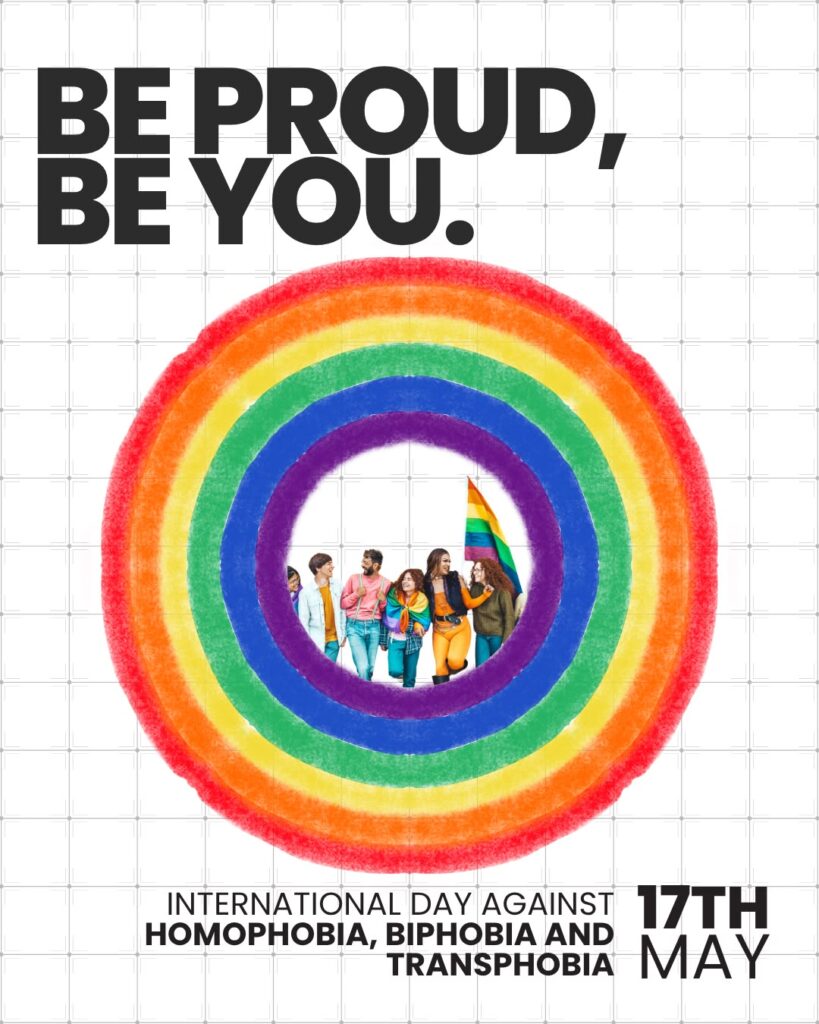
Every year on May 17, people around the world mark the International Day Against Homophobia, Transphobia & Biphobia, often shortened to IDAHOBIT. It’s a day focused on something simple, but powerful: dignity and safety for LGBTQ+ people, and a shared commitment to push back against prejudice—whether it shows up as jokes, exclusion, unequal policies, harassment, or violence.
In this guide from Riya’s Blogs, I’ll keep things clear and practical: what IDAHOBIT is, why the date matters, what an appropriate tone looks like (especially at work), whether pride colors are okay to use, and plenty of ready-to-share idahobit messages you can post or send.
What is IDAHOBIT, and what does it stand for?
IDAHOBIT stands for International Day Against Homophobia, Transphobia & Biphobia. The day is observed in many countries through awareness campaigns, community events, workplace initiatives, and social media education.
At its heart, IDAHOBIT is about:
- Respect and equal treatment for people of all sexual orientations and gender identities
- Visibility for discrimination that still exists (in big ways and small everyday ways)
- Action—not just “support in theory,” but support that shows up in language, policies, and behavior
You’ll also see related versions of the acronym in some places because different organizations emphasize different communities (for example, some explicitly include intersex people, and some expand the wording to cover broader LGBTQ+ experiences). The mission stays consistent: ending discrimination and affirming human rights.
Why is IDAHOBIT on May 17?
May 17 was chosen because it marks a major moment in modern health and human rights history: on May 17, 1990, the World Health Organization (WHO) removed homosexuality from its international classification of diseases. That decision helped shift global conversations away from stigma and toward science, dignity, and rights—though progress has been uneven across countries and communities.
So May 17 isn’t random. It’s a reminder that ideas once treated as “normal” by institutions can be corrected—and that respectful, evidence-based change is possible.
The most appropriate tone for IDAHOBIT (especially in public or at work)
A lot of people want to support IDAHOBIT but worry about “saying the wrong thing.” A safe, professional, inclusive tone is:
Warm, respectful, and non-performative.
That means:
- Speak with people, not about them like a topic.
- Avoid jokes or “edgy” humor (even if you mean well).
- Avoid assumptions like “everyone has a husband/wife,” or “you don’t look trans.”
- Keep the focus on dignity, safety, belonging, equal opportunity, and anti-discrimination.
If you’re writing for a workplace setting, aim for language that is:
- Neutral and welcoming
- Policy-aligned (respect, non-harassment, equal opportunity)
- Supportive without being overly personal
Think “inclusive community statement,” not “debate.”
Can you include pride colors?
Yes—pride colors are widely used and generally appropriate for IDAHOBIT. Pride colors communicate visibility and allyship quickly, and many organizations use them in May and June.
A few practical tips (especially for professional settings):
- Keep it tasteful: a subtle ribbon, gradient line, small accent, or a themed header can be enough.
- Prioritize accessibility: ensure high contrast for readability (some rainbow gradients can reduce text clarity).
- Follow brand guidelines: if you’re posting from a company page, stick to approved templates or color usage rules.
- Pair visuals with substance: colors work best when you also share a short educational line or supportive message—so it doesn’t feel like token support.
What IDAHOBIT is really asking us to do
The day is not only about posting. It’s also about everyday decisions that reduce harm and increase belonging. Here are meaningful actions that don’t require grand speeches:
- Use respectful language and correct pronouns when you know them
- Challenge casual discrimination (“That joke isn’t okay here.”)
- Support inclusive policies (anti-harassment, equitable benefits, inclusive facilities)
- Make space in conversations so people don’t feel they must hide who they are
- Listen and learn—especially from LGBTQ+ voices and lived experiences
Even one consistent habit—like not assuming someone’s gender or partner—can make a workplace or classroom feel safer.
IDAHOBIT messages you can share (social, personal, and workplace-friendly)
Below are ready-to-use idahobit messages, plus options that work as anti discrimination captions, professional notes, and supportive statements. I’m also including a few “quote-style” lines you can use as equality awareness quotes without sounding overly dramatic.
1) Short, workplace-inclusive IDAHOBIT messages
- “Today is IDAHOBIT—International Day Against Homophobia, Transphobia & Biphobia. We stand for respect, dignity, and equal opportunity for everyone.”
- “On May 17, we recognize IDAHOBIT and reaffirm our commitment to inclusion and a workplace free from discrimination.”
- “Everyone deserves to feel safe, valued, and respected at work—today and every day. #IDAHOBIT”
- “Inclusion isn’t a slogan. It’s how we speak, listen, hire, support, and lead.”
- “We support a culture where people can show up as themselves—with respect and without fear.”
2) Warm, personal supportive lines
- “You deserve respect exactly as you are.”
- “I’m proud to stand with LGBTQ+ friends, colleagues, and family—today and always.”
- “No one should have to earn basic dignity.”
- “Your identity is not up for debate. Your safety matters.”
- “You are not alone, and you are not ‘too much.’ You’re human.”
3) Pride ally support lines (clear and simple)
If you want direct pride ally support lines, these are straightforward without being performative:
- “I’m listening, learning, and showing up as an ally.”
- “I support LGBTQ+ inclusion—at work, at home, and in my community.”
- “Allyship is action: respect, accountability, and protection from harm.”
- “I’ll speak up when it’s easier to stay quiet.”
- “You belong here.”
4) Anti discrimination captions for social media
- “Different identities, equal dignity. #IDAHOBIT”
- “Respect is not optional.”
- “No hate. No fear. Just human rights.”
- “Inclusion is a daily choice.”
- “Safety and equality for every person—always.”
- “Let’s make spaces kinder, not just ‘tolerant.’”
- “Be the reason someone feels safe to be themselves.”
5) Equality awareness quotes (quote-style lines you can post)
These work well as equality awareness quotes for posters, newsletters, or internal communications:
- “Equality is not a special request—it’s a basic standard.”
- “Inclusion is what respect looks like in action.”
- “Human rights don’t depend on identity.”
- “A safe community is one where people don’t have to hide.”
- “Belonging is built through everyday choices.”
6) A “LGBTQ inclusion message” that’s polished for teams
Here are a few longer options if you need a proper statement for Slack, email, or a workplace post:
- “Today is IDAHOBIT (May 17), a reminder that everyone deserves to live and work with dignity—free from harassment, bias, and discrimination. We reaffirm our commitment to respect, inclusive language, and equal opportunity for people of all sexual orientations and gender identities.”
- “On IDAHOBIT, we recognize the impact discrimination can have on safety, mental health, and opportunity. Creating an inclusive culture means listening, learning, and building systems that protect everyone—especially those who face bias. Respect is the baseline.”
- “IDAHOBIT is a day to stand against homophobia, transphobia, and biphobia—and to stand for belonging. Let’s keep our spaces welcoming: assume less, listen more, and treat every person with the dignity they deserve.”
Workplace-friendly wording: a quick checklist (so it stays inclusive)
If you’re posting from a workplace account or writing to colleagues, this helps you stay respectful and professional:
Do
- Use “LGBTQ+ people” or “people of diverse sexual orientations and gender identities”
- Emphasize “respect,” “safety,” “equal opportunity,” “non-discrimination”
- Keep it welcoming and simple
- If relevant, reference workplace values (belonging, harassment-free environment)
Avoid
- Overly personal assumptions (“As a straight person, I…” can become the focus)
- Debating identity or framing inclusion as controversial
- Stereotypes, jokes, or “trend” language that minimizes seriousness
- “Othering” phrases like “those people” or “that lifestyle”
A very safe template you can reuse:
“On IDAHOBIT (May 17), we stand for dignity, safety, and equal treatment for LGBTQ+ people. We’re committed to inclusion and to a discrimination-free environment.”
How to observe IDAHOBIT in a meaningful way (not just a post)
If you want your support to be more than words, try one of these:
- Share a short educational fact about IDAHOBIT and why May 17 matters
- Promote a clear anti-harassment / anti-discrimination reminder at work
- Encourage respectful pronoun practices (only when people choose to share)
- Highlight support resources (employee assistance programs, DEI contacts, community hotlines, local LGBTQ+ orgs)
- Commit to a small behavior change: don’t assume gender, don’t assume partners, correct biased jokes
Small changes—repeated—are what build safer spaces.
Conclusion
The International Day Against Homophobia, Transphobia & Biphobia (May 17) is both a commemoration and a call to action. It reminds us that discrimination can be challenged, institutions can change, and communities can become safer when respect becomes non-negotiable.
If you’re wondering what to share, keep it simple: choose a steady, respectful tone; use pride colors if they fit your setting; and focus on dignity, safety, and inclusion. Whether you post one of the idahobit messages above, add anti discrimination captions to your feed, or share a thoughtful LGBTQ inclusion message at work, what matters most is that the support is real—and consistent.
Want to read a bit more? Find some more of my writings here-
International Day of Families (May 15): Meaning, Importance, and the Best Messages to Share
Dance Like a Chicken Day (May 14): Funny Messages, Silly Captions, and Playful Ways to Celebrate
I hope you liked the content.
To share your views, you can simply send me an email.
Thank you for being keen readers to a small-time writer.