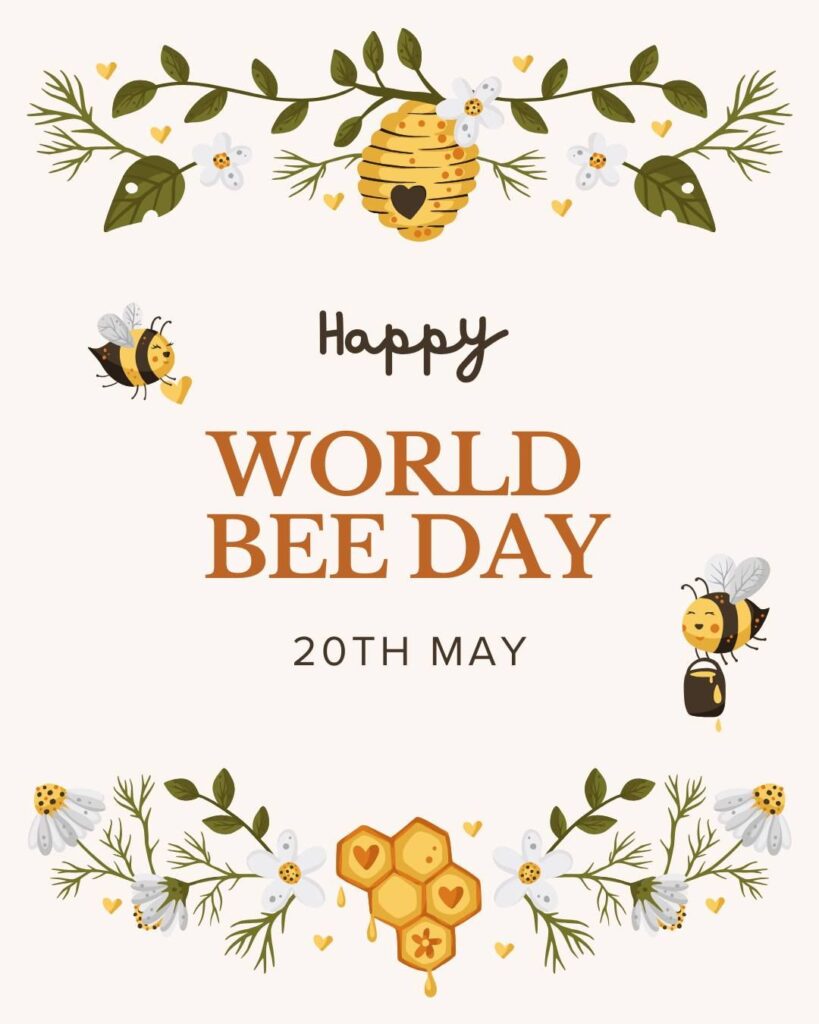
World Bee Day is observed every year on May 20 to remind us of something surprisingly simple: our everyday meals, healthy ecosystems, and a big chunk of global biodiversity depend on pollinators. Bees are the stars of the show, but the day also shines a light on butterflies, moths, birds, bats, and other pollinating species that keep nature (and our food systems) running.
In this guide on Riya’s Blogs, we’ll keep things clear and practical—what World Bee Day is, why it exists, what’s happening to bees, and how you can share meaningful World Bee Day messages and take real action that supports pollinators.
World Bee Day in a nutshell
World Bee Day was designated by the United Nations and is led globally with strong support from the Food and Agriculture Organization (FAO). The date—May 20—was chosen to honor Anton Janša (born May 20, 1734), a Slovenian pioneer of modern beekeeping whose work helped shape how people understand and care for bees.
The purpose of the day is straightforward:
- Raise awareness about the role of bees and other pollinators
- Encourage protection of pollinator habitats
- Promote sustainable practices in agriculture and gardening
- Inspire individuals, communities, and businesses to take small, practical steps that add up
World Bee Day isn’t just a “cute nature holiday.” It’s connected to bigger goals like food security, biodiversity conservation, and sustainability—because when pollinators decline, the effects ripple out far beyond honey.
Why bees and other pollinators matter (more than most people realize)
1) Pollination supports the foods we love
A commonly cited global estimate (from FAO and related international assessments) is that around 75% of leading food crops benefit from animal pollination to some degree. That doesn’t mean 75% of our food disappears without bees—but it does mean the quality, yield, diversity, and stability of many fruits, vegetables, nuts, and seeds are tightly linked to pollinators.
Think about foods that rely heavily on pollination:
- Apples, berries, mangoes, watermelons
- Almonds and many other nuts
- Cucumbers, pumpkins, squash
- Coffee and cocoa (yes, chocolate has pollinator connections too)
Even foods that don’t strictly “need” bees can still benefit indirectly because pollination strengthens ecosystems and farm diversity.
2) Bees help ecosystems reproduce
Wild plants depend on pollinators to produce seeds and maintain genetic diversity. When pollinators thrive, plant communities are healthier—and that supports birds, insects, mammals, soil life, and water cycles. In other words: bees are part of the quiet machinery of nature.
3) Pollinators have major economic value
Global assessments often estimate the annual economic value of pollination services in the hundreds of billions of US dollars (frequently cited ranges include US$235–577 billion, associated with IPBES-style reporting). Again, this isn’t just about honey—this is about the value of stable crop production and resilient agriculture.
4) Bees are more diverse than most people think
When people say “save the bees,” they often picture the familiar honey bee. But the world has thousands of bee species, many of them solitary and wild. Bumblebees, carpenter bees, leafcutter bees, mason bees—each plays a role in pollinating different plants, in different climates, across different seasons.
A strong pollinator protection message includes both managed honey bees and wild native bees, because wild pollinators are essential to ecosystem balance.
What’s putting bees at risk?
Bees are resilient, but they’re facing multiple pressures at the same time. That combination is what makes the situation urgent.
1) Habitat loss and less diverse landscapes
When natural areas turn into concrete or when farms become large single-crop “green deserts,” pollinators lose:
- Nesting sites
- Continuous food sources across seasons
- Shelter from heat, rain, and predators
A few decorative flowers are not the same as a habitat. Pollinators need a sequence of blooming plants from spring through late summer.
2) Pesticide exposure and chemical stress
Certain pesticides can harm bees directly or disrupt their navigation, learning, and immune systems. Even when a chemical doesn’t “kill instantly,” repeated exposure can weaken colonies and wild populations over time.
This is why many sustainability lines around World Bee Day focus on reducing chemical use, choosing safer methods, and supporting practices that protect non-target species.
3) Climate change and seasonal mismatches
Climate shifts can cause plants to bloom earlier or later, creating timing problems: bees may emerge when fewer flowers are available, or heat waves may reduce nectar flow. Unpredictable weather also affects nesting success and winter survival.
4) Diseases, parasites, and invasive threats
Managed honey bees can face serious challenges from parasites and pathogens (a well-known example is the Varroa mite). Wild bees also face diseases and competition pressures, especially where habitats are fragmented.
5) “Save the bees” needs nuance
It’s important to say this gently but honestly: saving bees isn’t only about adding more honey bee boxes everywhere. In some locations, large numbers of managed honey bees can compete with wild pollinators for limited flowers. The best approach is balanced:
- Protect wild habitats
- Plant native flowers
- Support responsible beekeeping
- Improve overall biodiversity
That’s a more complete, science-aligned way to live the spirit behind save the bees quotes and campaigns.
How to celebrate World Bee Day (simple actions that actually help)
You don’t need a farm or a garden to participate. The best World Bee Day celebrations are practical, repeatable, and community-friendly.
1) Plant for pollinators—native is best
If you can plant even a small pot, you can help. Choose native flowering plants when possible because local bees evolved alongside them.
Aim for:
- Different flower shapes (different bees prefer different flowers)
- Different bloom times (spring, summer, late summer)
- Single flowers over “extra-double” decorative varieties (more accessible nectar/pollen)
If you have space: create a “pollinator strip” or a small wild patch. If you don’t: balcony pots work.
2) Skip pesticides (or reduce sharply)
Try these instead:
- Hand-pulling weeds
- Mulching to prevent weed growth
- Natural pest controls (like neem-based options used carefully, or soap solutions for specific pests)
- Encouraging beneficial insects
If chemicals must be used, avoid spraying during bloom, and follow local guidelines carefully—pollinator timing matters.
3) Provide water (yes, bees get thirsty)
A shallow dish with pebbles or floating cork pieces gives bees a safe place to land while drinking.
4) Let your lawn be a little less “perfect”
If you have a yard:
- Mow less often
- Allow clover or small wildflowers
- Keep some leaf litter or natural corners for nesting sites
Many wild bees nest in soil or plant stems. “Messy” can be life-saving.
5) Support pollinator-friendly farming and local beekeepers
Buy local honey if you enjoy it, but also support:
- Farms that grow diverse crops
- Organic or integrated pest management approaches
- Brands that invest in habitat restoration
6) Teach and share
World Bee Day is perfect for classrooms and workplaces because it’s positive, educational, and action-oriented. Consider:
- A short presentation on pollinators
- A “plant a pot” activity
- A team challenge: everyone posts one eco-friendly action
This is where environmental awareness captions and thoughtful posts can turn into real impact—because social sharing spreads ideas fast.
World Bee Day messages, captions, and quotes you can use
Below are message ideas you can copy, customize, or post as-is. I’ve included short options, workplace-safe lines, and a few warm and slightly playful ones—so you can match your tone.
Short World Bee Day messages (quick and clear)
- “Happy World Bee Day! Small pollinators, huge impact.”
- “Plant flowers. Skip pesticides. Save the bees.”
- “No bees, no berries—protect pollinators today.”
- “A little wild space can mean a lot. #WorldBeeDay”
- “Let’s support pollinators and protect biodiversity.”
Eco-friendly awareness post lines (great for Instagram/LinkedIn)
- “World Bee Day is a reminder that sustainability starts in the everyday—what we plant, what we spray, and what we protect.”
- “Pollinators keep ecosystems blooming and food systems thriving. Today, I’m choosing one action to help.”
- “A pollinator-friendly garden isn’t about perfection—it’s about variety, native plants, and fewer chemicals.”
- “This is your sign to plant something that blooms.”
Workplace-friendly pollinator protection message
- “On World Bee Day (May 20), we recognize the essential role pollinators play in food security and healthy ecosystems. Small actions—like planting pollinator-friendly flowers and reducing pesticide use—support long-term sustainability.”
- “Happy World Bee Day! Protecting pollinators is a practical step toward a healthier environment and more resilient communities.”
- “Today’s sustainability reminder: support biodiversity where you live—balcony, backyard, or community space.”
Save the bees quotes (original-style, shareable)
- “Saving bees isn’t a trend—it’s ecosystem care.”
- “Protect the pollinators, protect the future.”
- “Let flowers grow, let nature work.”
- “Biodiversity begins with the smallest wings.”
- “A planet that blooms is a planet that breathes.”
Cute, light, and friendly captions
- “Bee kind. Plant flowers.”
- “Just winging it—like a bee on a mission 🐝”
- “Powered by pollination.”
- “May 20: celebrating the tiny heroes of our plates.”
- “More blooms, fewer chemicals.”
A short message you can text or add to a card
- “Happy World Bee Day! Let’s do one small thing today that helps pollinators—plant a flower, skip a spray, or share an awareness post.”
Conclusion
World Bee Day on May 20 is more than a calendar date—it’s a reminder that nature’s “smallest workers” keep life beautifully connected. Bees and other pollinators support crops, wild plants, biodiversity, and the long-term stability of ecosystems we depend on. And while the challenges are real—habitat loss, chemicals, climate shifts—so are the solutions.
If you’re posting today, choose a message that feels true to you—whether it’s a simple World Bee Day message, a thoughtful pollinator protection message, or a few strong sustainability lines. Then back it up with one action: plant something, protect habitat, reduce chemical use, or support pollinator-friendly communities.
Because the most powerful environmental awareness captions are the ones that inspire change beyond the screen.
Want to read a bit more? Find some more of my writings here-
International Day of Families (May 15): Meaning, Importance, and the Best Messages to Share
I hope you liked the content.
To share your views, you can simply send me an email.
Thank you for being keen readers to a small-time writer.