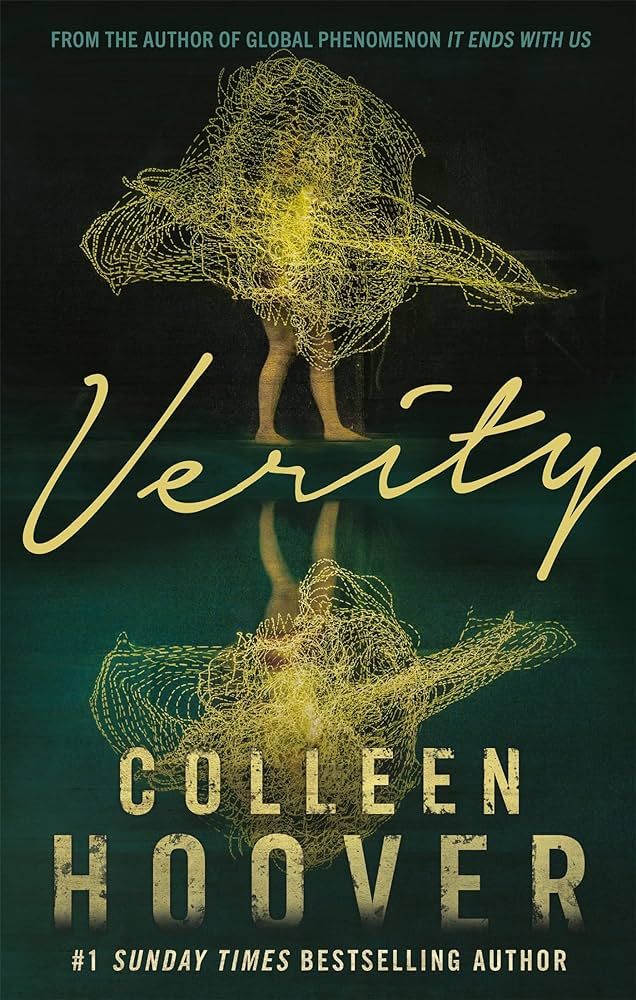
If you’ve heard of Verity, chances are someone called it “disturbing,” “twisted,” “unputdownable,” or “morally unsettling.” And they weren’t exaggerating. Verity is not a light romance. It isn’t a typical cozy mystery. Instead—it’s a psychological thriller cloaked in domestic ease, a novel that plays tricks on your mind, leading you to question what you believe, what is real, and what truth means when everyone tells a different version of it.
In this article from Riya’s Blogs, I’ll walk you through what Verity is about—its plot, characters, themes, moral gray zones, and why it hits readers so deeply. If you read this and then pick up Verity, you might never look at some characters—or yourself—the same way again.
The Premise: Ghostwriting, Secrets, and a House Full of Shadows
At its heart, Verity begins with a desperate writer and an offer that seems like salvation.
- Lowen Ashleigh is our narrator: a struggling writer, barely making ends meet, haunted by grief and uncertainty about her future.
- She gets approached by Jeremy Crawford, husband of a once‑successful author—Verity Crawford—who suffered a tragic accident and is now incapacitated, unable to continue writing.
Jeremy offers Lowen the “job of a lifetime”: ghostwrite the remaining books in Verity’s bestselling series. For a writer like Lowen—broke, overlooked, longing for success—this seems like an impossible dream come true.
She moves into the Crawford home. It’s elegant, quiet, secluded. Verity lies in bed, pale and silent; Jeremy is exhausted, carrying the grief of lost children and a marriage shattered by trauma. Their young son, Crew, lingers as a fragile thread holding the family together. On the surface, tragedy and grief seem plausible explanations. But as Lowen begins to sort through Verity’s notes, manuscripts, and old papers, she uncovers a secret: a hidden, unfinished autobiography. One that tells a story darker than grief—a story of obsession, jealousy, and possible infanticide.
From this quiet, professional start, Verity spirals into a world of suspicion, love, terror—and a question that will haunt you long after: Which version of the truth do you believe?
The Haunting Manuscript: Fiction or Confession?
The core of what Verity is about lies in that unpublished autobiography. In it, “Verity” writes in chilling detail about her emotional instability, her hatred for her twin daughters, her obsessive love for Jeremy, and even vaguely admits to trying to harm or kill her girls. The text is raw, confessional, horrific.
As Lowen reads, she feels sick. But she can’t stop. Because the manuscript is irresistibly compelling—and terrifyingly plausible.
Yet almost every page begs the question: Is this real? Or is it fiction? Is Verity confessing real crimes? Or is she writing a dark character study—a fictional “villain’s voice” to cope with grief or her creative pain?
This tension between truth and deception defines the entire novel.
- On one hand: the detail, the emotion, the sorrow—and the possibility that a mother could think those thoughts, feel that rage.
- On the other: the uncertainty: a bedridden author, silent, unable to defend herself. A wealthy husband eager to rid his life of the past. A ghostwriter alone in a house full of secrets.
Lowen becomes obsessed. She tries to decode every sign: shadows on the wall, creaking floorboards at night, strangely rational reactions from Jeremy. She flees sleep for scribbled notes, rereads passages, debates her sanity.
The manuscript becomes a mirror—reflecting not only Verity’s claimed memories, but the fears, guilt, and vulnerabilities of Lowen herself.
That is why verity matters so much—not just as the title or the author’s name, but as an idea: can we ever be sure we’re holding the truth? Or is truth just another story, waiting for someone to write it?
Characters Caught Between Moral Lines
One of the most powerful aspects of Verity is its morally gray, deeply human characters. None of them are wholly “good” or “evil.” Instead, they are complicated, messy — and terrifyingly realistic.
Lowen Ashleigh
Lowen begins as a vulnerable, slightly naive writer with a fragile sense of self. By the end, she is a woman forever changed—not just by what she reads, but by what she does. Her empathy, her longing for belonging, her grief, and her ambition all clash, and force her into impossible decisions.
She is our window into the story, but also a participant. The way she reacts—terrified, hopeful, suspicious, loving—is the emotional core of Verity. Her inner conflict (Should she expose a horror? Or protect someone she loves?) is what makes the novel so powerfully human.
Verity Crawford
It’s eerie to think of Verity as a character: bedridden, silent, not actively participating in the plot. Yet she is perhaps the most vivid and disturbing presence in the book. Through her manuscript, she bursts to life — full of rage, jealousy, desperation, guilt, and terrifying self‑awareness.
But the Verity we read about may not be real. Or she may be only partially real. That ambiguity—her status as both suspect and potential victim—is what turns Verity from a mere “villain” into a haunting enigma.
Jeremy Crawford
Grieving husband. Tired father. Lonely man. Charismatic, sad, protective. Jeremy is sympathetic—and maddening. He seems to want what is best for his son. He seems to care for Lowen. But as truths unravel, his protective instinct becomes a dangerous force.
When Jeremy’s rage explodes, his desperation shows: not just grief, but a raw need to end uncertainty. To end fear. Whether his actions are justified or monstrous is one of Verity’s most disturbing moral questions.
Crew (the son), and the memory of the daughters
Crew is young, innocent, sometimes silent. He is perhaps the most tragic symbol of loss, trauma, and vulnerable hope. The memory of Verity’s daughters—twin girls whose fate is shrouded in horror—is like a ghost hovering over the whole plot, an absent presence that colors every decision, every glance, every lie.
Through these characters, Hoover asks: when trauma fractures a family, who survives—and at what cost?
Plot Unfolding: Increasing Tension, Shifting Realities
If I were to outline what Verity is about in terms of structure and tension, here’s how it roughly unfolds:
- Introduction & Set Up
- Lowen accepts the ghostwriting job. She is introduced to the Crawford home, the tragic accident, and the grief surrounding the family.
- On paper, it seems straightforward: grief, tragedy, pain—and a job that can restore Lowen’s career.
- Discovery of the Manuscript
- Lowen stumbles upon the hidden manuscript. What she reads disturbs her to the core.
- Suspicion seeps in: is Verity really incapacitated? Were the children’s deaths natural or cruelly engineered?
- Emotional Entanglement & Moral Conflict
- Lowen grows closer to Jeremy. Their grief becomes shared loneliness. Their attraction becomes a fragile lifeline.
- But every glance, every whispered conversation, becomes tainted with fear: are they safe? Are they sane? Are they being watched?
- Climax: Revelation & Violence
- The truth (as revealed by the manuscript) becomes unbearable. Jeremy, enraged, confronts Verity. Verity’s silence shatters—they accuse, threaten, reveal.
- The confrontation ends violently. Verity dies under circumstances orchestrated to look like an accidental aspiration.
- Aftermath & Final Doubt
- Lowen and Jeremy attempt to rebuild: they become a couple, expecting a child.
- But before leaving, Lowen discovers a hidden letter—a final twist. The letter claims the disturbing manuscript was not a confession, but a fictional exercise: a way for Verity to process grief and fear. She never harmed her children. The real monster may have been grief, manipulation, suspicion, or even Jeremy himself.
- Endless Questions, No Clear Answers
- Lowen destroys the letter to protect Jeremy and preserve their fragile new reality.
- But the real question lingers: which version was the truth? How much of what we believed was real—and how much was fear, projection, or manipulation?
That uncertainty, that blur between reality and illusion, between guilt and innocence, is the heart of what Verity is about.
Themes: What Verity Explores Beyond Its Page‑Turning Plot
Beneath the twists and turns, Verity engages with some powerful themes—often uncomfortable, always provocative.
Truth vs. Fiction — and the Danger of Blurred Lines
When a writer crafts a story, fiction often springs from real pain, real memory, real fear. Verity shows how dangerously thin the line between fiction and reality can become. A journal, meant as catharsis or research, becomes a confession. A manuscript becomes evidence. A memory becomes a weapon.
In that shifting terrain, who gets to decide what is real? The author? The reader? The one who suppresses the truth?
Grief, Guilt, and the Poison They Breed
Guilt isn’t just self‑inflicted. It can be buried, repressed—but it finds ways to surface. Loss doesn’t end; it echoes. In Verity, grief haunts every character. It shapes their decisions, poisons their trust, distorts their love.
The twins are dead, but their absence is alive. Verity is broken, but not dead. And the living are haunted by what they lost—and what they might have done.
Obsession, Control, and the Mask of Normalcy
- Verity’s obsessive love for Jeremy becomes toxic jealousy.
- Jeremy’s protective instincts become controlling rage.
- Lowen’s ambition becomes moral compromise.
Underneath polite manners, the Crawford home is a house of control—control of perception, memory, bodies, and narrative. Verity forces us to ask: when kindness turns possessive, when love turns possessive, when grief gives way to suppression—at what point does humanity break?
Morality in Shades of Gray
There are no heroes in Verity. There are survivors. There are manipulators. There are guilty hearts and broken minds. Every decision feels tainted. Every reveal unsettles us.
And in that murkiness lies the novel’s power. Because real life doesn’t come with neat moral binaries. Real life is messy. Painful. Contradictory.
Why Verity Strikes a Chord: Its Emotional & Psychological Impact
You don’t read Verity for comfort. You don’t read it to escape. You read it because it makes you feel—fear, guilt, empathy, disgust, longing.
Here’s why so many readers react so strongly to what Verity is about:
- It forces reflection. After reading, you don’t just think about characters. You think about memory, trust, the stories we tell ourselves, the secrets we hide—even from those we love.
- It destabilizes certainty. As you turn the page, you hold one truth. Then another. Then realize maybe none of them belong to you. That feeling lingers.
- It reveals how fragile love and sanity are. In a house filled with grief, even love becomes dangerous. Even innocence becomes suspect.
- It shows writing itself as a weapon. Words are not just stories—they can be evidence, confession, manipulation. The pen becomes sharper than a knife.
In short: Verity isn’t just a book. It’s an emotional maze. Once you step in—you might never feel safe again.
Controversies and Reader Reactions: Why People Both Love and Hate Verity
Because Verity pushes boundaries, it also polarizes readers. Some call it a masterpiece; others call it manipulative, disturbing, even exploitative.
On Reddit and reader‑forums, some voices emerge strongly:
“Verity by Colleen Hoover is a psychological thriller that keeps readers on edge with its dark, twisted narrative and morally complex characters.”
Another:
“The book had SO much potential. An interesting storyline ruined by an ABSOLUTELY unnecessary … sex‑scene every 5 pages.”
And yet another:
“As a mom, I can’t even imagine?? I don’t understand how this book is so popular and how so many people rave about it.”
These reactions show that what verity is about is also a mirror of the reader’s own boundaries, traumas, and expectations. For some, the book’s darkness is cathartic; for others, it’s too close to horror.
The brutality, the sexual content, the twisted moral dilemmas, and the ambiguity of truth—all make Verity a divisive book. But they also make it unforgettable.
The Power of Ambiguity: The Final Twist and Its Haunting Echo
One of the most controversial—and arguably most brilliant—aspects of what Verity is about, is its final twist: after everything, nothing feels certain.
The hidden letter Verity leaves behind suggests that maybe the horrific manuscript wasn’t reality—but therapy, or coping, or a creative experiment. A way to exorcise grief and fear through written fiction.
Lowen destroys that letter. She chooses the story that gives her peace. She chooses to protect Jeremy and their unborn child. She chooses the version of reality that lets her move forward.
But as a reader—are you satisfied? Or unsettled? Because the novel ends not with closure, but with a question:
What is truth, if all versions hurt, all memories lie, all stories conceal more than they reveal?
That’s the final—and perhaps most haunting—answer to what verity is about.
Is Verity for You? A Gentle (But Honest) Warning
If you’re considering picking up Verity, here’s what to expect—and what to brace yourself for:
- The novel is dark—with themes of child loss, psychological manipulation, violence, possible infanticide, grief, obsession, and betrayal.
- It contains intimate scenes and romantic tension that some readers find gratuitous or triggering.
- The moral landscape is murky—there are no clean heroes or villains. What feels “right” becomes questionable.
- The ending doesn’t tie everything neatly. It leaves you thinking, doubting, sometimes uneasy.
If you enjoy psychological thrillers, morally complex narratives, and stories that linger long after the last page—Verity might resonate with you.
If you prefer comfort, clear moral resolution, or light reading—then this might not be the book to pick up right now.
But if you do decide to read it—read slowly. Let the tension sink in. Pause when it’s heavy. Reflect on the questions, not just the scares.
Why Verity Matters: More Than a Thriller, a Mirror to Our Times
At first glance, Verity is a thriller meant to shock. But underneath, it’s a novel about storytelling itself—and the dangers and power it holds.
- It asks: Who controls the narrative? The author? The reader? The one with the louder voice, the firmer grip?
- It shows how trauma, grief, and fear warp reality—not only for the victims, but for those around them.
- It reveals how love and obsession can blur together, how trust can break even bones.
- It forces readers to confront the ugly questions: Can a person heal by writing horror? Can fiction be worse than truth? Can a “monster” be created by the mind’s attempt to survive pain?
In a world where social media, edited lives, hidden traumas, and secret truths are the norm, Verity feels less like fiction—more like a cautionary tale.
That’s why, in my view, what verity is about matters so much—not just to suspense lovers or thriller readers—but to anyone who believes in the power of stories, and fears the fragility of truth.
Final Thoughts: Verity — A Roller Coaster of Fear, Doubt, and Emotion
Writing this piece for Riya’s Blogs, I realize that Verity may not be everyone’s cup of tea. It has darkness. It has horror. It has heartbreak.
But it also has raw emotion. Vulnerability. A willingness to show how, even in grief and guilt and fear, people cling to hope—or at least to control.
At the end of the day, Verity is more than a book. It’s an experience: unsettling, provocative, thought‑provoking. It forces you to confront your assumptions. It challenges what you consider “safe.” It unsettles before it settles.
If you approach it with an open but cautious heart—Verity might haunt you. But it might also make you more alive to the power of story—and the weight of truth.
Want to read a bit more? Find some more of my writings here-
60 Courage Quotes to Remind You to Be Brave Anyway
Where the Crawdads Sing — A Deep Dive into a Hauntingly Beautiful Tale
70 Attitude Quotes That Prove You Don’t Need Approval
I hope you liked the content.
To share your views, you can simply send me an email.
Thank you for being keen readers to a small-time writer.